





The Brains of the Operation: Rover Autonomy
A rover's ability to think for itself is paramount, especially when real-time commands are impossible due to communication delays. This is the realm of autonomy. Early rovers like Sojourner were heavily dependent on commands from Earth. In contrast, modern
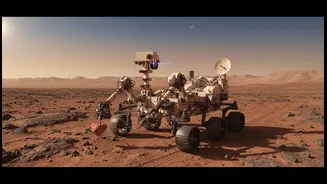
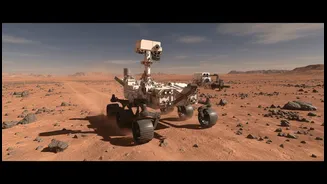
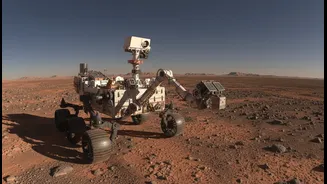
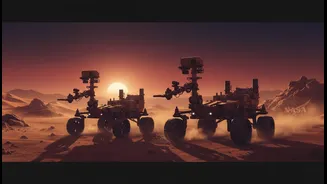
explorers like NASA's Curiosity and Perseverance showcase a dramatic evolution. Perseverance, for instance, possesses an enhanced autonomous navigation system, often called "AutoNav," that allows it to make decisions about its path up to five times faster than Curiosity. This enhanced brain enables it to analyze images from its cameras, create 3D maps of the terrain, and plot safe routes around obstacles without waiting for instructions. This increased autonomy is a game-changer, reducing the time engineers spend planning every step and allowing the rover to cover more ground, ultimately accelerating the pace of scientific discovery.
The Loneliest Mechanics: The Challenge of Maintenance
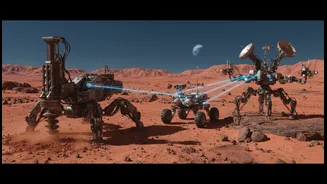
On Mars, there is no roadside assistance. Maintenance isn't about physical repairs but about ingenuity and resilience from millions of miles away. Rovers are designed with redundant systems, but when hardware fails, engineers must devise creative solutions. A classic example was a problem with Curiosity's drill in 2016. Engineers couldn't physically fix the mechanism, so they spent over a year developing and testing new procedures to use the drill in a completely different way, essentially teaching the rover a new skill. This often involves uploading new flight software or using an instrument in an unintended, yet effective, manner. These remote fixes, born from a deep understanding of the rover's systems and a bit of creative problem-solving, are the only form of maintenance possible and are crucial for extending a mission far beyond its initial lifespan.
Built to Last: Engineering Long-Duration Mobility
A rover's lifespan is directly tied to its ability to move and stay powered. Two key factors dominate this: power source and wheel design. Early Mars rovers like Spirit and Opportunity relied on solar panels, which were incredibly successful but vulnerable to dust storms that could coat the panels and end the mission. Larger, more power-hungry rovers like Curiosity and Perseverance utilize Radioisotope Thermoelectric Generators (RTGs), which use the heat from decaying plutonium to generate electricity. RTGs provide constant power day and night, regardless of weather, giving these missions greater operational flexibility and longevity. Mobility also means durable wheels. After Curiosity's aluminum wheels sustained higher-than-expected damage from sharp rocks, engineers redesigned them for Perseverance. Perseverance's wheels are narrower but have a larger diameter and thicker aluminum skin, with a different tread pattern designed to better withstand the harsh Martian terrain, demonstrating a direct lesson learned from one generation to the next.
The Next Frontier: Mobility on the Moon
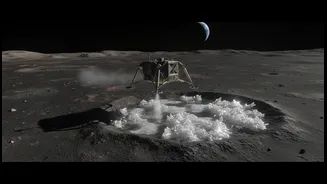
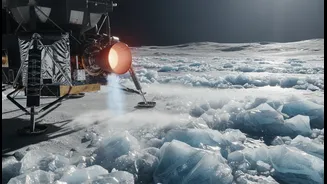
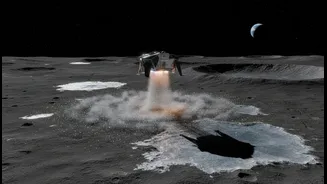
The lessons learned from Mars are now being applied to the unique challenges of the Moon. NASA's upcoming VIPER rover, designed to prospect for water ice at the lunar South Pole, faces a different set of mobility problems. Unlike Mars, the Moon has no atmosphere, leading to more extreme temperature swings and abrasive, electrostatically charged dust. VIPER is designed to be solar-powered and must carefully plan its route to stay in sunlight, using specially designed wheels and suspension to handle both hard-packed soil and soft, deep regolith. It will navigate in and out of permanently shadowed craters—some of the coldest places in the solar system—requiring it to operate on battery power for periods before returning to a sunny spot to recharge. This constant balancing act between exploration, power management, and communication blackouts makes lunar mobility a distinct and complex challenge.