




First, Let's Define Our Terms
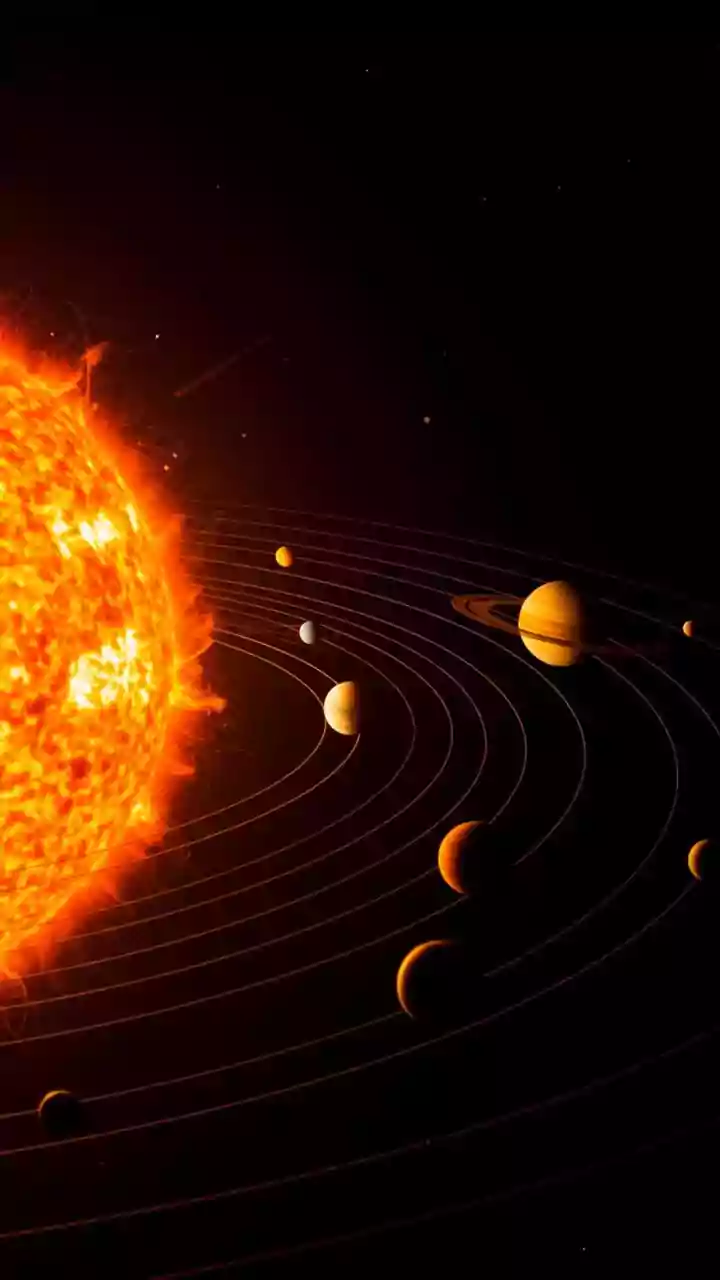
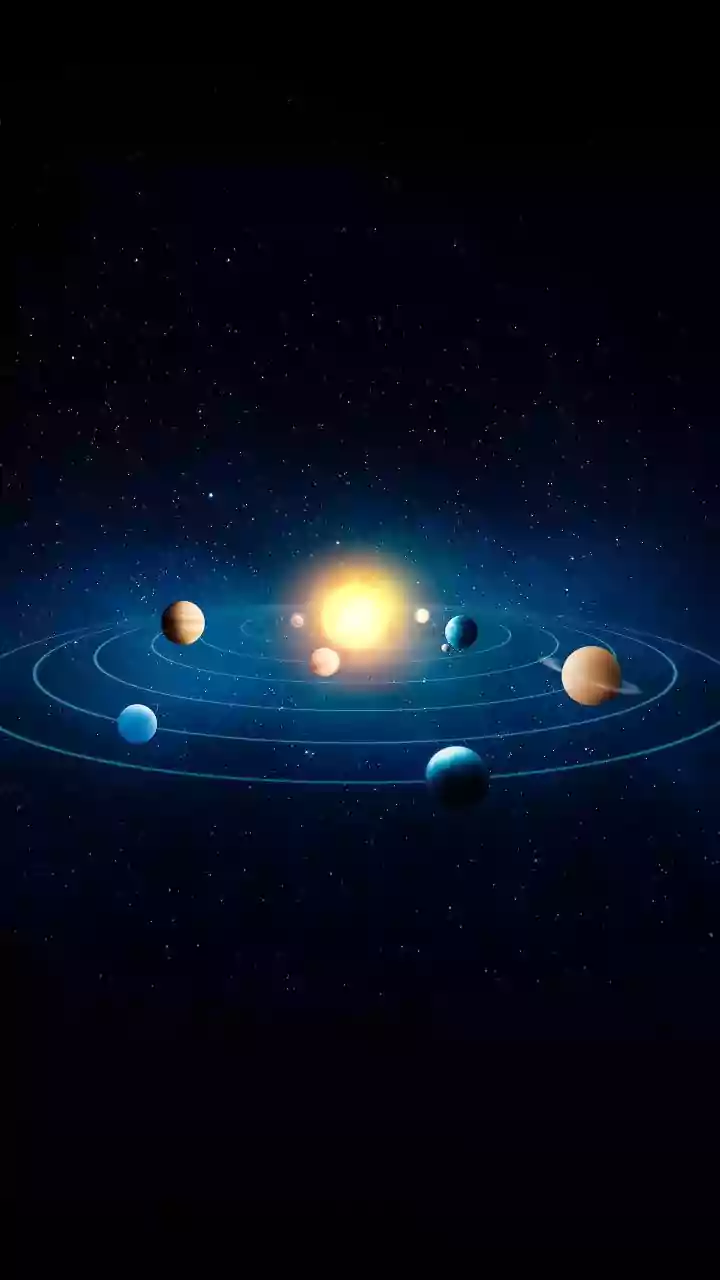
Before we dive into the strangeness of Venus, let's refresh our cosmic vocabulary using Earth as a baseline. A 'year' is the time it takes for a planet to complete one full orbit around its star. For Earth, that’s roughly 365 days. A 'day' is the time it takes for a planet to complete one full rotation
on its axis. For Earth, that's about 24 hours. This relationship seems simple and intuitive: we experience many days within a single year. This fundamental rhythm dictates our seasons, our sleep cycles, and our entire concept of time. But as we'll see, the universe has no obligation to follow our terrestrial logic.
The Venusian Anomaly
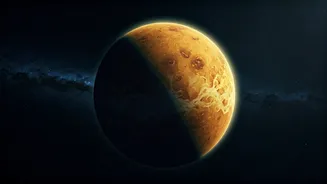
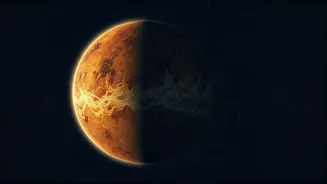
Now, let’s travel to Venus. A year on Venus—the time it takes to orbit the Sun—is about 225 Earth days. This makes its year significantly shorter than ours. But here’s where things get truly weird. A single day on Venus—one full rotation on its axis—takes approximately 243 Earth days. You read that correctly: a Venusian day is longer than a Venusian year. If you were standing on Venus, you would celebrate your first birthday before the planet had even finished spinning once. It’s a paradox that completely upends our understanding of how planetary timekeeping is supposed to work.
A Day With a Twist
To add another layer of strangeness, Venus spins backwards. Unlike Earth and most other planets in our solar system, which rotate counter-clockwise (prograde), Venus rotates clockwise (retrograde). This means the Sun on Venus rises in the west and sets in the east. Because of this backward spin in relation to its orbit, the length of a 'solar day' (the time from one sunrise to the next) is different from its 'sidereal day' (one full rotation). The combination of its slow spin and orbital motion results in a solar day that lasts about 117 Earth days. So, while a full rotation takes forever, you’d still experience two sunrises and sunsets in a single Venusian year, though each would take months to complete.
Why the Weird Spin?
Scientists are still debating why Venus is the oddball of the solar system. One leading theory suggests that in its distant past, Venus was struck by a massive asteroid or other celestial body. Such a colossal impact could have been powerful enough to not only slow its rotation to a crawl but also flip it upside down, causing its retrograde motion. Another compelling theory points to its incredibly thick and heavy atmosphere. Over billions of years, powerful atmospheric tides, created by solar heating, could have acted like a brake, gradually slowing the planet's rotation and eventually reversing it. This atmospheric drag, combined with gravitational interactions with the Sun and other planets, may have locked Venus into its current, leisurely spin.
A Truly Alien Sky
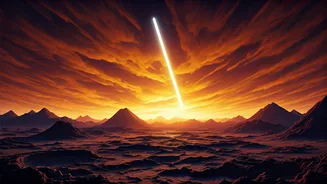
Let’s imagine what this means for a hypothetical observer on the Venusian surface (ignoring the crushing pressure and flesh-melting heat, of course). You would see the Sun rise in the west, but its journey across the sky would be agonizingly slow. It would take nearly two Earth months for the Sun to reach its zenith and another two months for it to set in the east. The sky would be perpetually hazy under the thick, sulphuric acid clouds, casting an eerie, diffuse light. The concept of a 'day' and 'night' as we know it would be stretched to an extreme, creating a world of prolonged, scorching daylight followed by an equally long, dark night. It’s a stark reminder that even our closest planetary neighbours can be profoundly alien.