



A Data Deluge From the Stars
For decades, NASA’s telescopes, rovers, and satellites have been sending a torrent of information back to Earth. The agency’s archives of Earth science data alone were projected to grow from 60 to 250 petabytes in the coming years. For context, one petabyte is
equivalent to about 500 billion pages of standard printed text. This cosmic library contains countless potential discoveries, from spotting new planets to predicting solar flares that could impact life on Earth. The challenge, however, is that the sheer scale of this data has overwhelmed the ability of scientists to manually review every image and data point. It has become nearly impossible to keep up, creating a bottleneck where groundbreaking discoveries might lie hidden for years.
Enter the AI Scientist
To solve this problem, NASA is leaning heavily into artificial intelligence. This isn't just about making existing processes faster; it's about fundamentally changing how science is done. The agency is developing a series of powerful AI programs, known as "foundation models," which are designed to be trained on vast amounts of unlabeled data. Think of it like teaching an AI to recognize patterns across the entire universe of NASA's data, from pictures of Martian landscapes to the light signatures of distant stars. These models can then be fine-tuned for specific tasks, like hunting for exoplanets or signs of ancient life, with much less effort than starting from scratch. A recent example is Prithvi, an open-source geospatial AI model developed in partnership with IBM, which is already being tested in orbit.
What Can AI Discover?
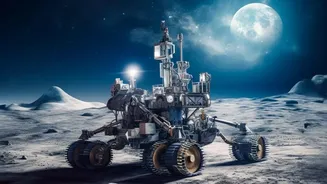
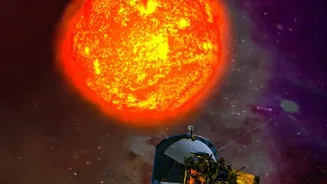
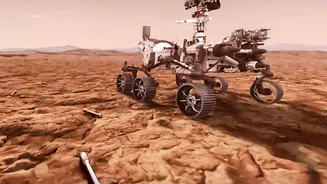
The applications are broad and transformative. In the past, AI has already helped in significant ways. For instance, NASA's ExoMiner, a deep learning system, identified 301 new exoplanets by analyzing data from the Kepler Space Telescope, spotting patterns that human eyes might miss. The Perseverance rover on Mars uses AI to navigate the planet's surface autonomously, selecting its own rock targets for chemical analysis. Looking forward, these new AI programs could go even further. By connecting data from different missions and fields of study, they could identify previously unseen links. One program, named Surya, is a heliophysics model designed to unlock the secrets of the Sun. Future models are planned for planetary science, astrophysics, and biological sciences, creating a suite of specialized AI tools for almost every field of space exploration.
A New Era of Open Science
A key part of NASA's strategy is not to keep these powerful tools locked away. The agency is committed to open-source science, meaning the models, data, and code will be shared openly with the global scientific community. This collaborative approach aims to accelerate discovery by allowing researchers everywhere to build upon NASA's work. Recently, NASA joined the White House's Genesis Mission, an initiative to accelerate AI-driven research across government agencies. This program will apply advanced AI to analyze over 150 petabytes of data from NASA and the Department of Energy, aiming to integrate observations and simulations to find new breakthroughs. By making these AI capabilities a form of shared public infrastructure, NASA hopes to empower a new generation of scientists and foster a more transparent, efficient, and collaborative research environment.