



The Small Space Entryway Problem
In a spacious house, a separate mudroom often contains the mess of the outdoors. But in urban Indian apartments where every square foot is precious, the front door typically opens directly into the living area. This means there is no dedicated buffer
zone. Wet umbrellas lean against walls, leaving damp patches. Raincoats are thrown over chairs, preventing them from drying properly and creating a musty smell. Shoes form a puddle-ridden obstacle course, tracking dirt and water further into the home. It’s not just untidy; it’s a daily source of stress and a potential slipping hazard. This chaos highlights a fundamental design flaw in many modern compact homes: the lack of a designated area to transition from the wet outdoors to the dry indoors.
The Solution: A Drop Zone
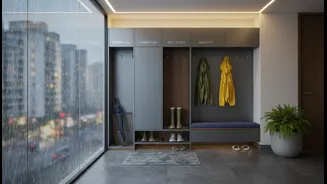
Enter the 'drop zone'. It’s a simple but transformative concept: a dedicated spot near your entrance where you can “drop” everything you carry when you walk in. This includes keys, mail, bags, and most importantly during the monsoon, all your drenched gear. A drop zone acts as a containment unit, keeping wet and dirty items confined to one easy-to-clean area. The goal is to create an organised, functional threshold that stops outdoor mess in its tracks. It’s not about having a separate room, but about smartly allocating a small patch of space to handle the daily comings and goings, making your life significantly easier and your home cleaner.
Why Customisation Is Crucial
For those living in compact flats, a standard, bulky hall tree or a large bench won't work. The key is “customisable.” A drop zone in a small home can't be a one-size-fits-all solution; it must be tailored to your specific entryway, your family’s habits, and the items you need to store. Maybe you have a narrow hallway, an awkward corner, or just a small, blank wall. A customisable approach allows you to piece together a system that works for your unique space, rather than trying to force a large piece of furniture where it won't fit. It's about being strategic and creative with what you have.
Go Vertical: Use Your Walls
When floor space is limited, the only way to go is up. Your walls are your greatest asset in creating a compact drop zone. Start with a series of sturdy hooks. Install them at different heights to accommodate everything from long raincoats to kids' backpacks. Above the hooks, add a slim, floating shelf. This can hold a small tray for keys and wallets, and perhaps a few decorative items to make the space feel welcoming. A wall-mounted organiser with small cubbies or pockets is another excellent tool for corralling smaller items and keeping them from cluttering the single shelf space you have.
Smart, Water-Resistant Foundations
The base of your drop zone is critical for managing water. Start with a highly absorbent, non-slip doormat. For the area where umbrellas and wet shoes will live, consider a boot tray. These are inexpensive, waterproof trays with a raised lip designed to contain water and mud, protecting your floors. A narrow, tall umbrella stand that can tuck into a corner is also essential; it ensures wet umbrellas don't drip all over your coats and bags. Some modern cloth drying stands even come with a bottom rack specifically for shoes, providing a ventilated space for them to air out. Using materials that can handle moisture is key to preventing mould and odours.
Multi-Functional Furniture For The Win
In a small flat, every piece of furniture should work hard. If you have a little more space, consider a slim bench with built-in storage. It provides a place to sit while you remove wet shoes, and the space underneath or inside can hide those shoes away in baskets. A narrow console table can also define a drop zone, giving you a surface for small items while allowing you to place waterproof bins or shoe racks neatly underneath. Look for pieces that are open at the bottom, which maintains a sense of spaciousness while still offering valuable storage.