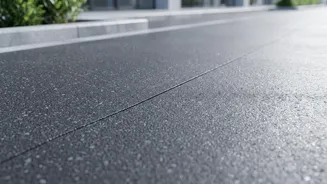







The Age-Old Problem of Potholes
Every year, as the rains recede, a familiar battle begins on India's roads. Potholes, cracks, and crumbling surfaces emerge, leading to traffic snarls, vehicle damage, and significant safety hazards. The cycle of road damage and repair is a costly one,
both for government authorities and for daily commuters. Traditional asphalt requires constant, reactive maintenance, where crews patch up damage after it has already occurred. This approach is not only expensive but also highly disruptive. The search for a more proactive, durable solution has led researchers around the world to a fascinating concept: what if the road itself could prevent potholes from forming?
Introducing Self-Healing Asphalt
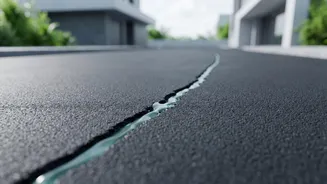
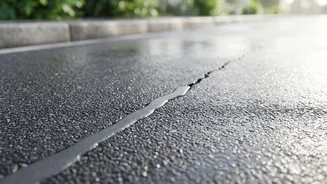
The solution sounds like science fiction, but it is rooted in advanced material science. Self-healing asphalt is an innovative type of pavement designed to automatically repair minor cracks before they can grow into large, dangerous potholes. The core idea is to embed the asphalt with components that can be activated to restore the road's integrity. There are several methods being developed, but one of the most promising involves incorporating tiny microcapsules filled with a rejuvenating agent, often referred to as a binder. When a micro-crack forms due to traffic stress or weather, it breaks open these capsules. The released agent flows into the gap, sealing the damage and reinforcing the pavement.
The Magic of Eco-Binders
What makes this technology particularly exciting is the shift towards 'eco-binders'. Instead of relying solely on traditional, petroleum-based bituminous agents, researchers are using sustainable and environmentally friendly materials as the healing agent. These eco-binders can be derived from a variety of renewable sources, including sunflower oil, castor oil, recycled cooking oils, and even by-products from the paper and pulp industry. Some research has even shown success with binders derived from algae. These bio-materials are not only greener but are also highly effective at rejuvenating aged asphalt, restoring its flexibility and preventing further cracking. By using waste products and plant-based oils, this technology tackles both infrastructure durability and environmental sustainability.
Can Rain Really Heal a Road?
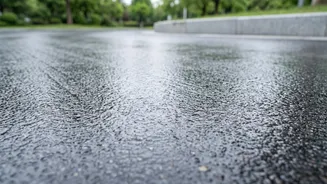
The headline's suggestion of rain-activated repair is a tantalizing prospect, especially for a monsoon-heavy country like India. While most current self-healing technologies are triggered by other means, the concept is not far-fetched. A pioneering invention from Mexico, for instance, uses recycled tires and special additives that create a chemical reaction when exposed to water, helping to seal cracks. This turns water from a source of damage into a catalyst for repair. Other mainstream methods involve using steel fibres in the asphalt mix, which can be heated by an induction machine passed over the road. The heat melts the binder, allowing it to flow and seal fractures. While direct, rain-activated healing on a mass scale is still an emerging field, the goal for many researchers is to create truly autonomous roads that respond to their environment.
Potential for India's Infrastructure
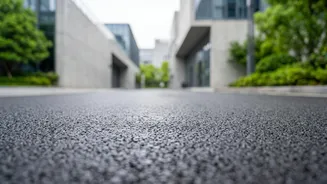
The benefits of this technology for India are immense. Self-healing asphalt could potentially double the lifespan of roads, dramatically reducing long-term maintenance costs. Fewer repairs would mean less traffic disruption, lower fuel consumption for idling vehicles, and improved road safety. Indian research institutions are already part of this global push, with bodies like the Central Road Research Institute (CRRI) and various IITs experimenting with variants suited for India's climate and heavy traffic loads. As the nation continues its ambitious expansion of its highway network under projects like Bharatmala, integrating such smart materials could be a game-changer, ensuring our new infrastructure is built to last.
The Road Ahead: Challenges and Opportunities
Despite its incredible promise, self-healing asphalt is not yet a standard feature on our highways. The primary hurdle is the higher upfront cost, which can be significantly more than conventional asphalt. Scaling the production of these advanced materials and ensuring consistent quality are other technical challenges that need to be addressed. However, proponents argue that the higher initial investment is more than offset by the massive savings in long-term maintenance and repair. As the technology matures and becomes more cost-effective, pilot projects in India could pave the way for wider adoption, moving us from a constant cycle of patching roads to building a resilient and sustainable transportation network for the future.