








The Calorie Burn and Intensity Gap
When it comes to burning calories efficiently, skipping is the undisputed champion. As a high-intensity exercise, jumping rope can burn over 100 calories in just 10 minutes, making it roughly three times more effective than brisk walking for the same
duration. Studies have shown that a 10-minute skipping session can offer cardiovascular benefits similar to a 30-minute jog. This is because skipping engages multiple muscle groups and demands significant energy, skyrocketing your heart rate quickly. Walking, while a fantastic low-intensity activity, burns calories at a slower, more sustained pace. For those with very limited time, skipping offers a much bigger metabolic punch. The choice here depends on your goal: maximum calorie burn in minimum time, or a less strenuous, longer-duration activity.
Impact on Joints and Bones
The primary difference in how these exercises affect your body lies in impact. Walking is a low-impact activity, meaning at least one foot is on the ground at all times. This makes it gentle on the joints—ankles, knees, and hips—and an excellent choice for beginners, individuals with arthritis, or those recovering from injury. Skipping, by contrast, is a high-impact exercise. The repetitive jumping motion puts significant stress on your joints, which can be a risk for some but a benefit for others. This high-impact stress is highly effective at building bone density, which can help reduce the risk of osteoporosis later in life. So, if your joints are healthy and your goal is to build stronger bones, skipping is a great option; if you need to protect your joints, walking is the safer bet.
The Space and Equipment Equation
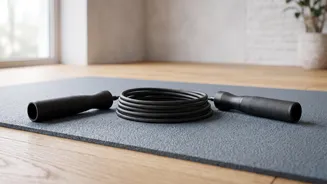
This is where the headline's central question comes into play. Both exercises are celebrated for their minimal requirements. Walking is arguably the most accessible form of exercise; it can be done anywhere, outdoors or indoors (even marching in place in a small room), and requires nothing more than a decent pair of shoes. Skipping is also a star player for small-space workouts. All you need is a spot with enough vertical clearance to swing a rope without hitting the ceiling and enough horizontal space to avoid furniture. For many people living in apartments or with limited room, a jump rope provides a complete cardio workout in a space far too small for most other activities. While walking in place is an option, skipping delivers a much more intense and varied workout within the same tiny footprint.
Skill, Coordination, and Overall Benefits
Walking requires virtually no skill, making it easy to start immediately. Its benefits are vast, including improved heart health, better mood, and enhanced endurance for daily activities. It is a sustainable habit that supports long term health and mobility. Skipping, on the other hand, involves a learning curve. Mastering the timing and coordination of your hands and feet takes practice. However, this is also one of its key benefits. The activity sharpens your agility, balance, and mind body connection in a way that walking does not. It’s a full body workout that engages your calves, quads, core, and shoulders, making it a more comprehensive conditioning tool.