






The Pressure Cooker on the Ground
The journey of a doctor in India is famously demanding. After a gruelling MBBS, graduates face a hyper-competitive environment for postgraduate seats. In 2024, over 228,000 candidates vied for roughly 74,000 PG spots. This intense bottleneck forces many
into repeated, stressful exam cycles. Even after specialization, doctors in urban centres often face what is described as job saturation, not a lack of patients, but a surplus of specialists in popular fields competing for positions in established hospitals. This can lead to long working hours, immense pressure, and burnout. Added to this are challenges like a mismatch between the number of graduates and available training positions, and rising incidents of workplace violence, which add to the psychological burden on young doctors.
A Celestial Calling: The Rise of Space Medicine
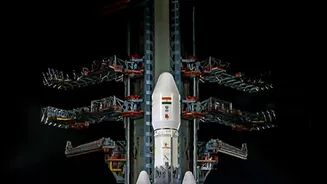
Enter aerospace medicine, a specialised field focused on the health, safety, and performance of pilots, aircrew, and, most excitingly, astronauts. It’s a discipline that combines clinical care with research into how the human body adapts to extreme environments like microgravity, cosmic radiation, and the psychological stress of isolation. With India's ambitions in space exploration growing, particularly with the Gaganyaan human spaceflight mission, the need for homegrown expertise in space medicine has become critical. This isn't just about treating illnesses; it's about developing countermeasures and technologies to ensure astronaut safety on long-duration missions, making it a pioneering field of research and application.
The Fellowship Frontier in India
Recognizing this need, Indian institutions are stepping up. A landmark development is the collaboration between the Indian Space Research Organisation (ISRO) and the Sree Chitra Tirunal Institute for Medical Sciences and Technology (SCTIMST). In July 2026, they launched the country's first-ever Postdoctoral Fellowship in Bioastronautics. This two-year program is designed for doctors with postgraduate or super-speciality qualifications and aims to provide deep insights into the physiological changes that occur during space travel. Fellows will conduct research and undergo training at both SCTIMST in Thiruvananthapuram and ISRO’s Human Space Flight Centre in Bengaluru. Beyond this new fellowship, the Institute of Aerospace Medicine in Bengaluru, run by the Indian Air Force, has been offering a three-year MD in Aerospace Medicine for decades, open to both military and a small number of civilian doctors.
More Than Just an Escape Route
While the pressures of traditional medicine are a significant "push" factor, the appeal of space medicine is a powerful "pull." For many, it’s not about escaping a saturated field but about embracing a unique, mission-driven career. It offers a chance to be at the forefront of scientific discovery and contribute directly to a national prestige project like Gaganyaan. The career path is intellectually demanding, blending medicine with physics, engineering, and psychology. Graduates don't just become clinicians; they become researchers, safety officers, and pioneers. For those accepted into defence-linked programs, the career begins at a senior officer rank, such as Squadron Leader in the Air Force, offering a respected and structured professional life from the outset.
The Right Stuff for the Final Frontier
A career in space medicine requires a unique combination of skills. Strong clinical knowledge is a given, but candidates also need a profound orientation toward research and an analytical mindset. They must be comfortable working at the intersection of medicine and technology, helping to design and evaluate life-support systems and other biomedical technologies for space. The field is incredibly selective. The new ISRO-SCTIMST fellowship, for example, will only accept two fellows per year. Similarly, the MD program at the Institute of Aerospace Medicine has only a handful of seats for civilians, making admission intensely competitive. This exclusivity, combined with the groundbreaking nature of the work, makes it an aspirational goal for doctors who want a career that is truly out of this world.