





The Rise of a Fizzy Phenomenon
Not long ago, sourdough starters were the undisputed kings of the kitchen counter, symbols of a global turn towards home-based craft and comfort. But as the flour settled, a new fermentation project began to bubble up. Enter kombucha, the tangy, effervescent
tea that has transitioned from a niche health-food-store curiosity to a full-blown global DIY obsession. Driven by the same post-pandemic desire for wellness and hands-on hobbies, home-brewed kombucha is claiming its territory. The global market for this fermented beverage is projected to grow significantly, reaching figures as high as USD 15.56 billion by 2034, propelled by a worldwide shift towards functional, probiotic-rich drinks. This surge isn't just commercial; it's happening in kitchens from Mumbai to Milwaukee, where jars of sweet tea are slowly transforming into a gut-friendly elixir.
Meet the SCOBY: The Heart of the Brew
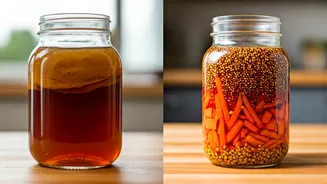
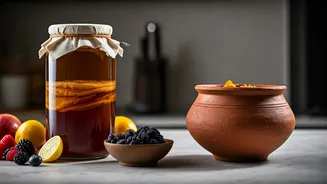
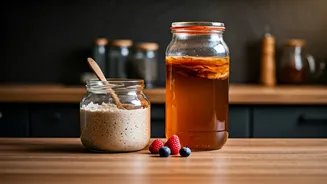
At the core of every kombucha brew is the SCOBY, an acronym for Symbiotic Culture of Bacteria and Yeast. It’s a strange and wonderful thing, often described as a gelatinous, rubbery, pancake-like disc that floats on top of the sweet tea. While its appearance can be startling to newcomers—it's sometimes called the “mother” or “mushroom,” though it's not a fungus—this living mat is the engine of fermentation. The diverse community of bacteria and yeast within the SCOBY works together, feeding on the sugar in the tea and transforming it into a complex beverage rich in organic acids, B vitamins, and probiotics, with a signature tart-sweet flavour and natural fizz. Each time a batch is brewed, the SCOBY grows a new layer, allowing brewers to share their culture with friends, much like the cherished tradition of passing on a sourdough starter.
Sourdough vs. Kombucha: A Tale of Two Ferments
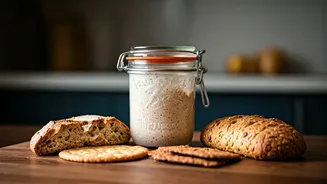
While both sourdough and kombucha tap into the magic of fermentation, they demand different rhythms from the home hobbyist. Sourdough starter is a daily commitment, requiring regular feeding and attention to thrive. It’s a needy but rewarding pet. Kombucha, on the other hand, operates on a batch-brewing cycle. Once the SCOBY is added to a fresh batch of sweet tea, it can be left to ferment for one to three weeks with minimal intervention. This makes kombucha a lower-maintenance, set-it-and-forget-it alternative for those who love the idea of fermentation but lack the time for sourdough's daily rituals. This difference in workflow is precisely why they are seen as competitors for kitchen space and a home brewer's finite attention. While some enthusiasts maintain both cultures, keeping them physically separated to avoid cross-contamination, many find themselves choosing one ferment over the other based on lifestyle and taste.
The Indian Fermentation Renaissance
In India, a country with a rich heritage of fermented foods like idli, dosa, and kanji, kombucha is finding a receptive audience. Initially gaining traction in metro cities like Mumbai, Delhi, and Bangalore, its popularity is rapidly spreading. Local artisanal brands are flourishing, creating unique flavours inspired by India's diverse culinary landscape, such as those infused with Naga pepper or Gor Keri (a sweet mango pickle). The trend is fueled by a growing health consciousness and a desire for alternatives to sugary soft drinks. For many in India, kombucha is not just a trendy import but a modern extension of a long-held cultural appreciation for the health benefits and complex flavours produced by fermentation. The India kombucha market is projected to be the fastest-growing in the Asia Pacific region, a testament to its enthusiastic adoption.