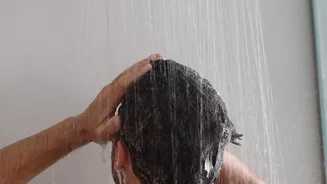







Leaving Rainwater in Your Hair
Getting caught in a downpour is a quintessential monsoon experience, but letting your hair air-dry without a proper rinse is a significant mistake. Urban rainwater isn't pure; it often carries atmospheric pollutants, dust, and chemicals that can settle
on your scalp. This residue can disrupt your scalp's natural pH balance, leading to irritation, itchiness, and even fungal infections in the damp, warm environment. If your hair gets drenched, make it a priority to rinse it with clean water as soon as you get home. Follow up with a gentle shampoo to properly cleanse away any impurities before they can cause damage.
Tying Wet Hair Tightly
When your hair is wet, it is at its most fragile and vulnerable state. The hair shaft swells and becomes more elastic, making it extremely susceptible to breakage. Tying it up in a tight ponytail, bun, or braid puts immense stress on the already weakened strands and roots, leading to snapping and hair fall. This habit also traps moisture against the scalp, creating a perfect breeding ground for dandruff and fungal growth. Instead, gently pat your hair with a soft microfiber towel and let it air-dry as much as possible before considering any hairstyle. If you must tie it, opt for a loose style with a gentle accessory like a silk scrunchie.
Skipping Conditioner
Many people with oily scalps avoid conditioner, fearing it will weigh their hair down, especially in the humid monsoon weather. However, this is a counterproductive step. High humidity causes the hair's outer layer, the cuticle, to lift as it absorbs moisture from the air, resulting in frizz. A good conditioner works to seal these cuticles, locking in necessary moisture while smoothing the hair shaft to prevent it from absorbing excess environmental humidity. This not only controls frizz but also makes your hair softer and easier to manage. Apply conditioner primarily to the mid-lengths and ends, avoiding the scalp if you're prone to oiliness.
Over-Washing Your Hair
The sticky, greasy feeling that comes with monsoon humidity might tempt you to wash your hair every day. While keeping the scalp clean is important, over-washing can strip away its natural protective oils (sebum). This can send a signal to your glands to produce even more oil to compensate, leading to a vicious cycle of a greasy scalp and dry ends. It can also leave your hair more porous and prone to frizz. Experts suggest washing your hair two to three times a week with a mild, pH-balanced shampoo is sufficient to remove dirt and buildup without causing damage.
Aggressive Towel-Drying
Rubbing your hair vigorously with a coarse cotton towel is one of the fastest ways to cause damage, especially when it's already in a weakened wet state. The friction roughs up the hair cuticles, leading to immediate frizz and increasing the chances of breakage and split ends. This habit can undo all the good work of your shampoo and conditioner. The better approach is to gently squeeze out excess water with your hands and then blot your hair with a soft, absorbent microfiber towel or even an old cotton t-shirt. This method absorbs water without causing unnecessary friction.
Overusing Heat Styling Tools
When your hair is already battling high humidity, subjecting it to high heat from blow dryers, straighteners, or curling irons can be a recipe for disaster. Heat styling further strips moisture from the hair, making it even more brittle and susceptible to the frizz-inducing effects of the humid air. It's best to embrace your natural texture during the monsoon and minimize heat styling. If you must use heat, always apply a heat-protectant serum beforehand and use the coolest setting possible on your device. Air-drying is always the gentlest option.