




What is Microgravity, Anyway?
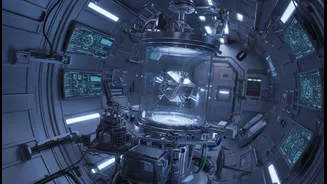
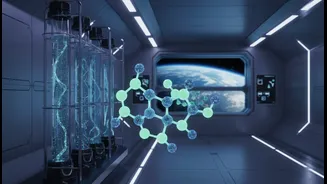
Imagine a laboratory where gravity, the force that keeps our feet on the ground, almost disappears. This is the world of microgravity, or 'near-weightlessness'. It's an environment found in orbiting spacecraft, like the International Space Station (ISS),
or created for brief periods on Earth using specialised facilities. In this unique setting, the fundamental rules of physics and biology change. Fluids behave differently, flames burn in spheres, and living cells grow in three dimensions, unconstrained by gravitational pull. For scientists, this isn't just a curiosity; it's a revolutionary opportunity. By removing gravity from the equation, they can study the underlying mechanisms of everything from disease progression to the formation of new materials, leading to discoveries that are impossible on Earth.
ISRO's Push for In-Orbit Research
The Indian Space Research Organisation (ISRO) is spearheading the nation's journey into this new domain. With the Gaganyaan human spaceflight programme progressing and plans for the Bharatiya Antariksh Station (BAS) by 2035 taking shape, India is building platforms for sustained research in space. To catalyse this, ISRO has launched the Indian Microgravity Experiments programme, or IMEx-2026. This initiative is an open call to researchers across Indian universities, labs, and industries to develop experiments for these future missions. The goal is to transform India's spaceflights from purely technological demonstrations into powerful scientific platforms, fostering an ecosystem for cutting-edge research. This has already seen collaborations, such as with NASA on the Axiom-4 mission, where an Indian astronaut conducted experiments on muscle regeneration, plant growth, and human-computer interaction in space.
The Promise for Medicine and Materials
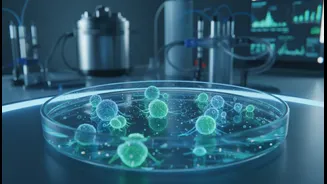
The potential applications of microgravity research are vast and could directly benefit India. In pharmaceuticals, microgravity allows for the growth of larger, more perfect protein crystals. This provides clearer structural data, which is crucial for designing more effective drugs to combat diseases. Indian researchers see opportunities to target illnesses prevalent in the region, like malaria and dengue. Similarly, studying how human cells and tissues behave without gravity offers profound insights. Research on muscle atrophy in space, for example, could lead to breakthroughs in treating age-related muscle loss on Earth. In materials science, the absence of gravity-driven convection and sedimentation allows for the creation of flawless super-alloys and purer crystals for semiconductors, potentially revolutionising India's manufacturing and technology sectors.
A New Space Race for Startups
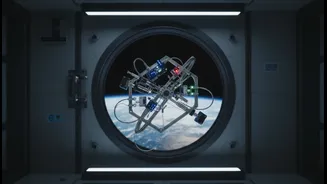
The excitement isn't limited to government agencies. A new breed of Indian startups is emerging to build the infrastructure for this research. Companies like Bengaluru-based Vellon Space are developing their own "micro space stations"—small, automated labs designed to be sent into orbit for experiments and then returned. Chennai's Inbound Aerospace, incubated at IIT Madras, is building reusable spacecraft to offer "microgravity as a service" for long-duration research. These ventures aim to democratise access to space, providing a platform for pharmaceutical companies, biotech firms, and research institutes to conduct experiments without having to build their own space programmes. Other startups, like Aaka Space, are even developing underwater habitats to simulate microgravity conditions for astronaut training on Earth.
The Next Frontier for Indian Science
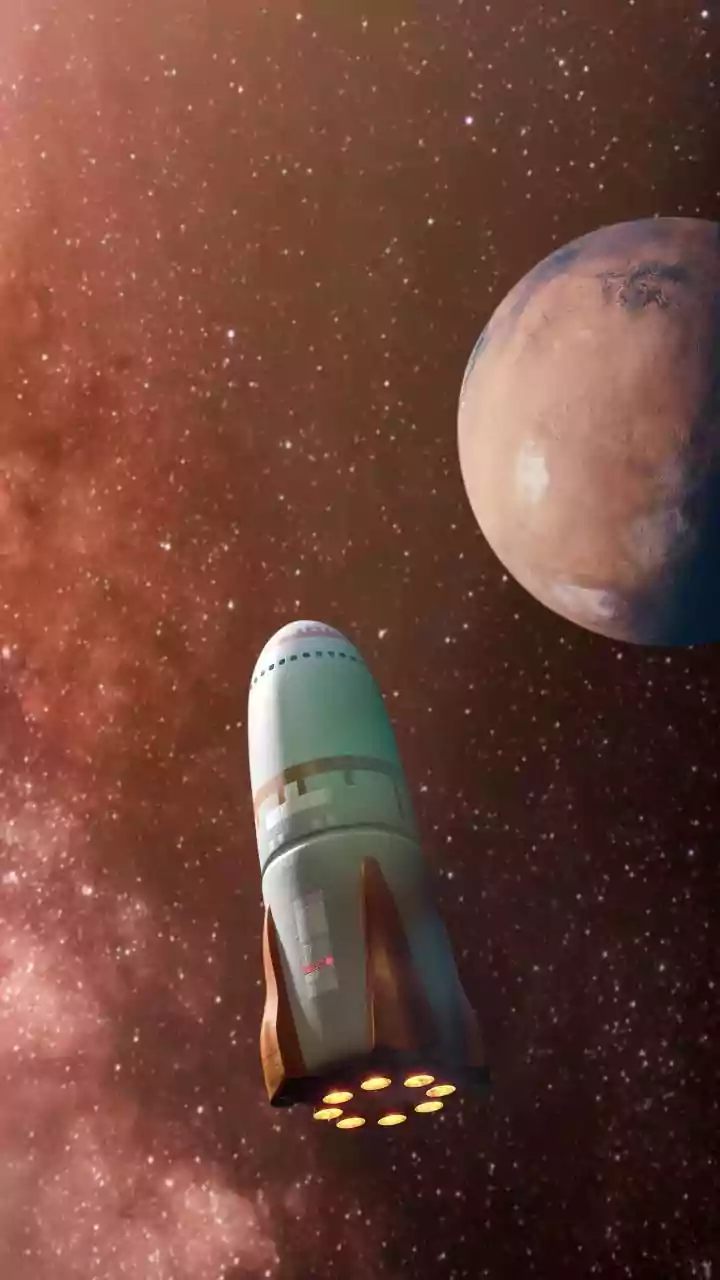
As India prepares to send its 'Vyomanauts' into orbit and establish a permanent address in space with the Bharatiya Antariksh Station, the focus is shifting. The initial challenge was getting to space; the next is learning how to live and work there productively. Microgravity research is the key to unlocking that future. It holds the promise of developing regenerative life-support systems, growing food in space, manufacturing advanced materials in orbit, and achieving medical breakthroughs. By inviting its entire scientific community to participate, from students to established industries, India is not just building rockets. It's building a self-reliant, knowledge-based ecosystem that will cement its place as a leading power in the final frontier.