





The Silence of Doubtful Sound
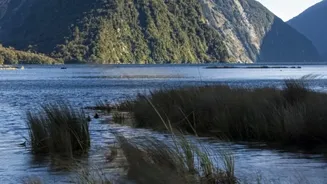
Often called 'the Sound of Silence', Patea / Doubtful Sound is a compelling alternative to its more famous neighbour, Milford Sound. Three times longer and with ten times the surface area, its scale is immense, creating a profound sense of isolation.
Getting here is an adventure in itself, involving a cruise across the serene Lake Manapouri, followed by a bus journey over the dramatic Wilmot Pass to reach Deep Cove, where fiord cruises begin. This multi-stage journey means fewer visitors make it, resulting in a quieter, more intimate wilderness experience. The fiord is home to a resident pod of bottlenose dolphins, fur seals, and the rare Fiordland crested penguin. For a truly immersive trip, overnight cruises allow you to wake up to the quiet majesty of the fiord, long after the day-trippers have departed.
The Alpine Ridges of the Kepler Track
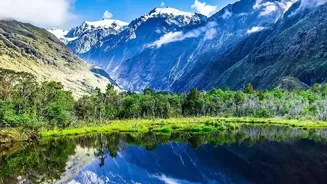
While the Milford Track often grabs the spotlight, the Kepler Track offers an equally stunning, and arguably more accessible, Great Walk experience. This 60-kilometre loop track starts and ends near Te Anau, making logistics far simpler than other point-to-point hikes. The Kepler is renowned for its diversity, taking trampers from the gentle shores of Lake Te Anau, through lush beech forests, and up to spectacular alpine ridgelines with panoramic views. The section between Luxmore Hut and Iris Burn Hut is a particular highlight, offering sustained high-altitude walking along the tops. Luxmore Hut itself is a worthy destination, famous for its incredible vistas and nearby limestone caves. For those with less time, a day walk or helicopter trip to the hut can provide a taste of the track's alpine grandeur without committing to the full four-day journey.
The Coastal Wilds of the Hump Ridge Track
Fiordland's newest Great Walk, the Hump Ridge Track, is a 61-kilometre loop in the park's south that delivers a magnificent blend of coastal, forest, and sub-alpine scenery. Considered a challenging hike with long days and a significant climb on day one, it rewards fit walkers with incredible variety. The trail begins by crossing windswept beaches before ascending through ancient, moss-laden forests to the exposed ridgeline. Along the way, trampers cross immense, historic wooden viaducts, relics of a bygone logging era in Port Craig. A highlight is Okaka Lodge, perched on the ridge with 360-degree views stretching from the mountains out to the Southern Ocean and, on a clear day, Stewart Island. This track offers a true wilderness feel, far from the crowds of the northern fiords.
The Remote Depths of Lake Hauroko
For a journey into one of Fiordland’s most remote and dramatic corners, look to Lake Hauroko. At 462 metres deep, it is New Zealand's deepest lake, a dark and imposing body of water cradled by steep, forest-clad mountains. Its Māori name, which translates to 'sounding wind', hints at the conditions that can whip across its surface, adding to its wild character. Access is via a partially unsealed road to the southern end of the lake, from where a steep lookout track offers breathtaking views. For adventurers, the lake is a gateway to even more remote experiences, including jet boating down the wild Wairaurahiri River to the coast or accessing the start of the challenging Dusky Track, one of Fiordland's most rugged multi-day tramps.
The Historic Hollyford Track
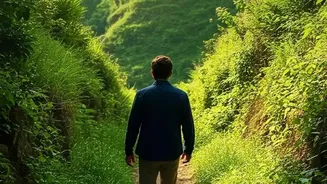
Unlike Fiordland's other major tracks, the Hollyford Track does not climb over high alpine passes. This makes it accessible for much of the year and a fantastic option for those wanting a valley-based journey from the mountains to the sea. The 56km track follows the Hollyford River through lush, ancient rainforest, past two large lakes, and out to the rugged West Coast at Martins Bay. The area is rich in both wildlife and history, passing the site of the ill-fated Jamestown settlement from the 1870s. While it can be walked independently, guided options often include a jet boat trip along Lake McKerrow and a scenic flight out from Martins Bay, turning the return journey into a spectacular highlight. Its lower altitude and different perspective make it a unique Fiordland experience.