






From Landing to Returning
Chandrayaan-4 represents a monumental leap in ambition for India's space program. While Chandrayaan-3 successfully demonstrated a soft landing and roving, its mission ended on the lunar surface. Chandrayaan-4 aims to complete the full cycle: land, collect
samples of lunar soil and rock (known as regolith), and return them safely to Earth. This sample-return capability is a feat only achieved by the United States, the former Soviet Union, and China, placing India in an elite group of spacefaring nations if successful. The mission is not just a sequel but a significant upgrade in technology and complexity, serving as a critical stepping stone for India's long-term goal of landing an astronaut on the Moon by 2040.
Why Bring Moon Rocks Home?
Studying lunar regolith on Earth offers scientific possibilities far beyond what a rover can accomplish. On-site instruments are limited by weight and power, but terrestrial labs have access to massive, highly sensitive equipment like electron microscopes and mass spectrometers. These tools can unlock secrets about the Moon's origin, its geological evolution, and the history of our solar system. Furthermore, the returned samples can be preserved and re-analysed for decades with future technologies, answering questions we haven't even thought to ask yet. There are practical benefits, too. Understanding the composition of lunar soil is crucial for future long-term habitats, including how to extract resources like water and oxygen or use the regolith itself as a building material.
An Ambitious Five-Part Mission
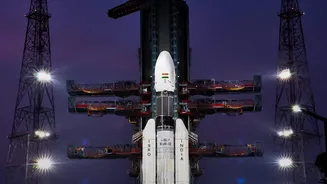
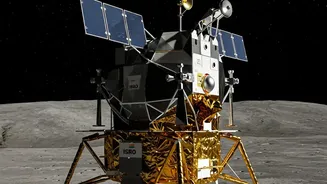
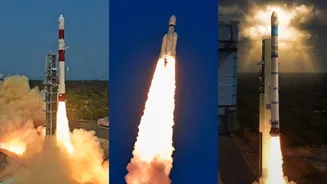
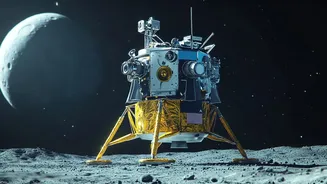
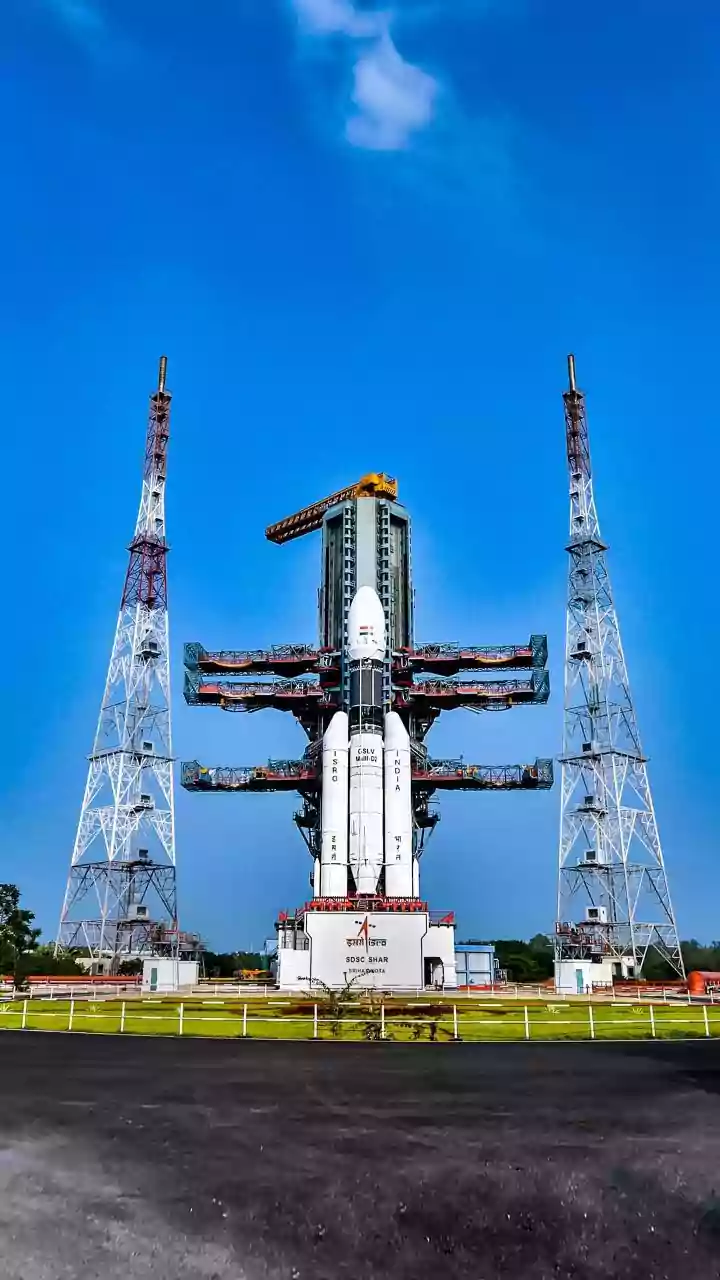
The mission's complexity is highlighted by its five-module design, a stark contrast to Chandrayaan-3's three modules. The components are the Propulsion Module (PM), Descender Module (DM), Ascender Module (AM), Transfer Module (TM), and Re-entry Module (RM). Due to the combined weight, ISRO plans to use two separate launches of its heaviest rocket, the LVM3, to get all the hardware into space. These components will then need to perform a docking manoeuvre in Earth's orbit to assemble the full spacecraft before heading to the Moon—a first for an Indian interplanetary mission.
The Intricate Dance in Lunar Orbit
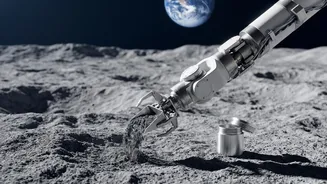
Once it reaches the Moon, the mission becomes a carefully choreographed sequence of events. The Descender and Ascender modules will separate and perform a soft landing, potentially near the 'Shiv Shakti' point where Chandrayaan-3 touched down. A robotic arm will collect surface and sub-surface samples and transfer them to the Ascender Module. Then comes one of the most challenging parts: the Ascender will launch itself off the Moon's surface, a critical demonstration of technology, and rendezvous with the Transfer and Re-entry modules waiting in lunar orbit. The sample will be transferred and sealed in the Re-entry module for the final journey home, culminating in a fiery, high-speed descent through Earth's atmosphere.
What Happens Next?
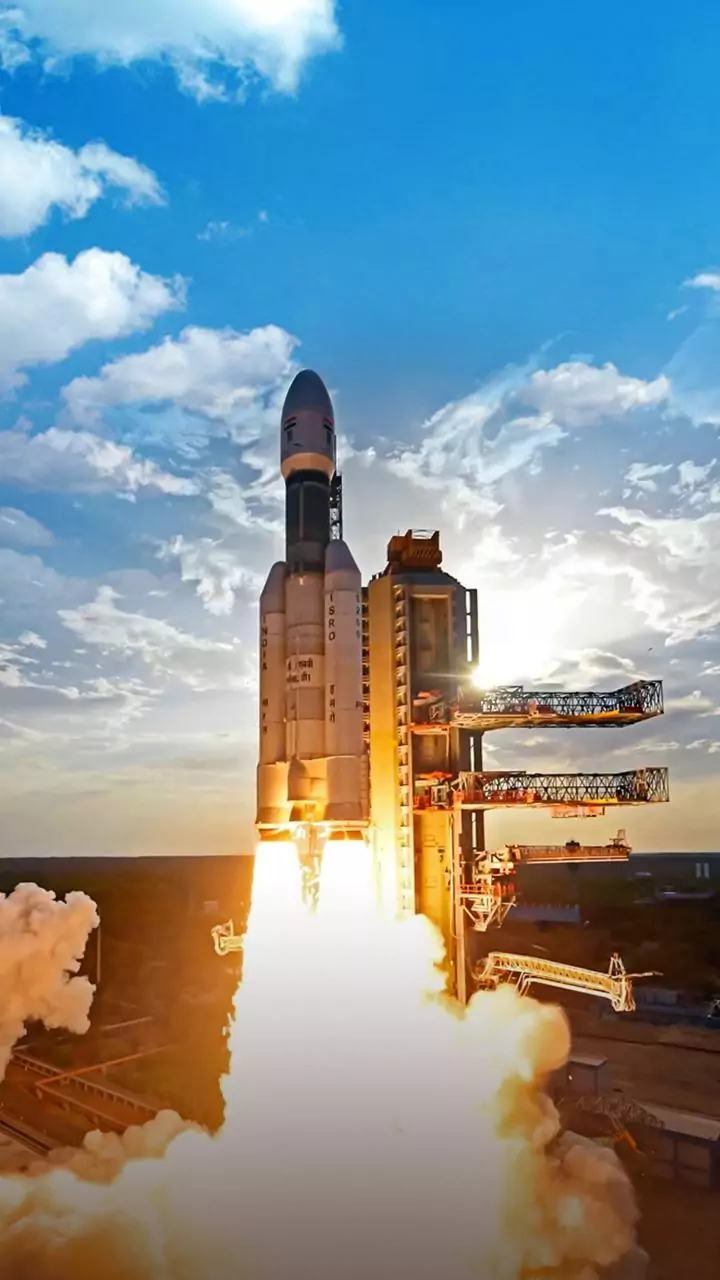
ISRO is targeting a launch around 2028 for this landmark mission. The project, approved by the Union Cabinet in September 2024 with a budget of over ₹2,100 crore, is a cornerstone of India's ambitious space vision. Key technologies like orbital docking have already been successfully tested with the SPADEX mission, boosting confidence in the mission's architecture. Chandrayaan-4 is more than just a scientific endeavour; it is a declaration of India's growing technological prowess and its ambition to become a major player in the future of space exploration, from building a space station to eventually sending humans to the Moon and beyond.