


The Soul of Sweets: Chhana
At the heart of most iconic Bengali sweets lies 'chhana', a fresh, moist cottage cheese. Unlike paneer, chhana is not pressed, retaining a delicate, crumbly texture that is essential for melt-in-the-mouth creations. The process begins by curdling full-cream
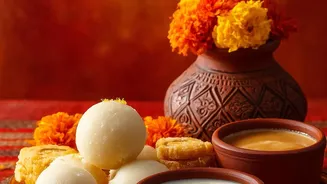
cow's milk with an acid like lemon juice. Once the whey separates, the solids are strained through a muslin cloth, washed to remove any sourness, and kneaded meticulously. This kneading is not just a step but an art form; its duration and pressure determine the final texture of sweets like the spongy Rosogolla or the delicate Sandesh. Mastering chhana is considered the foundational skill for any Bengali sweet maker, or 'moira'.
Mastering the 'Paak' or Syrup
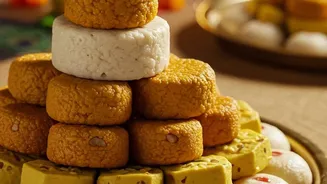
If chhana is the body, 'paak'—the sugar syrup—is the soul. The consistency of this syrup dictates the character of the sweet. For a Rosogolla, a thin, clear syrup allows the chhana balls to swell and become spongy while cooking. For Sandesh, the game changes entirely. Here, chhana is cooked with sugar over a low flame to form a paste. The 'paak' for Sandesh can be 'naram' (soft) or 'kara' (hard). Naram paak results in a soft, fudgy Sandesh that melts in your mouth, while kara paak yields a drier, firmer sweet that holds intricate shapes. This control over heat and sugar concentration is a skill passed down through generations, defining the sweet's final form and feel.
From Narkel Naru to Mishti Doi
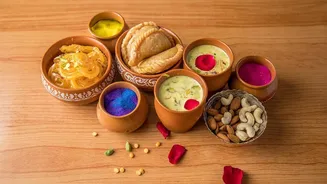
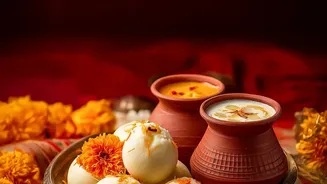
Beyond chhana, other traditional techniques create a diverse festive platter. Narkel Naru, simple spheres of grated coconut cooked with jaggery or sugar, are a household staple during Puja, symbolizing prosperity. These laddoos are cherished for their chewy texture and comforting flavour. Another quintessential delight is Mishti Doi, or sweet yoghurt. Traditionally, milk is reduced, sweetened with jaggery or sugar, and then set in earthen pots. These porous pots not only help the doi set by absorbing excess moisture but also impart a unique earthy aroma that plastic containers cannot replicate. During Puja, it is both an offering to the goddess and a beloved dessert at community feasts.
Artistry in Form and Flavour
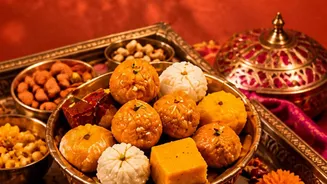
Bengali sweets are as much a feast for the eyes as they are for the palate. The art of moulding is central to this visual appeal. Intricately carved wooden or stone blocks, known as 'chhaanch', are used to press Sandesh into beautiful shapes of flowers, fish, or conch shells. Some sweets, like Lobongo Lotika, are folded pastries stuffed with coconut or khoya and sealed with a clove before being fried and dipped in syrup. Others, like Pantua, a cousin of the Gulab Jamun, are carefully fried to a perfect deep brown, ensuring they are cooked through yet remain incredibly soft inside. Sweets like Sarbhaja involve frying layers of milk cream, a testament to the rich, indulgent side of the craft. Each shape and garnish tells a story of care and celebration.
A Tradition Served with Love
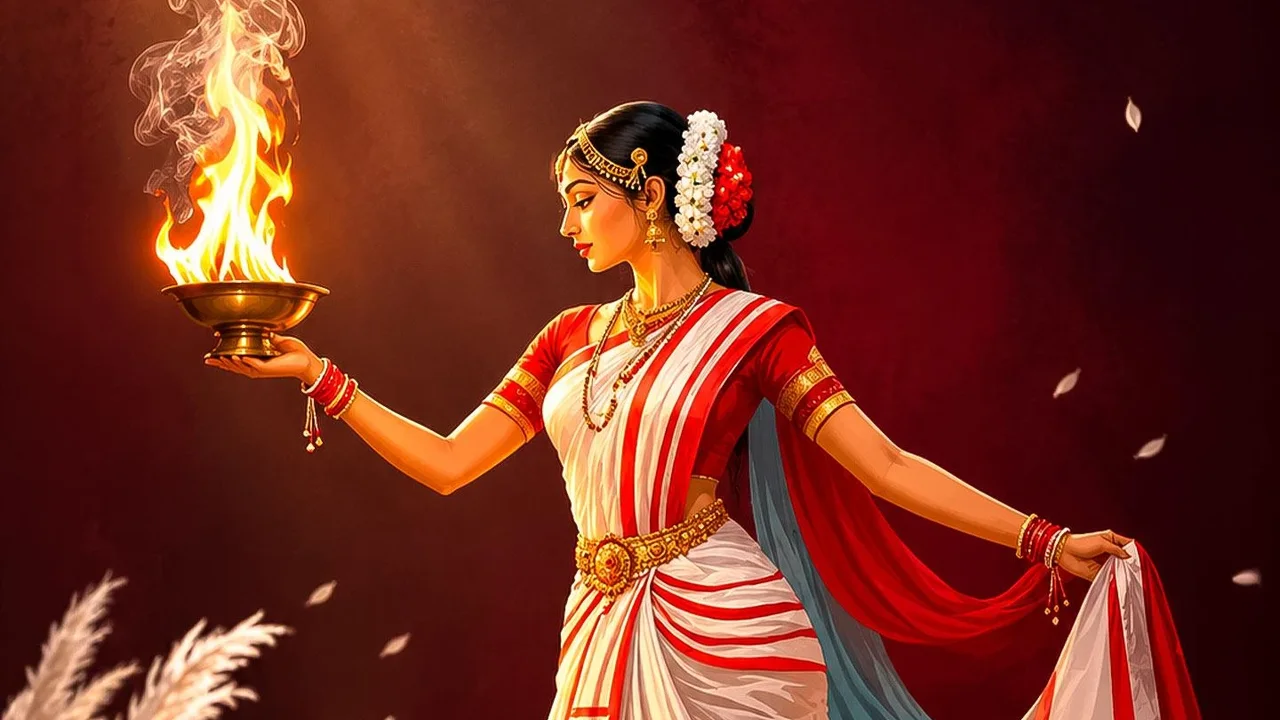
During the five days of Durga Puja, these sweets are more than just dessert. They are offerings (bhog) to the deity, gifts exchanged between friends and family, and the sweet conclusion to every festive meal. The ritual of 'mishti mukh', or sweetening the mouth, on Bijoya Dashami is a poignant moment where a morsel of a sweet marks the bittersweet farewell to the goddess. It symbolizes good wishes and the strengthening of community bonds. Whether it's a simple Narkel Naru made at home or an elaborate Sandesh from a famed 'Mishti Dokan', each sweet carries the essence of the festival—joy, togetherness, and devotion.