


The Lure of a Starry Night
For most of us, the brilliant canopy of stars that enchanted our ancestors is now a distant memory, washed out by the relentless glow of urban life. Seeing the Milky Way with the naked eye has become a rare privilege, a travel goal in itself. This has given
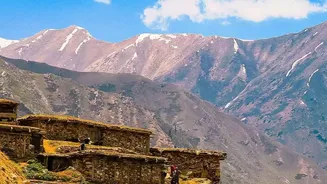
rise to astrotourism, where travellers seek out the planet's darkest corners to witness the cosmos in its full glory. In India, the high-altitude cold deserts of the Himalayas have emerged as world-class destinations for this pursuit. While Ladakh's Hanle is famously India's first official Dark Sky Reserve, neighbouring Himachal Pradesh offers equally stunning, naturally dark skies, particularly in the remote and beautiful Spiti Valley. These areas are now leveraging their pristine conditions to create unique celestial experiences.
What Makes a 'Dark-Sky' Area?
A dark-sky reserve or park is an area recognised for its exceptional starry nights and a commitment to keeping them that way. The main enemy is light pollution—the excessive and misdirected use of artificial light. A true dark-sky sanctuary benefits from natural advantages like high altitude, dry air, and sparse population, all of which reduce atmospheric distortion and ground-based light. The Spiti Valley, for instance, with its elevation of over 3,000 metres and arid climate, provides a perfect natural observatory. These conditions mean the air is thin, crisp, and free from the haze and humidity that plague lower regions, allowing starlight to travel to our eyes with breathtaking clarity.
Himachal's Protective Measures
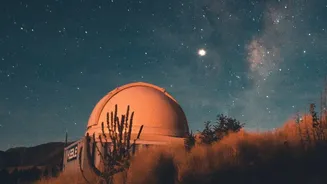
Protecting these natural advantages requires deliberate action. The core of protecting a dark sky lies in managing light pollution. This doesn't mean plunging communities into darkness, but rather using light intelligently. In and around areas like Spiti, community-led initiatives and government support are promoting responsible lighting practices. This includes using shielded light fixtures that direct light downward where it's needed, avoiding upward glare that creates 'sky glow'. It also involves using low-intensity, warm-coloured bulbs instead of harsh, blue-spectrum LEDs which scatter more light into the atmosphere. In July 2025, a community-run stargazing facility was inaugurated in Kaza, the main town of Spiti, complete with high-powered telescopes and local guides trained to offer astro-tours. This initiative empowers the local economy while formalising the commitment to preserving the night.
The View for the Astrotourist
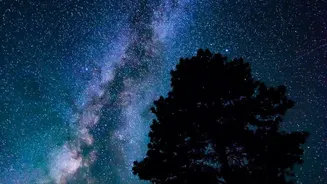
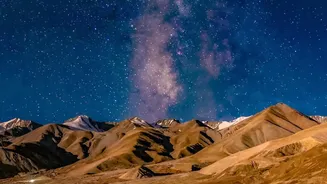
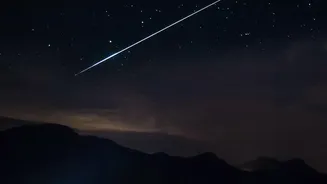
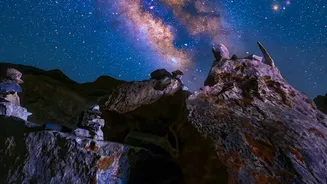
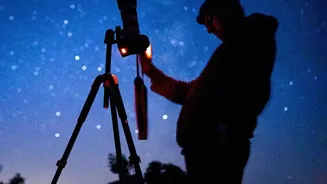
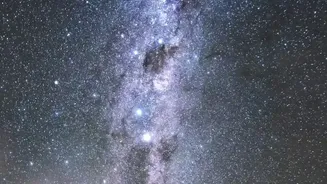
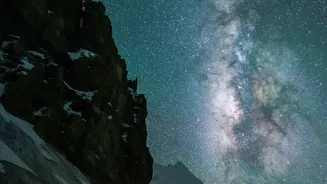
The result of these efforts is a celestial spectacle that leaves visitors spellbound. On a clear, moonless night in places like Kaza, Kibber, or near Chandratal Lake, the sky is not just dotted with stars; it is overflowing with them. The Milky Way arches across the horizon not as a faint smudge, but as a brilliant, textured river of light, its dust lanes clearly visible. Constellations pop with three-dimensional depth, and meteor showers become a dramatic display. Astrotourism packages in Spiti often include guided stargazing sessions, astrophotography workshops, and stays in local homestays whose owners are increasingly trained to share the wonders of the night sky. The experience is often described as spiritual, connecting travellers to the vastness of the universe against the backdrop of ancient monasteries.
Beyond Tourism: A Sustainable Future
Protecting the night sky is about more than just tourism. Light pollution disrupts the ecosystems of nocturnal wildlife, affecting the breeding and migration patterns of birds and insects. By adopting dark-sky friendly policies, these high-altitude communities are promoting a form of sustainable development that respects natural rhythms. This model creates a unique economic driver that is intrinsically tied to conservation. It provides livelihoods for local youth, strengthens the tribal economy, and positions Himachal as a forward-thinking destination. It’s a powerful example of how preserving a natural asset—in this case, darkness itself—can benefit both the environment and the people who call it home.