






The 'Semi' in Semicryogenic
To understand a semicryogenic engine, it helps to know what a fully cryogenic one is. Cryogenic engines, like the one on the upper stage of India's LVM3 rocket, use propellants that are gases at room temperature but are cooled to extreme sub-zero temperatures
to turn them into liquids. Typically, this means liquid hydrogen as fuel and liquid oxygen (LOX) as the oxidiser. A semicryogenic engine is a hybrid. It still uses liquid oxygen, which is cryogenic, but pairs it with a fuel that is liquid at normal temperatures: a highly refined form of kerosene, which ISRO calls 'Isrosene'. Because only one of the two propellants needs to be super-cooled, the system is 'semi' cryogenic. This seemingly small change has massive benefits.
A Simple Guide to Thrust
In rocketry, thrust is the force that pushes the rocket upwards, overcoming gravity. Think of letting go of an inflated balloon; the air rushing out in one direction pushes the balloon in the opposite direction. A rocket engine does the same thing on a massive scale, by burning propellants and expelling hot gases at incredibly high speeds. The more mass you can expel and the faster you can expel it, the greater the thrust. To launch heavier satellites or send missions deeper into space, rockets need engines that can generate significantly more thrust. ISRO's new semicryogenic engine, the SE-2000, is designed to produce 2,000 kilonewtons (kN) of thrust, which is roughly equivalent to 200 tonnes of force.
More Power, Less Hassle
The key advantage of the kerosene-based semicryogenic engine is its power and efficiency. Kerosene is much denser than liquid hydrogen. This means you can store more fuel mass in a smaller tank, which is a huge advantage in rocket design. Smaller tanks mean a lighter rocket structure, allowing more weight to be dedicated to the payload, like a satellite or a crewed capsule. Furthermore, handling room-temperature kerosene is far simpler, cheaper, and safer than managing liquid hydrogen, which must be kept at a frigid -253°C and requires complex, heavy insulation. This combination of higher energy density and easier logistics makes semicryogenic engines a powerful and practical choice for the heavy-lifting first stages of a rocket.
What the Recent Tests Mean
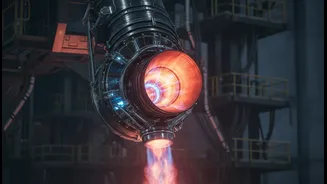
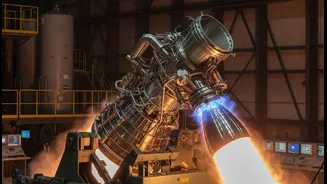
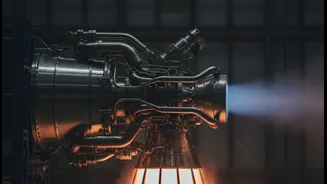
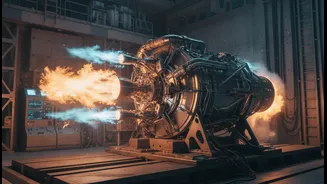
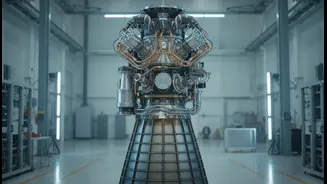
In late June 2026, ISRO successfully conducted a 'hot test' of the engine's Power Head Test Article (PHTA) at 88% of its target thrust, reaching 175 tonnes of force. The powerhead is like the heart of the engine; it's a complex assembly of turbopumps and pre-burners that force the propellants into the combustion chamber at immense pressures. Testing this component in isolation verifies that the most mechanically stressful parts of the engine can withstand the violent forces of a launch before attaching the main combustion chamber. This successful test gives ISRO the confidence to proceed toward a full-thrust demonstration at 200 tonnes, clearing the path for flight qualification.
Building India's Future in Space
This powerful new engine is not just an experiment; it is the future workhorse of India's space ambitions. The plan is to replace the current core stage of the LVM3 rocket, which uses less powerful and more toxic fuels, with a new stage powered by a single SE-2000 engine. This upgrade will significantly boost the LVM3's payload capacity, allowing it to lift 10 tonnes to Low Earth Orbit (up from 8 tonnes) and 5 tonnes to Geostationary Transfer Orbit (up from 4 tonnes). This extra muscle is critical for launching heavier communication satellites, components for the planned Bharatiya Antariksh Station, and future deep space and human spaceflight missions like Gaganyaan. It is also a key technology for ISRO's planned Next Generation Launch Vehicle (NGLV).