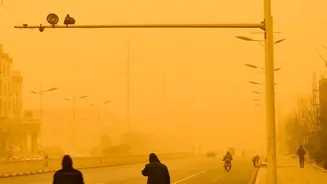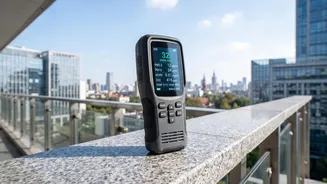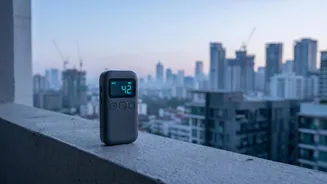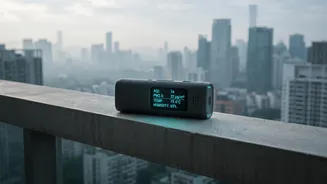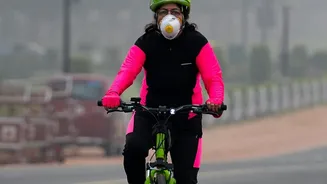

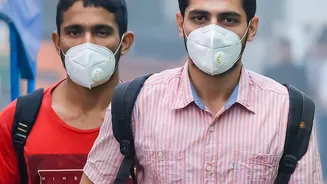


As winter arrives, a familiar haze settles over many Indian cities. This smog is not just fog; it's a mix of pollutants that can harm your health. Thankfully, technology offers a way to navigate this, right from your smartphone.
First, What Is the Air Quality Index (AQI)?
The Air Quality Index,
or AQI, is a simple tool for communicating how polluted the air is. It converts complex data about various pollutants—like PM2.5, PM10, and nitrogen dioxide—into a single number and a corresponding colour. In India, this scale runs from 0 to 500 and is divided into six categories: Good (Green), Satisfactory (Light Green), Moderate (Yellow), Poor (Orange), Very Poor (Red), and Severe (Maroon). The higher the number, the greater the health concern. The primary goal is to help you understand the potential health impact at a glance.
Choosing the Right AQI App for India
Several reliable apps can help you track the AQI. The government's official app is SAMEER, from the Central Pollution Control Board (CPCB), which provides data from official monitoring stations across the country. For those wanting more granular, hyperlocal data, apps like AQI India and IQAir AirVisual are popular choices. IQAir often provides real-time hourly data from a mix of government and private sensors, which can sometimes result in different readings compared to the 24-hour average data from government sources. Another government-backed option, SAFAR-Air, provides city-specific data and forecasts, particularly for major metro areas. Choosing one or two apps to cross-reference can give you a comprehensive picture.
Decoding the Numbers and Taking Action
Understanding what to do at each AQI level is key. Here’s a simple breakdown:
- Good (0–50) & Satisfactory (51–100): Air quality is considered safe for everyone. It's a great time for all outdoor activities.
- Moderate (101–200): Sensitive groups—like children, the elderly, and people with heart or lung conditions—may experience some breathing discomfort. It's wise for these individuals to reduce prolonged or heavy outdoor exertion.
- Poor (201–300): Most people may start to feel the effects, such as breathing discomfort, after prolonged exposure. It’s advisable for everyone to reduce strenuous activities like running outdoors.
- Very Poor (301–400): The risk of respiratory illness increases. Avoid all outdoor physical activity and try to stay indoors as much as possible.
- Severe (401+): This is a health emergency. Everyone should avoid all outdoor exposure and remain indoors with windows sealed. If you must go out, a well-fitting N95 mask is essential.
Timing Your Day Around Smog Peaks
Pollution levels aren't static; they change throughout the day. Smog is often at its worst during the early morning and late evening, partly due to traffic rush hours and temperature inversions that trap pollutants near the ground. On days with 'Moderate' or 'Poor' AQI, the safest window for any essential outdoor activity is typically mid_day, from late morning to early afternoon, when pollution levels may temporarily dip. Use your app to check the hourly forecast. If you see the AQI is predicted to be lower at 2 PM than at 8 AM, plan your walk or errands for that less_polluted window.
Beyond the App: A Holistic Approach
AQI apps are powerful tools, but they are part of a larger strategy for protecting your health. On days with high pollution, focus on improving your indoor air quality. Keep windows and doors closed to prevent pollutants from entering. Using an air purifier with a HEPA filter can significantly reduce the concentration of harmful indoor particles. Additionally, wearing a certified N95 or N99 mask is crucial if you have to step outside in 'Poor' or worse conditions, as simple cloth masks offer little protection against fine particulate matter. Supporting your body's defenses with a diet rich in antioxidants, like fruits and green vegetables, and staying hydrated can also help mitigate some of the inflammatory effects of pollution.