




The Foundation Guessing Game
For decades, finding the right foundation shade has been a process of trial and error. Swatching a colour on your hand or jawline under the questionable lighting of a department store is a familiar ritual for many. This method is flawed from the start;
the skin on your hand is rarely the same colour as your face, and store lighting can dramatically alter how a shade appears. The alternative, buying online, is even more of a gamble, relying on edited product photos and educated guesses. This frustrating experience often leads to wasted money and products. Studies have shown that a significant percentage of online beauty returns are due to shade mismatches, highlighting just how difficult the traditional process can be. It’s a common problem that has left many consumers wishing for a more accurate and reliable solution.
How AI Finds Your Perfect Match
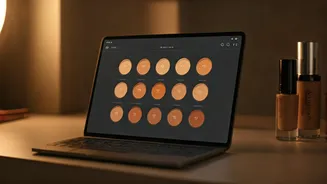
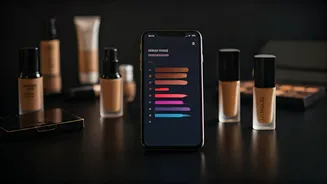
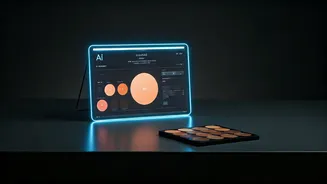
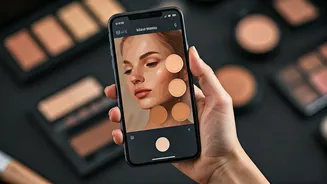
Artificial intelligence is changing the game by turning your smartphone into a sophisticated skin analysis tool. Using your phone's camera, AI-powered shade finders employ computer vision and deep learning algorithms to do what the human eye can't. These systems analyze a selfie or a short video of your face, capturing thousands of data points. The technology can identify not just your primary skin tone, but also your subtle undertones—the warm, cool, or neutral hues beneath the surface that are critical for a perfect match. Some advanced tools even use spectroscopy, analyzing how light from your phone's screen reflects off your skin to get a scientifically precise reading. By training on vast datasets of diverse skin tones, these algorithms learn to map your unique complexion to the ideal product in a brand's inventory.
From In-Store Swatch to In-Home Scan
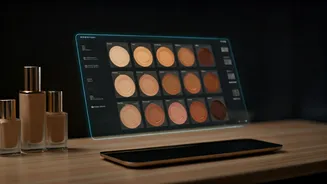
Leading beauty brands and retailers are rapidly adopting this technology, offering it through their websites and mobile apps. The process for the user is remarkably simple. Typically, you'll be guided to take a photo or scan your face in natural light, without makeup. The AI then gets to work, often delivering a top recommendation in under a minute. Companies like Perfect Corp, ModiFace (owned by L'Oréal), and IlluminateAI partner with brands such as Clarins, Estée Lauder, and MAC to power these tools. Some platforms can analyze up to 90,000 different skin tones, offering hyper-personalized suggestions. Many also integrate augmented reality (AR) for a virtual try-on, allowing you to see exactly how the recommended shade will look on your face before you buy.
Beyond Convenience: A More Inclusive Future
The impact of AI in shade matching extends far beyond individual convenience. It's a powerful force for inclusivity in the beauty industry. For years, consumers with very light or very dark skin tones, as well as those with less common undertones, have struggled to find products that match. AI provides brands with detailed data on the full spectrum of human skin colour. By using inclusive frameworks like the Monk Skin Tone Scale, some AI systems are specifically designed to perform better across all complexions, helping to correct for historical biases in beauty product development. This data-driven insight encourages companies to expand their shade ranges and formulate products for demographics that were previously overlooked, ensuring more people can find their true match.
Are the Robots Always Right?
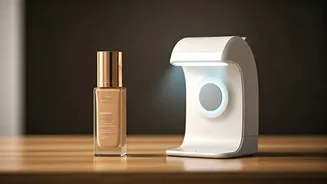
While AI shade matching is a massive leap forward, it’s not yet foolproof. The accuracy of a smartphone-based scan can be heavily influenced by variables like your camera's quality and, most importantly, lighting conditions. A scan taken in a dimly lit room will produce a different result than one taken in bright, natural daylight. To combat this, some companies are developing in-store devices with calibrated lighting or asking users to hold a color-reference card next to their face to standardize the results. Furthermore, the algorithms are only as good as the data they are trained on. If the training data isn't sufficiently diverse, it can lead to algorithmic bias, resulting in less accurate recommendations for certain skin tones.