



The First ODI Double Century
On November 2, 2013, in a series-decider against Australia in Bengaluru, Rohit Sharma truly announced his arrival as an ODI giant. While he had shown flashes of brilliance since his 2007 debut, this was the day he broke into the format's most elite club.
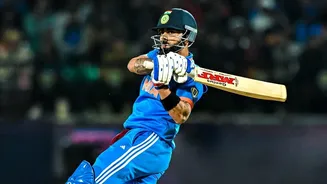
He became only the third batsman in history, after Sachin Tendulkar and Virender Sehwag, to score a double century in a One Day International. Sharma’s stunning 209 came off just 158 balls, an innings that married caution with carnage. He started patiently, building his innings before unleashing a furious assault, hitting a then-world record 16 sixes. The knock powered India to a mammoth total of 383, securing a 57-run victory and the series win. More than just a score, this innings was a statement; it was the birth of Rohit the ODI opener, a role in which he would go on to break countless records.
The Unthinkable 264
Just a year after his first double ton, Rohit Sharma did the unthinkable. On November 13, 2014, against Sri Lanka at Eden Gardens, he didn't just score another double century; he rewrote the record books entirely. Returning from an injury, he was dropped on just four runs—a mistake that would haunt Sri Lanka forever. What followed was a masterclass in pacing an ODI innings. He moved to his fifty in 72 balls, his hundred in 100, and then exploded. He scored the next 164 runs in a whirlwind 73 balls, finishing with a monumental 264. This remains the highest individual score in ODI history. The innings included an astounding 33 fours and 9 sixes, as he single-handedly outscored the entire Sri Lankan team, which was bowled out for 251. It was a freakish, once-in-a-generation performance that solidified his status as a modern-day legend.
The 2019 World Cup Masterclass
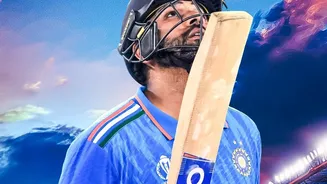
The 2019 ICC Cricket World Cup in England was Rohit Sharma’s playground. In what can only be described as a run of supreme form, he put on a batting exhibition throughout the tournament. He became the first and only batsman to score five centuries in a single World Cup edition, breaking Kumar Sangakkara's record of four. His hundreds came against top opposition: South Africa, Pakistan, England, Bangladesh, and Sri Lanka. Each century was a testament to his adaptability and temperament on the biggest stage. He finished the tournament as the highest run-scorer with 648 runs from nine matches at an average of 81. Though India's campaign ended in a heartbreaking semi-final loss, Rohit's performance was a display of batting perfection that is etched in World Cup history.
The 2007 T20 World Cup Final Cameo
Long before he was the established 'Hitman', a young Rohit Sharma played a crucial, often-overlooked innings in the final of the inaugural 2007 T20 World Cup. In a high-pressure final against arch-rivals Pakistan, India's innings was stuttering. While Gautam Gambhir anchored one end with a brilliant 75, wickets fell at the other. Walking in late, the 20-year-old Sharma played a fearless cameo, scoring an unbeaten 30 off just 16 balls. His knock, which included two fours and a six, pushed India’s total to 157/5. In a match that India won by just five runs, those 30 runs were invaluable. As his teammate Yuvraj Singh later noted, it was arguably one of the most important knocks of the tournament, showcasing the calm head and big-match temperament that would become his trademark.
The IPL Dynasty Builder
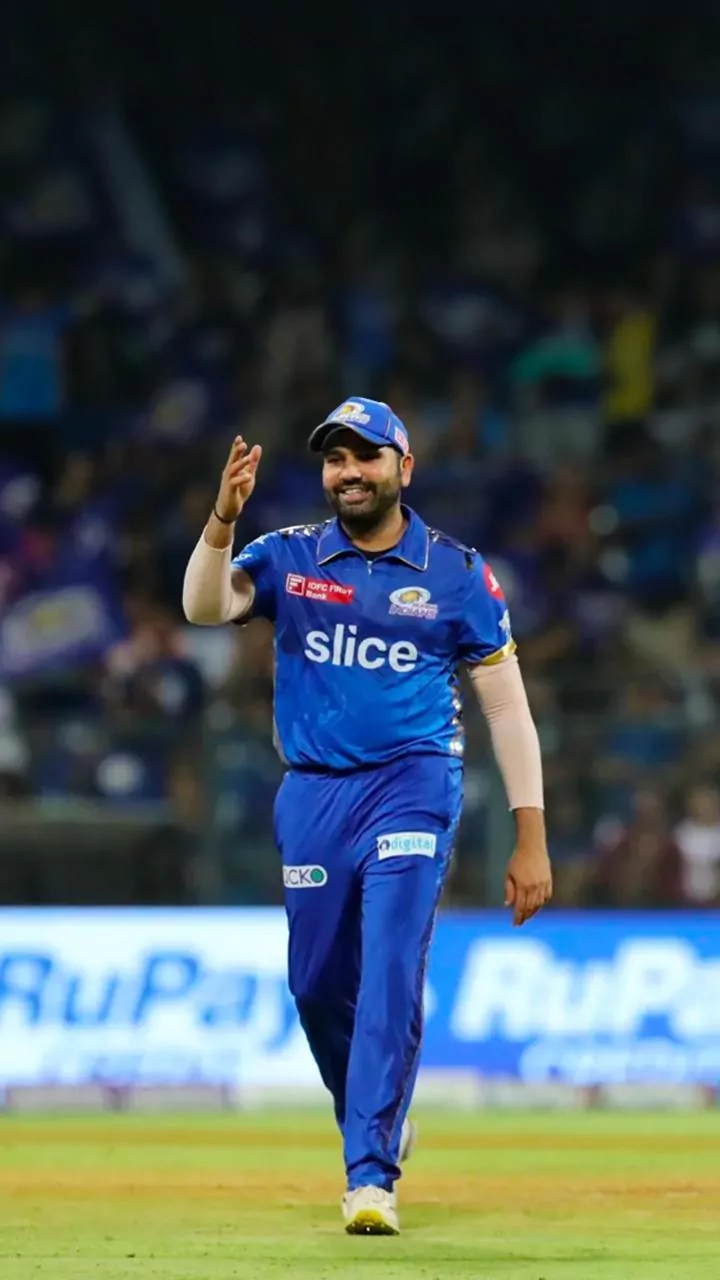
While his international heroics are legendary, Rohit Sharma's iconic status is equally defined by his leadership in the Indian Premier League (IPL). After being appointed captain of the Mumbai Indians midway through the 2013 season, he transformed the franchise's fortunes. He led them to their maiden title that very year and went on to win four more in 2015, 2017, 2019, and 2020. With five titles as captain, he is the joint-most successful skipper in IPL history alongside MS Dhoni. His captaincy is marked by a calm demeanor, tactical intelligence, and an ability to nurture young talent. Building a dynasty in the high-stakes, fast-paced world of the IPL cemented his legacy not just as a world-class batsman, but also as one of cricket's shrewdest leaders.