





Redefining The 'Core'
Before comparing workout styles, it's crucial to understand what the 'core' really is. It’s not just the six-pack muscles (rectus abdominis). Your core is a complex, three-dimensional system of muscles that includes your abs, obliques, lower back, glutes,
and pelvic floor. These muscles work together as a stabilising unit for your entire body. True core stability isn't about how many crunches you can do; it's about how well this entire system works together to control movement and protect your spine.
Calisthenics: Training Movements, Not Just Muscles
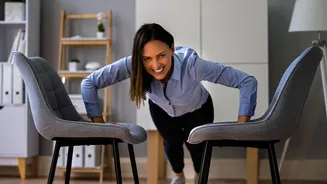
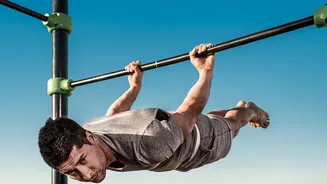
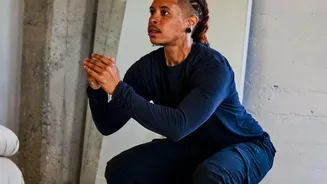
Calisthenics is a form of strength training that uses your own bodyweight as resistance. Think of exercises like push-ups, planks, squats, and pull-ups. These are all 'compound' exercises, meaning they engage multiple muscle groups and joints at once. When you perform a plank, for example, you're not just working your abs. Your entire core system, along with your shoulders and legs, must fire in coordination to keep your body in a straight line. This forces your stabiliser muscles to work together as a unit, which directly builds functional strength and improves the communication between your brain and your muscles.
The Logic of Isolation Machines
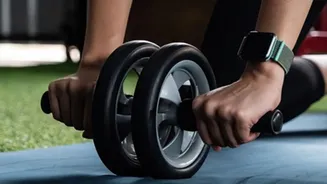
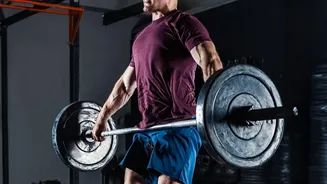
Gym equipment, particularly 'isolation' machines like the ab crunch machine or the back extension bench, are designed to do the opposite. They target one specific muscle or muscle group at a time. The machine provides stability for you, locking your body into a fixed path of motion so you can focus all the effort on, for example, your lower back or your chest. This approach is effective for building size (hypertrophy) in a specific muscle, which is why it's popular in bodybuilding. However, by isolating a muscle, you're training it to work in a vacuum, without the support of the surrounding stabiliser muscles.
The Stability and Posture Connection
This is where the distinction becomes critical for posture and stability. Poor posture is often the result of muscular imbalances and a weak core that cannot properly support the spine. Calisthenics addresses this head-on. Because bodyweight movements require constant self-stabilisation, they naturally correct these imbalances and strengthen the core as an integrated system. You learn to control your body in space. Isolation machines, on the other hand, can sometimes worsen imbalances. If you strengthen your abs on a crunch machine but neglect the supporting muscles in your back and glutes, you aren't building a truly functional and stable core. Posture is a full-body skill, and calisthenics trains it as such.
Functional Strength for Everyday Life
Ultimately, the goal of a strong core is to improve your daily life. Calisthenics excels at building this 'functional' strength. The ability to hold a perfect plank translates directly to the core control needed to carry heavy groceries, lift a child without straining your back, or sit at a desk all day without slumping. The strength built on an isolation machine is less transferable because daily life rarely asks you to move a single joint against resistance while the rest of your body is perfectly supported. Calisthenics prepares your body for the dynamic, coordinated challenges of the real world.