


Saturn Takes Centre Stage
October kicks off with a major planetary event. On October 4, Saturn will be at opposition. This means Earth is positioned directly between the Sun and Saturn, making the ringed planet appear at its biggest and brightest for the year. It will be visible
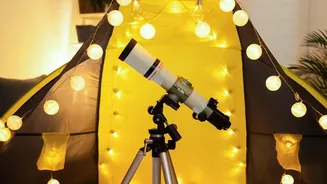
all night long, rising in the east around sunset, reaching its highest point around midnight, and setting at sunrise. While you can spot Saturn as a steady, bright point of light with the naked eye, a small telescope will reveal its magnificent rings, a truly unforgettable sight. Look for it in the constellation Cetus for the best view.
An Evening of Shooting Stars: The Draconids
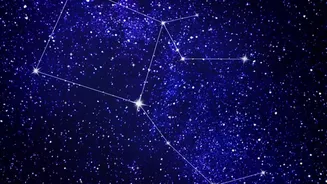
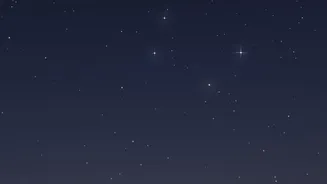
Get ready for the first of two meteor showers this month. The Draconid meteor shower is set to peak on the night of October 8-9. Unlike many other showers that are best seen in the pre-dawn hours, the Draconids are an evening affair. The best time to watch is just after nightfall, as its radiant point in the constellation Draco the Dragon is highest in the sky. This year’s viewing conditions are excellent, as the shower peaks just before the New Moon on October 10, meaning dark, moonless skies will make it easier to spot the meteors. While typically a modest shower with about 10 meteors per hour, the Draconids are known for occasional surprise outbursts.
The Best Nights for Stargazing
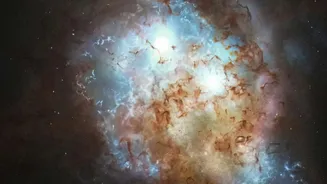
The darkest skies of the month arrive with the New Moon on October 10. With no moonlight to wash out fainter objects, this is the perfect time to aim your binoculars or telescope at deep-sky treasures. It's an ideal window to hunt for the Andromeda Galaxy, our closest major galactic neighbour. From a dark location away from city lights, you might even spot it as a faint, fuzzy patch with your unaided eye. These moonless nights are a gift to anyone wanting to explore the starfields of the Milky Way before the season ends.
Halley's Comet Debris: The Orionid Meteor Shower
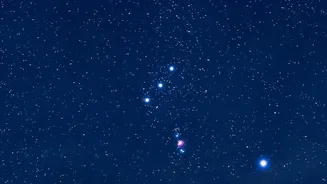
October's second celestial light show, the Orionid meteor shower, peaks on the night of October 21-22. Produced by dust and debris left behind by the famous Halley's Comet, the Orionids are known for their fast, bright meteors. At its peak, you can expect to see up to 20 meteors per hour under ideal conditions. This year, a bright waxing gibbous moon will be present for part of the night, which could wash out some of the fainter meteors. For the best experience, plan your viewing for the hours just before dawn, after the moon has set. Lie back, look toward the constellation Orion, and enjoy the show.
The Hunter's Moon and Sharad Purnima
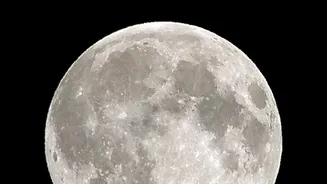
The month concludes with the full Hunter's Moon on October 26. This full moon is significant in many cultures, and in India, it coincides with the festival of Sharad Purnima. On this night, the Moon is celebrated, and it’s a time when many devotees fast and make offerings under the bright moonlight. While the full moon's brightness isn't ideal for viewing faint stars, its own brilliant appearance is a spectacle worth admiring as it rises on the eastern horizon.