







The Humidity Hurdle for Your Heart
Running or cycling on a hot, dry day is tough. But when you add high humidity, your body faces a completely different challenge. Normally, we cool down through sweat evaporation. The moisture leaves our skin, taking heat with it. However, when the air
is already saturated with moisture—as it is during India's monsoon or pre-monsoon seasons—your sweat has nowhere to go. It can't evaporate efficiently. As a result, your body's core temperature can rise more quickly. To compensate, your heart has to work harder, pumping more blood to the skin to try and release heat. This means your heart rate will be significantly higher for the same level of effort compared to a dry day. This increased cardiovascular strain not only makes your workout feel much harder but also increases the risk of dehydration and heat-related illnesses like heat exhaustion.
Why the Pool Is a Perfect Solution
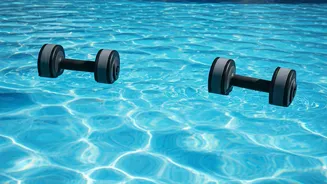
Swapping your usual outdoor cardio for a pool session isn't a compromise; it's a smart upgrade. The most immediate benefit is the water's cooling effect. It constantly pulls heat away from your body, preventing overheating and keeping your heart rate from spiking unnecessarily. This allows you to maintain a higher intensity for longer than you could on a humid trail. Furthermore, water is buoyant. When you're submerged up to your neck, your body bears only 10% of its weight. This dramatically reduces the impact on your joints—your knees, hips, and ankles will thank you. This makes pool workouts ideal for everyone, from seasoned runners looking for active recovery to individuals with joint pain or those just starting their fitness journey. Water also provides 360-degree resistance, turning every movement into a chance to build strength without the need for weights.
Cardio Beyond Swimming Laps
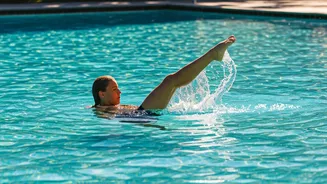
You don’t need to be a competitive swimmer to get a fantastic cardio workout in the pool. Many effective exercises require minimal swimming skill and can be done in the shallow end. Consider these low-impact, high-reward movements: - **Aqua Jogging:** Simply run in place in chest-deep water. Focus on bringing your knees up high and pumping your arms. The water's resistance will elevate your heart rate without any jarring impact. - **Treading Water:** An excellent full-body workout. Try intervals of 30 seconds of intense treading followed by 30 seconds of rest. For an extra challenge, try lifting your hands out of the water. - **Flutter Kicks:** Hold onto the side of the pool and extend your legs behind you. Perform quick, powerful flutter kicks, just as you would when swimming. This targets your core and leg muscles. - **Jumping Jacks:** A pool-based version is much kinder to your joints. The resistance of the water slows the movement down, forcing your muscles to work harder through the entire range of motion.
Structuring Your First Pool Workout
Diving into a new routine can be intimidating, so start simple. A great way to begin is with an interval-based workout. After a good warm-up, this structure can provide a balanced and effective session. * **Warm-up (5 minutes):** Walk back and forth across the shallow end of the pool, swinging your arms to get the blood flowing. * **Main Set (20 minutes):** Alternate between different exercises. For example: * 2 minutes of aqua jogging. * 1 minute of rest (gentle walking). * 2 minutes of flutter kicks holding the wall. * 1 minute of rest. * 2 minutes of jumping jacks. * 1 minute of rest. * Repeat the cycle two or three times. * **Cool-down (5 minutes):** Perform gentle stretches in the water. The buoyancy will help you achieve a deeper stretch in your hamstrings, quads, and back.
Making the Transition Smoothly
Before you jump in, check your local pool's schedule for lap swimming or open public hours. Remember that even though you're in the water, you are still sweating, so it's crucial to stay hydrated. Keep a water bottle at the edge of the pool and drink before, during, and after your workout. Most importantly, listen to your body. The sensation of working out in water is different. Your muscles will be working against constant resistance, so you might feel a different kind of fatigue. Start at a moderate intensity and gradually increase the duration and effort as you become more comfortable with the new environment.