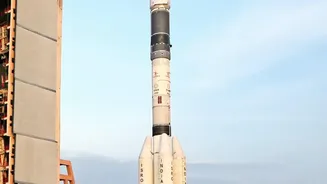








India’s Next Great Interplanetary Leap
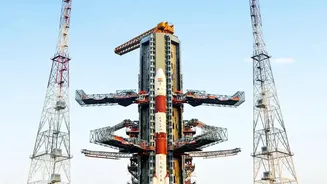
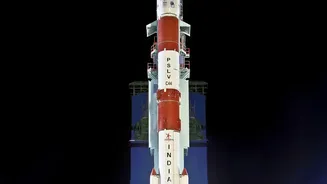
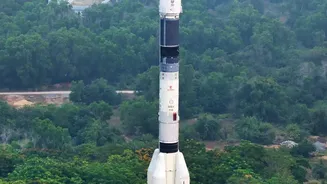
Following the historic successes of the Chandrayaan moon missions and the Mangalyaan Mars orbiter, the Indian Space Research Organisation (ISRO) is setting its sights on the second planet from the sun. Officially named the Venus Orbiter Mission, Shukrayaan
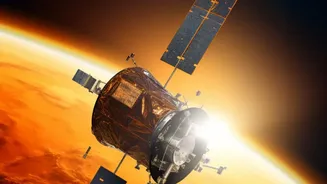
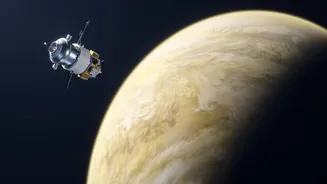
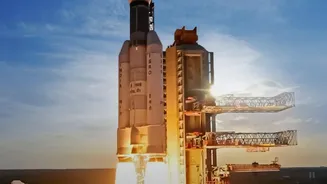
represents India's first dedicated mission to our nearest planetary neighbour. The mission, approved by the government with a launch now targeted for 2028, will place a sophisticated orbiter around Venus to conduct a comprehensive global survey. This endeavour places India in a select group of space agencies that have successfully sent probes to Venus, reinforcing its status as a major player in planetary exploration. The primary goals are to understand the planet's complex and hostile environment, from its mysterious surface to the dynamics of its super-rotating atmosphere.
The Hellish Atmosphere of Earth's Twin
Venus may be our twin in size, but its environment is a cautionary tale. The planet is smothered by a dense atmosphere primarily made of carbon dioxide, creating a runaway greenhouse effect that cooks its surface to over 460°C. This thick atmosphere also exerts a surface pressure over 90 times that of Earth's. Instead of water, thick clouds of corrosive sulfuric acid perpetually shroud the planet, making direct observation of the surface impossible in visible light. Understanding how and why Venus evolved so differently from Earth is a key driver for scientists. This hostile atmosphere, with its extreme temperatures, crushing pressure, and toxic chemistry, is precisely what makes it a compelling target for study. By deciphering the processes at play on Venus, scientists hope to gain invaluable insights into climate change, atmospheric dynamics, and the conditions that can make a planet uninhabitable.
A Closer Look at the Scientific Toolkit
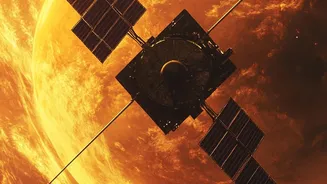
To peer beneath the clouds and analyze this unique environment, Shukrayaan will be equipped with a suite of advanced scientific instruments. A key focus is atmospheric chemistry. The payload will include sensors designed to study the composition and dynamics of the Venusian atmosphere. One of the flagship instruments will be a high-resolution Synthetic Aperture Radar (SAR), which can map the planet's surface geology and volcanic activity by penetrating the dense cloud cover. Another groundbreaking instrument is a ground-penetrating radar, which would provide the first-ever look at Venus's subsurface stratigraphy. Additional sensors will include an infrared camera to search for volcanic hotspots, a lightning detector, and spectrometers to analyze atmospheric gases. International collaboration is also key, with Sweden providing a Venusian Neutrals Analyser to study the interaction between the solar wind and the planet's atmosphere.
Unlocking Venus's Deepest Secrets
With its powerful sensor suite, ISRO aims to answer fundamental questions about Venus. The atmospheric sensors will create detailed maps of its chemical makeup, helping scientists understand the extreme greenhouse effect. The mission will investigate how the solar wind interacts with the Venusian ionosphere, a process crucial for understanding atmospheric escape and how the planet may have lost its water. The search for active volcanism is another high-priority objective; confirmation of active volcanoes would transform our understanding of the planet's geology. By studying cloud dynamics and searching for lightning, Shukrayaan will provide a more complete picture of Venusian weather. Ultimately, the mission's data will help piece together the planet's evolutionary history and explain why a world so similar to our own took such a drastically different path.
A New Global Race to Venus
ISRO's Shukrayaan mission is part of a renewed global interest in exploring Venus. After decades of being relatively overlooked in favor of Mars, the 'morning star' is once again a focus for the world's leading space agencies. NASA is planning two ambitious missions in the late 2020s: VERITAS, an orbiter to map the surface in high resolution, and DAVINCI, a probe that will descend through the planet's atmosphere. The European Space Agency (ESA) is also developing its EnVision orbiter, planned for launch in the early 2030s to provide a holistic view of the planet. India's Shukrayaan, with its unique instruments and scientific goals, is poised to make a significant contribution to this new era of Venus exploration, ensuring the nation plays a crucial role in the collaborative international effort to understand our sister planet.