



The Destination vs. The Journey
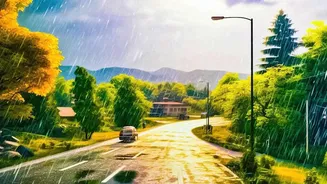
A clear sky at your resort in Lonavala or Munnar says nothing about the journey to get there. The highway connecting two cities can be a world away in terms of weather and road conditions. A light drizzle at your starting point can escalate into a torrential
downpour midway through your drive, drastically reducing visibility and making roads treacherous. The weather forecast you checked for the city doesn't account for the microclimates along the route, especially in hilly or coastal areas where conditions can change in minutes. This is the core deception of relying solely on a destination forecast: the real risks often lie on the road itself, not at the endpoint.
Beyond Weather Apps: Checking The Route
To get a true picture of your journey, you need to think beyond standard weather apps. Start by checking for real-time updates from highway authorities. The National Highways Authority of India (NHAI) collaborates with services like Google Maps and Mappls to provide information on road closures, diversions, and accident-prone zones. Social media groups and forums dedicated to specific routes can be invaluable for on-the-ground reports from fellow travellers. Before leaving, search for your route and look for recent mentions of waterlogging, landslides, or heavy traffic. For landslide-prone regions like Kerala or the Himalayas, specialized apps are being developed to predict instability based on rainfall thresholds. Don't rely solely on GPS for the fastest route; it might not be the safest one. Cross-reference with multiple sources to understand the actual conditions you'll be facing.
Hidden Hazards: Potholes, Landslides, and Waterlogging
Monsoon rains introduce a unique set of hazards that go beyond just a slippery surface. Waterlogging is a major issue, concealing deep potholes or debris that can damage your vehicle or cause an accident. Driving through standing water is always a gamble; just a foot of water can be enough to make many cars float, and six inches can cause a loss of control. In hilly terrains, the risk of landslides increases dramatically with heavy rain. Areas in the Himalayas and the Western Ghats are particularly vulnerable. Be extra cautious on ghat sections and listen to local advice; if you hear warnings about an unstable road, it's better to wait or find an alternative route. Remember that the first rains after a dry spell often create the most slippery road conditions as oil and dirt mix with water.
Your Monsoon-Ready Emergency Kit
A standard first-aid kit isn't enough for a monsoon road trip. Your emergency supplies should be tailored to the specific challenges of the season. Pack a tow rope, as getting stuck in mud or a waterlogged area is a real possibility. Include essentials like a powerful flashlight with extra batteries, a portable power bank for your phone, and non-perishable snacks and drinking water in case you're stranded for a few hours. Waterproof bags are crucial for protecting electronics and important documents. A basic toolkit, jumper cables, and a tyre inflator can also be lifesavers. It’s also wise to keep a few old towels or rags in the car. Finally, ensure you have a fully charged phone and a car charger to stay connected and access real-time information.
Defensive Driving for Monsoon Conditions
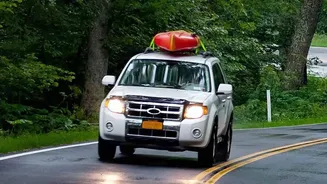
Safe monsoon driving requires adjusting your technique. The most important rule is to slow down significantly to give yourself more time to react. Increase the distance between your vehicle and the one in front, as braking distances are longer on wet roads. Avoid sudden braking or sharp turns, which can cause your car to skid. If you encounter a waterlogged patch that you must cross, stay in a low gear and keep the engine revving steadily to prevent water from entering the exhaust. If your car begins to hydroplane—losing contact with the road and sliding on water—do not panic or slam on the brakes. Gently ease off the accelerator and steer in the direction you want to go until the tyres regain traction. Always keep your headlights on for better visibility, even during the day.