





A New Lunar Gold Rush
The global space industry is undergoing a seismic shift. For decades, lunar exploration was the exclusive domain of national space agencies with colossal budgets. Today, a new race to the Moon is on, but this time it’s driven by commercial interests.
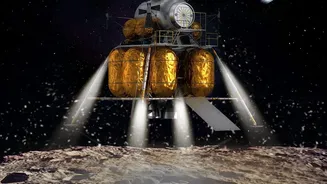
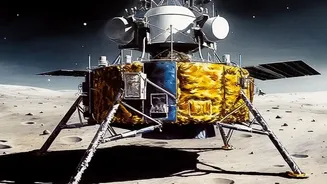
The market for delivering payloads to the lunar surface is exploding, with NASA's Commercial Lunar Payload Services (CLPS) program leading the charge by partnering with private companies. This has created a robust demand for not just landers, but for everything they can carry—including robotic rovers. The global lunar lander market, valued at $3.8 billion in 2025, is projected to surge to $10.6 billion by 2034. This expansion is creating unprecedented opportunities for companies that can provide reliable and affordable lunar mobility.
India's Moment Has Arrived
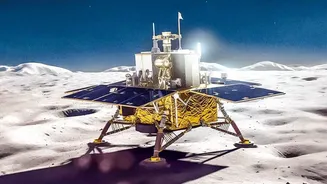
Fresh off the historic success of the Chandrayaan-3 mission, which made India the first nation to land near the lunar south pole, the country's space sector is buzzing with confidence and ambition. Leveraging this momentum, the Indian government and ISRO are actively fostering a vibrant private space ecosystem. With the Indian Space Policy 2023 officially opening the doors for private firms to undertake end-to-end space activities, the nation's nearly 450 space-tech startups are ready to capture a larger slice of the global market. India aims to grow its share of the $360 billion global space economy from 2% to over 8% in the next decade, with a projected value of $44 billion by 2033.
The Low-Cost Revolution
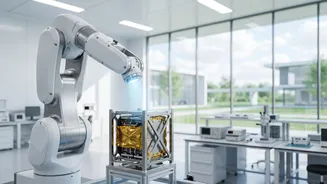
The key advantage for Indian startups is their ability to innovate at a fraction of the traditional cost, a principle often dubbed 'frugal innovation'. This isn't about cutting corners; it's about smart engineering, leveraging local manufacturing ecosystems, and developing new technologies. For rovers, cost reduction comes from several areas. One approach is standardization, creating modular rover platforms similar to the 'CubeSat' revolution that dramatically lowered the cost of satellite launches. Another is the use of novel, lightweight materials and advanced, low-power electronics. Bengaluru-based Kepler Aerospace, for instance, founded by ISRO veterans, is developing advanced satellite and defence technology, showcasing the high-calibre talent driving this sector. Companies like ORBITBeyond are even establishing global space systems centres in India to design and build landers and rovers for worldwide missions, citing the country's strong engineering base and supportive government policies.
Who Needs a Low-Cost Rover?
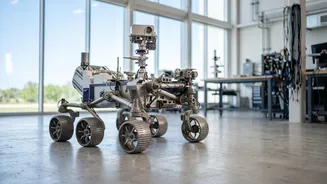
The customers for these affordable rovers are the growing number of private companies planning lunar landings. American firms like Astrobotic Technology and Intuitive Machines are already key players in NASA's CLPS initiative, but with over 90 lunar missions planned globally through 2035, the market is wide open. An Indian-built rover could be an attractive payload for a lander mission from the US, Japan, or Europe. These rovers aren't just for show; they are mobile science platforms designed to carry instruments for prospecting resources like water ice, studying lunar geology, or testing new technologies in the harsh lunar environment. By offering 'mobility-as-a-service', startups can dramatically lower the barrier to entry for scientists and other customers who want to conduct experiments on the Moon without having to build a rover from scratch.
Navigating the Challenges
The path forward is not without obstacles. Indian space startups face significant challenges, including the need for more seed-stage investment, as space ventures require large upfront capital and have long development cycles. Access to sophisticated testing facilities, which are largely controlled by ISRO, remains a bottleneck for rapid prototyping. Furthermore, the absence of a comprehensive national space law creates regulatory uncertainty for private players. However, initiatives like the SpaceTech Innovation Network (SpIN) and collaborations between ISRO and companies like Microsoft aim to provide crucial support, from technical mentoring to market access, helping these startups scale and become enterprise-ready.