



Australia’s Organised Might
The Australian Socceroos enter the 2026 World Cup with a clear and established identity: they are a unit defined by organisation, relentless work rate, and physical intensity. Under coach Tony Popovic, a meticulous disciplinarian, Australia has honed
a pragmatic style that makes them incredibly difficult to break down. They typically operate in a compact defensive shape, often a 3-4-2-1, prioritizing structural security over possession. This isn't a team that will dominate the ball; instead, they control games by dictating where the opposition can play, compressing space between their defensive and midfield lines, and frustrating more technically gifted opponents. Their strength lies in their collective ethos. Players like the combative Jackson Irvine anchor the midfield, breaking up play and launching quick transitions. While they may lack a global superstar on the level of their opponent, their unity and knockout-stage experience from 2022 make them a dangerous and resilient tournament team.
The Salah Factor: Egypt’s Talisman
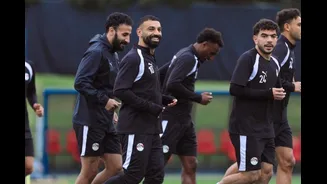
For Egypt, the conversation always begins and ends with Mohamed Salah. Now 34 and likely in his final World Cup, Salah carries the hopes of a nation on his shoulders. He is not just a player; he is Egypt's entire attacking system and emotional foundation. Manager Hossam Hassan has built the team to maximize Salah's influence, often deploying him in a more central playmaking role to find pockets of space and create chances for himself and others. During a dominant, undefeated qualifying campaign, Salah was the undisputed leader, scoring nine goals. The Pharaohs' entire strategy revolves around their defensive solidity and their ability to get the ball to Salah in transition. The immense pressure on him is also Egypt's biggest vulnerability; if a team can successfully nullify Salah, Egypt's attack can often look blunt.
The Tactical Battleground
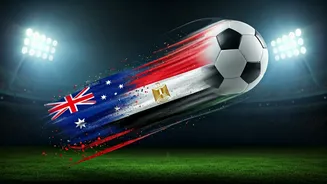
This match presents a fascinating clash of styles. Australia, under Popovic, will likely cede possession and look to defend in a compact block, frustrating Egypt and waiting for opportunities to counter-attack. Their high-intensity press and discipline are designed to disrupt opponents and create turnovers. Egypt, meanwhile, will look to use the ball to find Salah and fellow attacker Omar Marmoush in space, relying on quick, vertical passes and combinations. The key battle will be on the flanks. Australia's wing-backs are crucial to their system, providing both defensive cover and attacking width. Egypt will try to exploit any space left behind them with the speed of their forwards. The question is whether Australia's disciplined structure can contain Salah's creative genius. Forcing him wide and doubling up on him will be central to the Socceroos' game plan.
Beyond the Stars
While the spotlight will be on Salah, other players will be pivotal. For Egypt, the emergence of forward Omar Marmoush provides a crucial second attacking threat, reducing the predictability and pressure on Salah. In midfield, Mohamed Elneny's experience is key to controlling the tempo and protecting the defense. Australia will rely on its defensive spine, anchored by the towering Harry Souttar, and the tireless work of midfielders like Aiden O'Neill. A potential wildcard for the Socceroos is young forward Nestory Irankunda, a player with the individual spark and long-range shooting ability to produce a moment of magic, even when the team is starved of possession. His ability to provide a game-changing moment could be Australia's answer to Salah's brilliance.
The Verdict: Can He Do It?
So, can Mohamed Salah single-handedly power Egypt to the Round of 16? He certainly has the capacity to decide the match with a single moment of brilliance, something he has done for club and country countless times. However, football at this level is often a battle of systems. Australia's greatest strength is their ability to execute a disciplined game plan and nullify individual threats through superior organisation. They are built to frustrate teams like Egypt. If the Socceroos can maintain their defensive shape, stay compact, and limit the space for Salah to operate in, they have an excellent chance of grinding out a result. The game will likely hinge on a few key moments: a set piece, a rapid counter-attack, or a flash of genius from Salah. While Egypt possesses the game's most potent weapon, Australia's collective strength and tactical discipline might just be the shield that is strong enough to withstand it.