





The Craftsmanship We Overlook
When we talk about regional sweets, we often focus on the familiar comfort they bring. However, this nostalgic lens can obscure the incredible artistry involved in their creation. These are not just simple concoctions of sugar and flour; they are edible architecture.
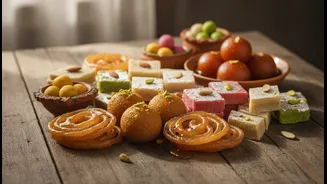
Consider the Rajasthani Ghewar, a disc-shaped sweet with a delicate honeycomb texture. Its creation is a performance of culinary precision, involving a batter of flour and ghee poured into hot oil to create its unique lattice structure. Then there is Andhra Pradesh's Pootharekulu, aptly named 'paper sweet'. Here, artisans create wafer-thin films from rice starch, a painstaking process, before filling them with sugar, nuts, and ghee. These are skills honed over generations, often within specific communities, like the 400 families in Atreyapuram who depend on making Pootharekulu. Each sweet tells a story of technique, patience, and deep-rooted knowledge.
An Identity on a Plate
Regional sweets are more than just desserts; they are potent symbols of cultural and geographical identity. Their ingredients are often intrinsically linked to the local landscape. The Goan Patoleo, for instance, is a steamed sweet where a paste of rice is slathered on fresh turmeric leaves, filled with coconut and jaggery, and then steamed. The use of turmeric leaves imparts a unique, earthy aroma that is inseparable from the region's identity and is prepared by both Hindu and Christian communities for their respective festivals. These sweets are pillars of festive traditions, marking occasions from Teej and Raksha Bandhan with Ghewar in the north to the Assumption feast with Patoleo in Goa. They are expressions of community, history, and a region’s unique agricultural bounty. To lose them would be to lose a piece of our collective cultural vocabulary.
From Memory to Marketplace
Viewing these sweets only through the lens of nostalgia prevents us from seeing their immense economic potential. The skills of artisanal sweet makers are a valuable resource that, if supported, can create livelihoods and boost local economies. The conversation around Indian food is increasingly celebrating hyper-regional cuisine, with diners eager to explore authentic, story-rich flavours. This creates a perfect opportunity to reposition regional sweets. Instead of being relegated to the dusty shelves of memory, they can be presented as premium, artisanal products. This requires a shift in mindset, from seeing them as quaint relics to appreciating them as sophisticated culinary creations. With better packaging, storytelling, and marketing, sweets like Pootharekulu and Ghewar could find a much larger audience, both within India and globally, benefiting the communities that have preserved these traditions.
Preserving the Present, Not Just the Past
The challenge for many traditional sweet makers is daunting. They face competition from mass-produced confectionery, fluctuating ingredient costs, and the difficulty of scaling up production without compromising on the intricate, time-honoured techniques. Many of these recipes have been passed down orally, risking their disappearance as older generations fade. Preserving these sweets isn't about freezing them in time. It's about ensuring their survival in the modern world. This could mean helping artisans with better supply chains, documenting their unique recipes, and creating platforms that connect them directly with consumers who appreciate quality and authenticity. By investing in these culinary artists, we aren't just saving a memory; we are ensuring the future of a living, breathing art form.