


What Makes a Planet 'Superhabitable'?
The idea of a superhabitable world was formally proposed in 2014 by astronomers René Heller and John Armstrong. They argued that our search for extraterrestrial life was too geocentric—focused on finding a mirror image of Earth. Instead, they suggested
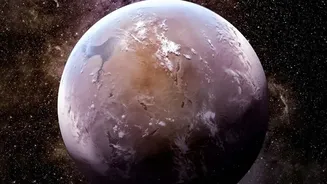
we should look for planets with conditions that could make them even more hospitable to life, potentially leading to greater biodiversity and biomass. This isn't about finding a new home for humanity, but about identifying the most promising targets in the hunt for life elsewhere. The core idea is simple: while Earth is clearly good for life, it may not be perfect. A superhabitable planet would be a world that is, in theory, better suited for the emergence and evolution of life than our own.
The Blueprint for a Better World
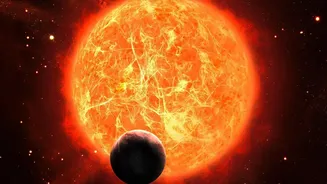
Scientists have developed a list of criteria for what a superhabitable planet might look like. It would likely be slightly older, larger, warmer, and wetter than Earth. Specifically, a planet about twice Earth's mass could have stronger gravity to retain a thicker atmosphere, and a larger iron core could generate a more powerful magnetic field to shield life from cosmic rays. An average surface temperature of around 25°C, a few degrees warmer than Earth's, could promote greater biodiversity. Furthermore, these planets might orbit a K-type dwarf star, also known as an orange dwarf. These stars are cooler and less massive than our Sun but have incredibly long lifespans—tens of billions of years, compared to our Sun's 10 billion. This stability gives complex life much more time to emerge and evolve.
Earth's Own Imperfections
Thinking about superhabitable worlds forces us to confront Earth's own limitations. Our planet has experienced devastating ice ages, and its continental landmasses create vast inland deserts with low biodiversity. A world with smaller, more distributed continents and shallower oceans could support more varied ecosystems. Additionally, our Sun, a G-type star, has a relatively short lifespan in cosmic terms. It's estimated that in about 500 million to a billion years, the Sun's increasing brightness will boil away Earth's oceans, rendering it uninhabitable. Life on a planet orbiting a stable, long-lived K-dwarf star wouldn't face such an imminent existential threat. This reframes Earth not as the pinnacle of habitability, but as one successful example among potentially many, and perhaps not even the best one.
The Hunt Is On, But Confirmation Is Far Away
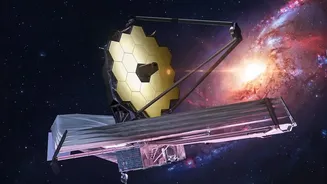
Based on these criteria, researchers have started combing through the thousands of known exoplanets. In 2020, a team led by scientist Dirk Schulze-Makuch identified 24 top candidates for superhabitability. It is important to note that all of these potential worlds are more than 100 light-years away, making them impossible to visit. Planets like KOI 5715.01 are often cited as strong contenders, but their status remains highly speculative. The challenge is that most of what we know about these distant worlds is inferred from indirect measurements, like how they dim their star's light. Determining their actual surface conditions and analysing their atmospheres for signs of life—or 'biosignatures'—is a monumental task that is just beginning with advanced tools like the James Webb Space Telescope.