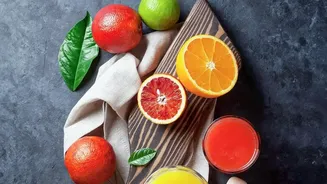





The Whole Fruit Advantage: Fibre
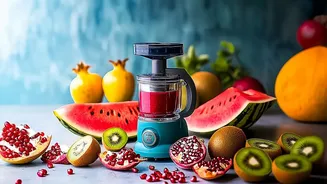
The most significant difference between eating a whole piece of fruit and drinking its juice is the fibre content. Whole fruits are packed with dietary fibre, especially in the skin and pulp. This fibre is crucial for good digestion and gut health. When
fruit is juiced, most of this beneficial insoluble fibre is removed. The fibre in whole fruit also slows down the absorption of sugar into your bloodstream, providing a more steady release of energy and helping you feel full for longer. This feeling of satiety is often missing when you drink juice, which is why it's much easier to consume the sugar equivalent of several oranges in a single glass of juice than it is to eat several whole oranges.
What Happens to Nutrients During Juicing?
Juicing doesn't just remove fibre. The process of extracting juice, along with commercial pasteurisation (heating to extend shelf life), can reduce the levels of some heat-sensitive vitamins, like Vitamin C and some B vitamins. While pasteurisation is vital for safety, killing harmful bacteria, it can slightly alter the nutritional profile compared to a fresh, unpasteurised juice or the original whole fruit. However, many nutrients do remain in the juice, and it can still be a source of vitamins and minerals. The key takeaway is that some nutritional value is lost in the conversion from a whole food to a processed liquid.
Decoding the Juice Aisle
Navigating the juice aisle can be confusing, with labels making various claims. Legally, these terms have specific meanings that can help you understand what's inside the package. The first thing to check on any label is the ingredients list; they are listed in descending order by weight, so the first ingredient is the most prominent. If fruit is not the first or second ingredient, you're likely looking at a fruit-flavoured drink, not a genuine juice product. Also, remember to check the serving size; many bottles contain more than one serving, so you might be consuming double the sugar and calories listed.
100% Juice vs. Nectar vs. Fruit Drink
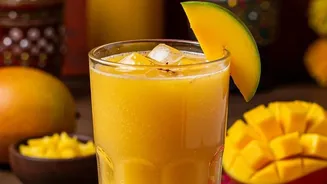
The product name itself tells a story. '100% Fruit Juice' means the liquid is entirely from fruit, with no added sugars. It can be 'not from concentrate' (NFC), meaning it was simply pressed and pasteurised, or 'from concentrate', where water was removed for shipping and then added back. Nutritionally, these two are very similar as long as nothing extra is added. 'Fruit Nectar' is not 100% juice; it is a blend of juice or puree, water, and often sweeteners. Nectars are common for fruits like mango or guava, which are too thick to be drunk as 100% juice. They typically contain 25-50% juice. A 'Fruit Drink', 'Beverage', or 'Cocktail' has the lowest fruit content, sometimes as little as 6-10%, with the rest being water, sugar, and flavourings.
The 'No Added Sugar' Trap
Seeing 'no added sugar' on a label sounds great, but it doesn't mean the product is low in sugar. It simply means the manufacturer hasn't added extra sugars like high-fructose corn syrup. All fruit juice, even 100% juice, is high in natural fruit sugars. The World Health Organization classifies the sugars in juice as 'free sugars', the same type as table sugar, because they are no longer bound within the fruit's fibrous structure. This is why even 100% juice should be consumed in moderation.