





A Vast and Dark Cosmic Ocean
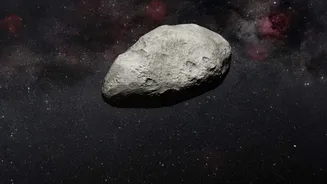
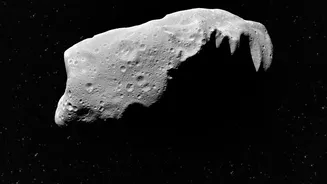
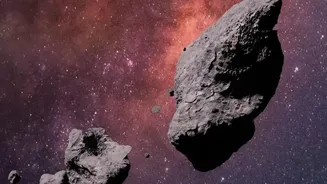
The first challenge is one of sheer scale and stealth. Space is vast, and the asteroids we are most concerned about are often comparatively tiny and incredibly dark. Many asteroids have low reflectivity, or albedo, making them as dark as lumps of coal.
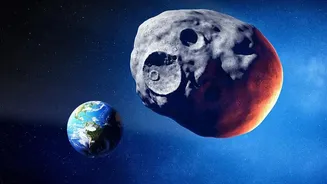
Spotting a small, non-reflective object against the black backdrop of space is a monumental task. Even with powerful telescopes, an asteroid has to be relatively close and large enough to be detected. Scientists estimate there are about 25,000 near-Earth asteroids larger than 140 meters—big enough to cause regional devastation—but as of late 2025, less than half had been found. While new surveys are discovering thousands of objects, the majority of smaller, city-killer-sized rocks remain uncharted.
The Sun's Glaring Blind Spot
One of the most significant reasons for last-minute discoveries is a critical vulnerability in our detection methods: the Sun. Ground-based telescopes can only operate at night, scanning the sky away from the sun. Any asteroid approaching Earth from the direction of the daytime sky is effectively hidden in the sun's glare. This was exactly the case with the Chelyabinsk meteor in 2013; the 66-foot-wide rock came from the direction of the sun and was completely undetected before it exploded over Russia with the force of 30 atomic bombs. This solar blind spot means that even very large objects can sneak up on us, their approach masked until the final moments when their trajectory brings them into the view of our nighttime observatories.
The Problem with Follow-Ups
Discovering a potential near-Earth object is only the first step. To plot an asteroid's trajectory and determine if it poses a threat, astronomers need multiple observations from different locations over time. This can be a race against the clock. A newly discovered object might be faint, moving quickly, or observable for only a short window before it disappears back into the void. If follow-up observations aren't made quickly, the object can become 'lost,' its orbital uncertainty growing so large that finding it again is nearly impossible. Weather, the availability of telescopes, and even the brightness of the Moon can hinder this crucial tracking process, leaving gaps in our knowledge of an asteroid's path.
A New Generation of Sentinels
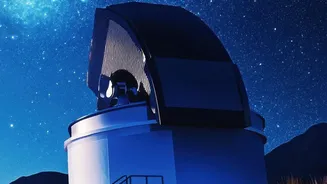
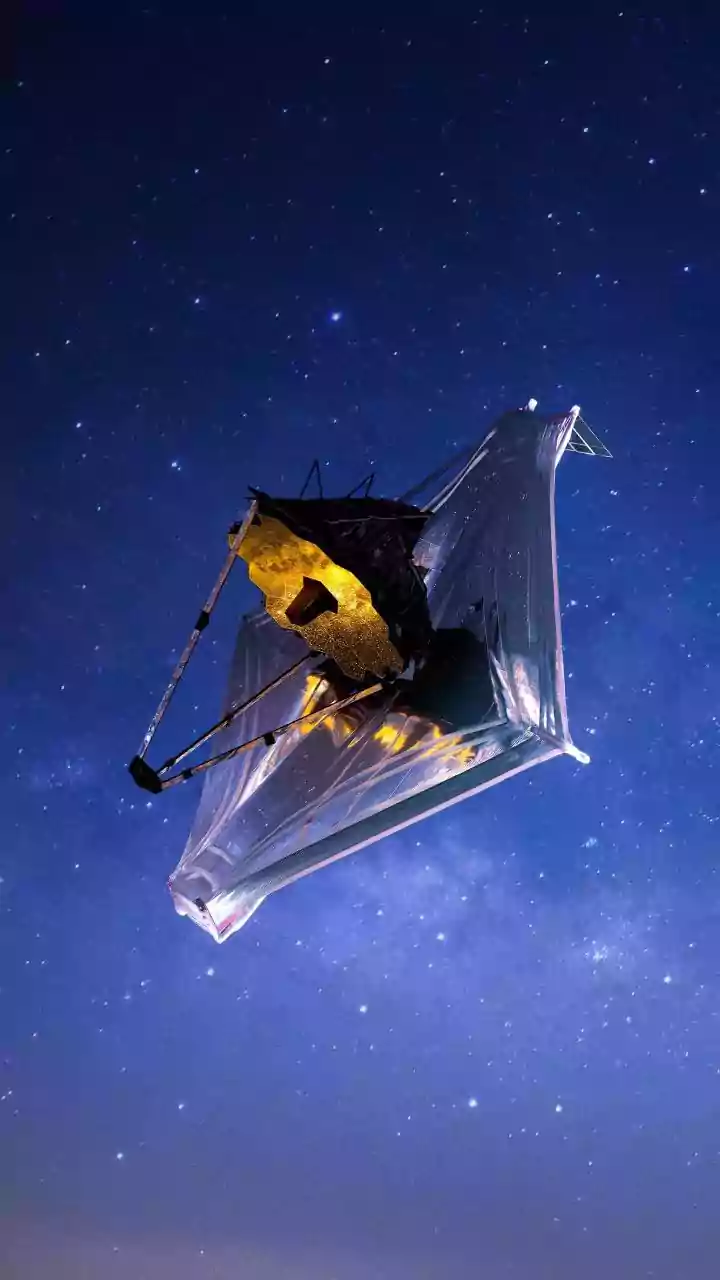
Recognizing these limitations, space agencies are developing the next generation of planetary defense systems. On the ground, the Vera C. Rubin Observatory, which began making discoveries in 2025 and 2026, is set to revolutionize asteroid hunting. It can scan the entire southern sky every few nights with unprecedented sensitivity, expected to find millions of new asteroids. The true game-changer, however, will be space-based telescopes. NASA's NEO Surveyor, planned for launch no earlier than September 2027, is a heat-seeking infrared telescope. By parking itself at a stable point between the Earth and Sun, it will be able to spot asteroids coming from the sun's direction. Because it detects the heat emitted by asteroids, it can easily find dark objects that are invisible to optical telescopes on the ground. The goal for NEO Surveyor is to find at least two-thirds of potentially hazardous objects larger than 140 meters within its first five years of operation.