



Europe’s Moment in the Shadow
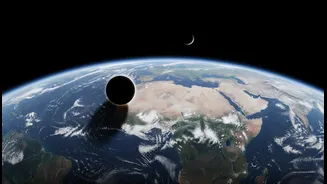
For the first time since 1999, a total solar eclipse will grace mainland Europe, turning an ordinary Wednesday into a spectacle of cosmic proportions. The path of totality—the narrow track where the Moon completely obscures the Sun—will begin over remote
parts of Greenland and the Arctic. It will then sweep across western Iceland, including the capital Reykjavík, before making its grand entrance over northern Spain in the evening. Cities like Bilbao, Zaragoza, and Valencia will be plunged into darkness for up to two minutes. For much of the rest of Europe, from Ireland to Italy, a dramatic partial eclipse will be visible, with over 90% of the sun obscured in many areas. This event is significant not just for its rarity, but for its accessibility, occurring during peak holiday season and offering a prime-time celestial show.
A Sunset Like No Other
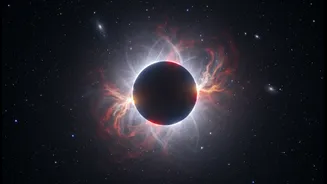
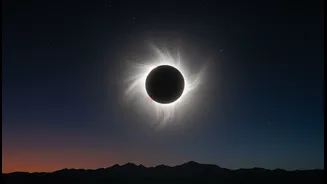
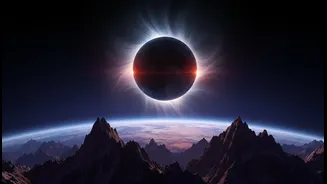
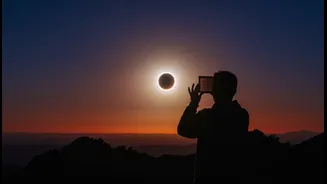
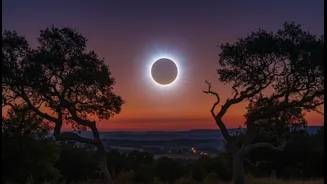
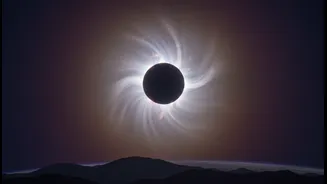
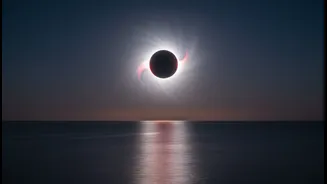
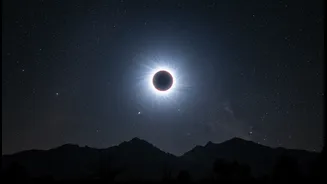
What makes the 2026 eclipse particularly special is its timing. For observers in Spain, totality will occur late in the evening, with the eclipsed sun hanging low on the western horizon. This low-in-the-sky setting creates a unique and dramatic visual, allowing photographers and sky-gazers to capture the blackened sun alongside earthly landscapes. Imagine seeing the sun's ethereal corona glowing above a mountain range or the Mediterranean Sea. This celestial alignment also presents a challenge: a perfectly clear view of the horizon is essential. Adding to the magic, the famous Perseid meteor shower is set to peak the same night, promising a double feature for those who stay out after the sun has set.
A Global Scientific Endeavor
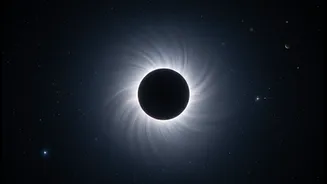
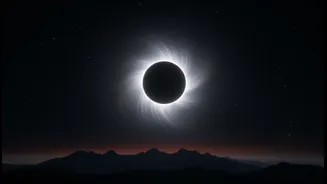
A total solar eclipse is more than a beautiful sight; it is a priceless opportunity for science. When the moon blocks the sun's blinding glare, it reveals the star's mysterious outer atmosphere, the corona. Scientists from around the globe are preparing for this event, as it provides a rare chance to study this superheated plasma, which is normally invisible. Many scientific expeditions, including expedition cruises carrying NASA experts and astrophysicists, are planned for Greenland, Iceland, and the Atlantic. These missions will investigate everything from the sun's magnetic fields to the solar wind, gathering data that can only be captured during the fleeting moments of totality.
The Economics of Awe
The path of totality is also a path of economic opportunity. An entire industry known as "eclipse tourism" is already in full swing for the 2026 event. Tour companies are offering elaborate packages, some costing thousands of dollars, that ferry enthusiasts to prime viewing locations, from hilltop wineries in Spain to expedition ships in the Arctic fjords of Greenland. Towns and cities along the path are bracing for a massive influx of visitors. In Iceland, officials are already planning how to manage traffic on the narrow roads leading to prime viewing spots. This global migration for a few minutes of darkness demonstrates the powerful, universal draw of such a profound natural wonder and the significant economic impact it can have.
A Moment of Shared Humanity
Ultimately, the true lesson of a total solar eclipse lies in its name: totality. It is a shared, global experience. In an age of digital division and political polarization, a celestial event like this has the power to unite us. For those brief minutes, people from all over the world will stand together, look up, and feel the same sense of awe. It is a humbling reminder of our small place in a vast cosmos, a moment where borders and backgrounds fade away, replaced by a collective gasp of wonder. The eclipse doesn't just darken the sky; it illuminates our shared humanity. It shows us that, beneath it all, we are one species on one planet, captivated by the same grand, cosmic ballet.