


Seeing the Invisible Universe
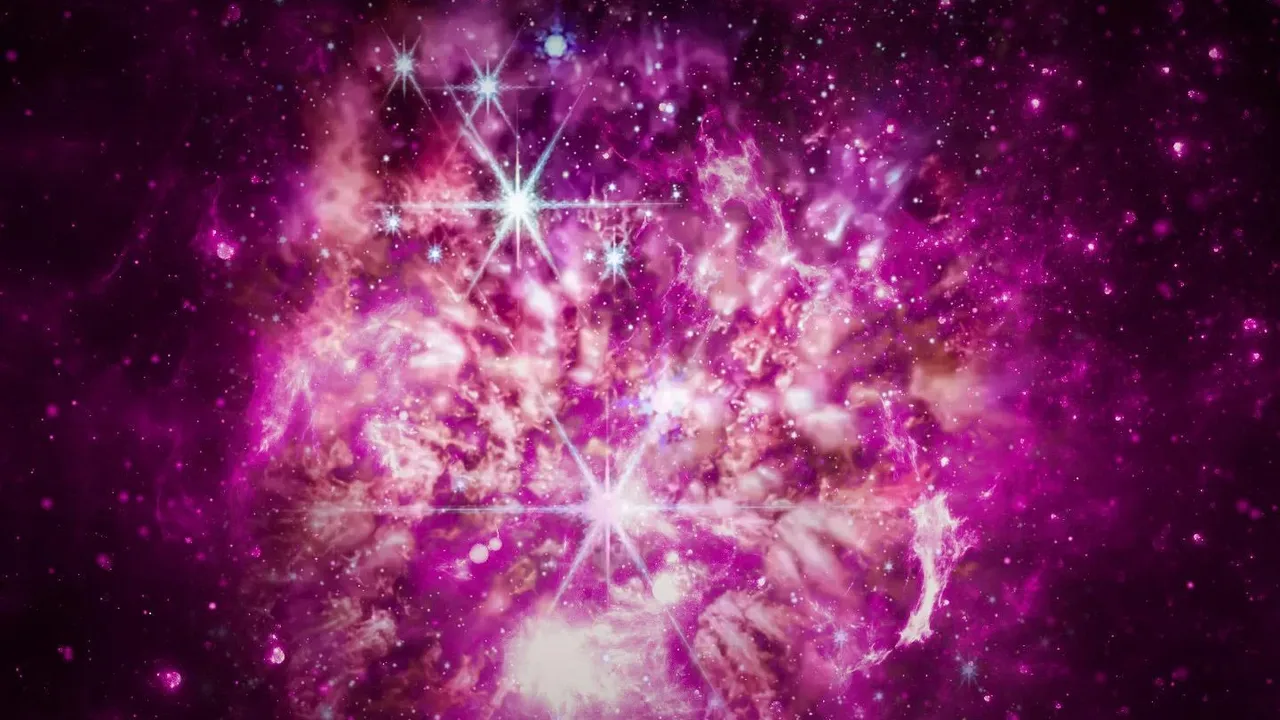
Imagine trying to watch a play through a thick curtain of smoke. That's the challenge astronomers face when studying star formation. Stars are born inside vast, dense clouds of cosmic gas and dust that block visible light almost completely. But just as special
goggles can help a firefighter see through smoke, infrared telescopes can see through this cosmic dust. Infrared is a type of light with a longer wavelength than what our eyes can detect. These longer waves can pass through the dense dust clouds, giving us a clear view of the stellar nurseries hidden inside. It’s a superpower that lets us see celestial objects that are otherwise completely invisible.
A Glimpse Inside Stellar Nurseries
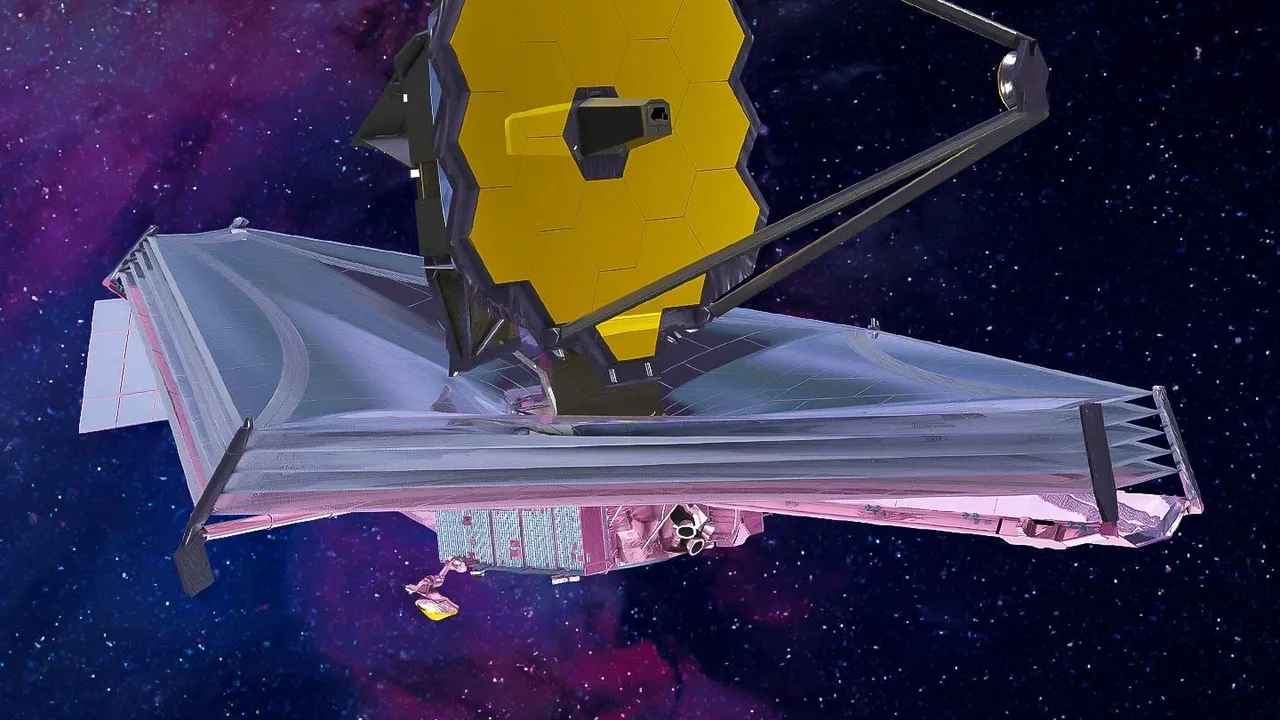
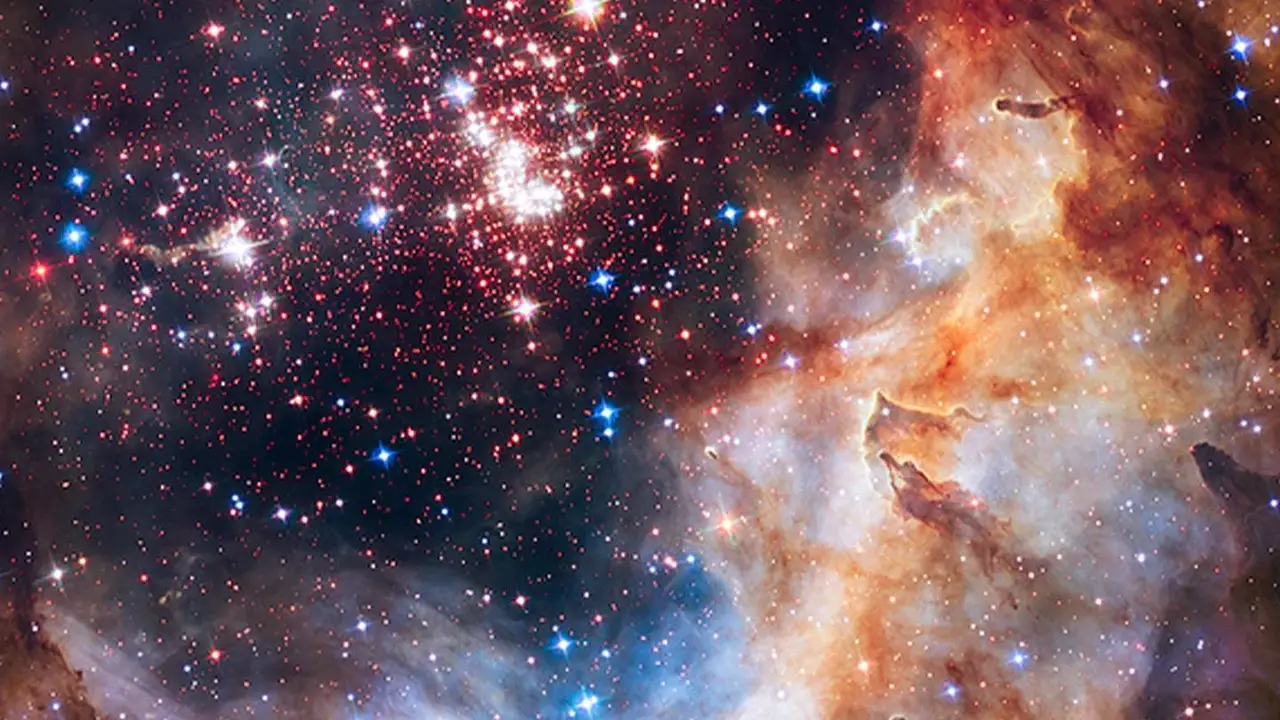
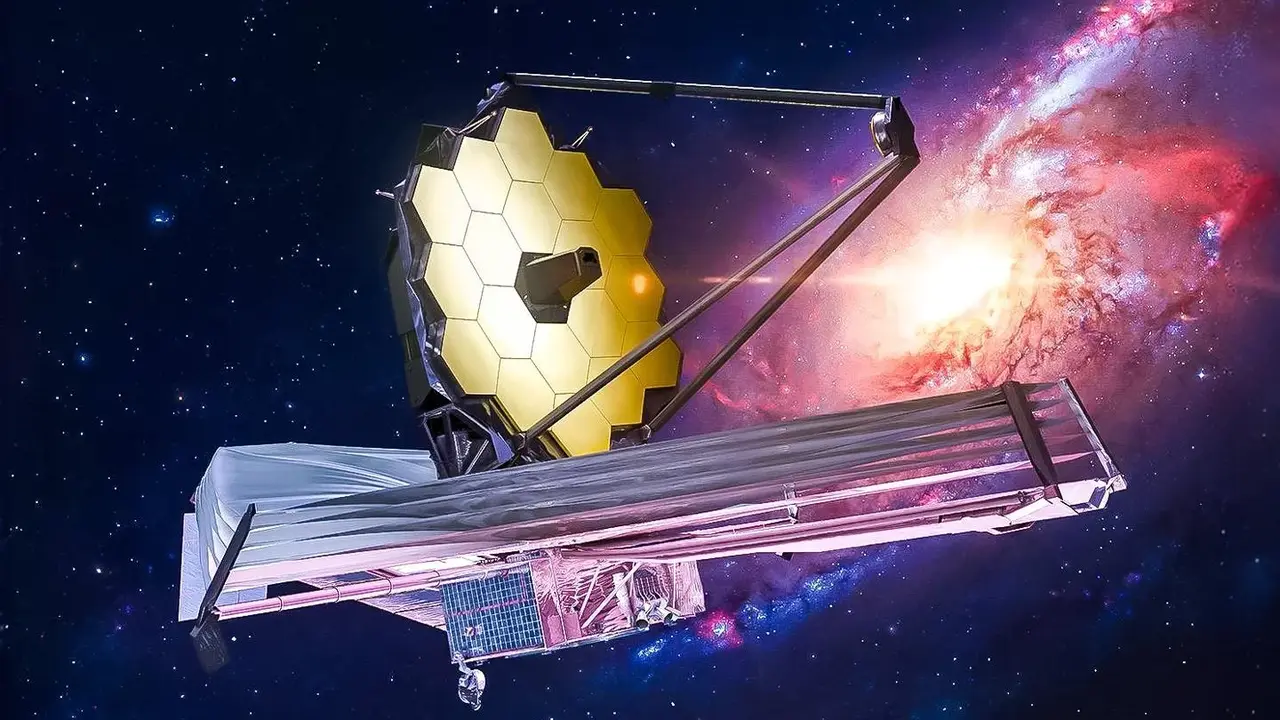
Once we peer through the dust, what do we find? We see the very seeds of stars, known as protostars. These are dense clumps of gas and dust that are collapsing under their own gravity. While a protostar isn't hot enough yet to ignite nuclear fusion and become a true star, the process of gravitational collapse generates a tremendous amount of heat. This heat makes the protostar and its surrounding dust glow brightly in infrared light. By capturing this glow, telescopes like the James Webb Space Telescope (JWST) can study the earliest phases of a star's life, watching as it gathers mass from a surrounding disk of material—a disk that might one day form planets.
Looking Back to the Cosmic Dawn
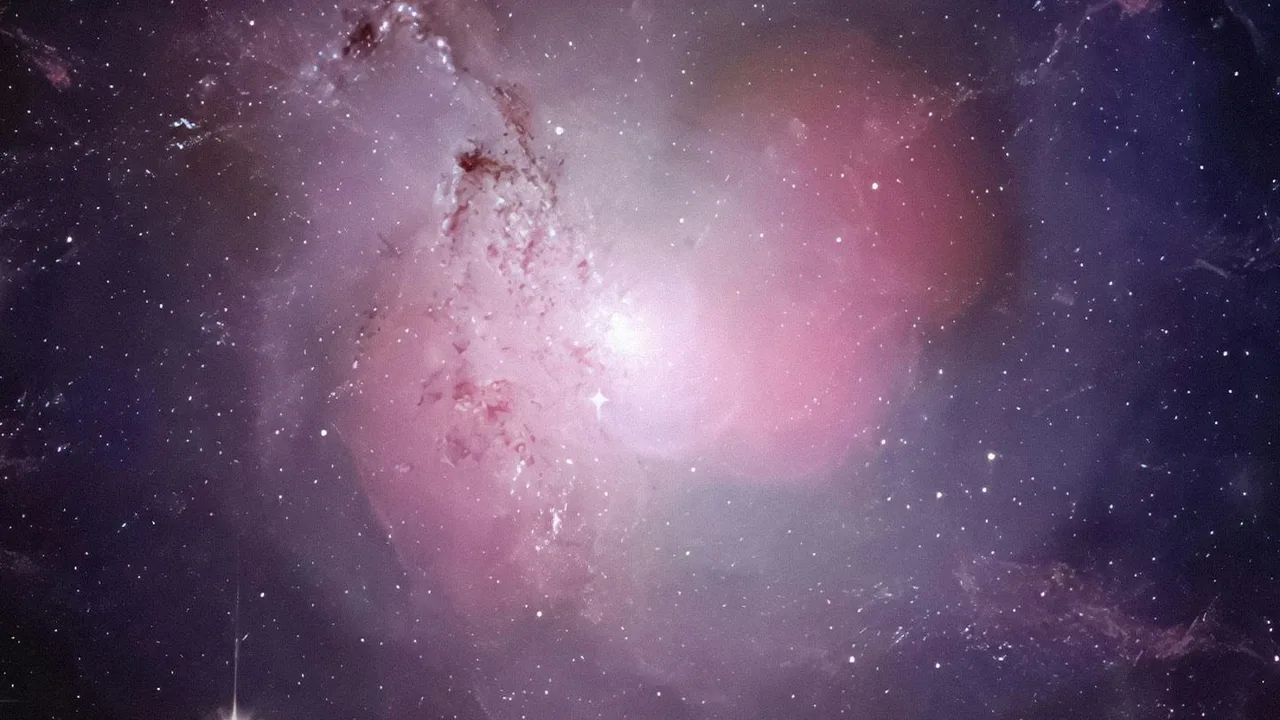
Infrared vision isn't just about piercing dust clouds; it's also a form of time travel. Because light takes time to travel across the vastness of space, looking at distant objects is the same as looking back into the past. The most distant galaxies are also the oldest, and we see them as they were when the universe was in its infancy. Due to the expansion of the universe, the light from these ancient galaxies gets stretched out on its long journey to us. Visible and ultraviolet light emitted by the first stars is stretched into longer, redder wavelengths, a phenomenon called 'redshift'. For the most distant objects, this light is shifted all the way into the infrared spectrum. This is how JWST can see galaxies that existed just a few hundred million years after the Big Bang, an era known as the Cosmic Dawn.
Chaotic Beginnings and New Mysteries
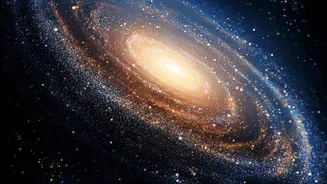
These glimpses into the early universe are revealing a surprisingly chaotic and active period. Early galaxies were not the well-ordered spiral structures we see today, like our own Milky Way. Instead, many were 'clumpy' and turbulent systems, blazing with intense bursts of star formation. The first generation of stars were powerful enough to burn off the thick fog of neutral hydrogen that filled the early cosmos, making the universe transparent. In fact, recent discoveries from JWST have surprised scientists, showing galaxies that appear more massive and mature than models predicted for that early time. Just this month, astronomers announced the potential discovery of a new type of object—a 'black hole star'—an enormous, bright red body from the early universe powered by a central black hole instead of fusion. These findings are challenging and refining our understanding of how cosmic structures grew so quickly.
Forging the Elements of Life
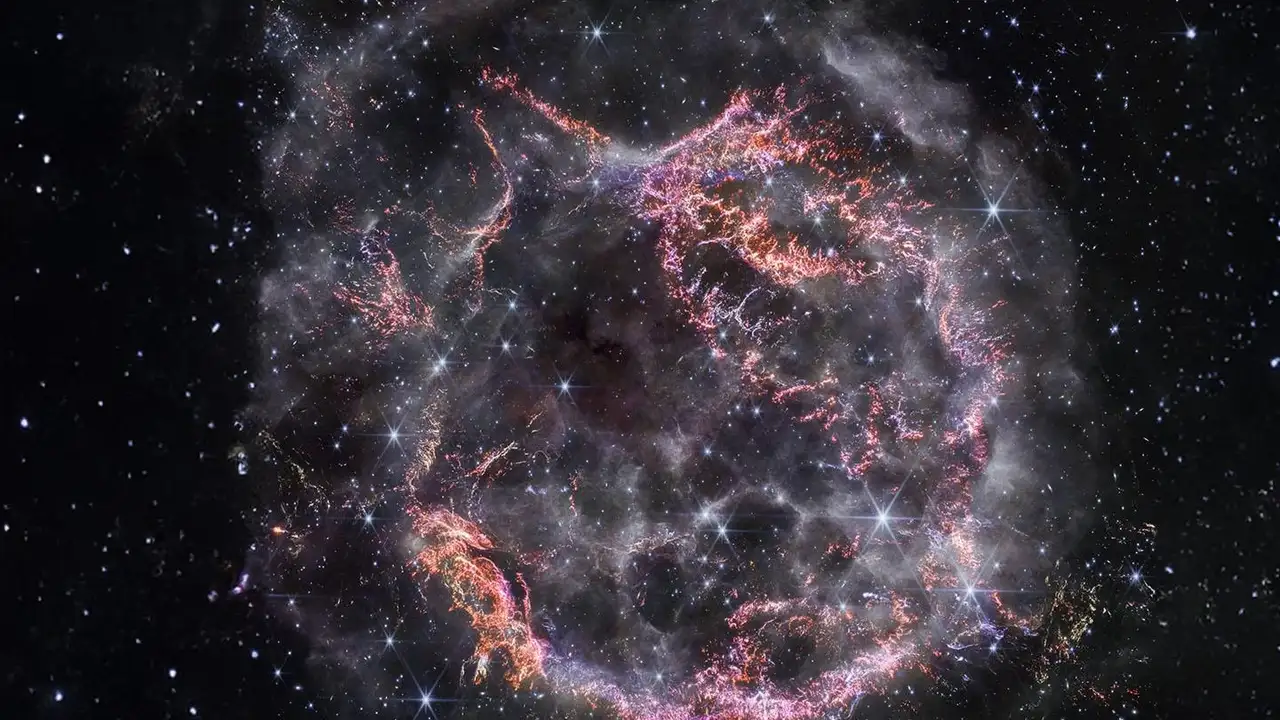
Studying the birth of the first stars is about more than just understanding distant galaxies; it’s about understanding our own origins. The Big Bang primarily produced hydrogen and helium. Every other element—the carbon in our bodies, the oxygen we breathe, the iron in our blood—was forged inside the fiery cores of stars and scattered across the cosmos when they died. This process, known as nucleosynthesis, began with the very first generation of stars that infrared telescopes are now revealing. By studying their formation, we are tracing the story of the chemical elements that eventually came together to form Earth, our solar system, and life itself. In a very real sense, looking at these early stars is like looking at our own cosmic family tree.