


A New Cosmic Cartographer
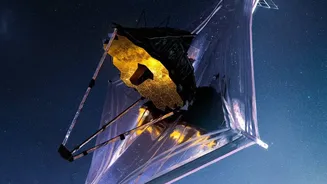
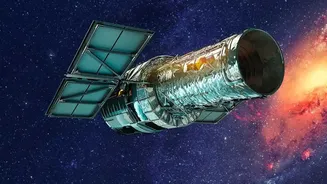
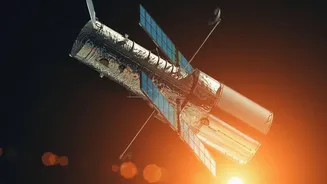
Set to launch in late 2026, the Nancy Grace Roman Space Telescope is NASA's next great space observatory, following in the footsteps of the Hubble and James Webb telescopes. But Roman isn't just another powerful eye on the sky; it's a cosmic surveyor
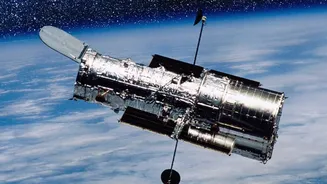
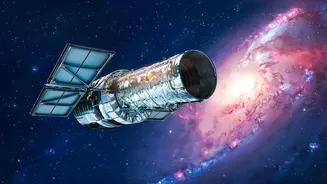
designed for breathtaking scale. Named after Nancy Grace Roman, NASA's first chief of astronomy and the visionary “Mother of Hubble,” the telescope embodies her push for large-scale space astronomy programs. While Hubble and Webb excel at taking incredibly detailed, deep-dive portraits of small, specific patches of the universe, Roman is built to create vast panoramas. It carries a 2.4-meter mirror, the same size as Hubble's, but its instrumentation gives it a completely different, and complementary, power. Its goal is not just to see new things, but to see everything in a new way.
The Power of a Panoramic View
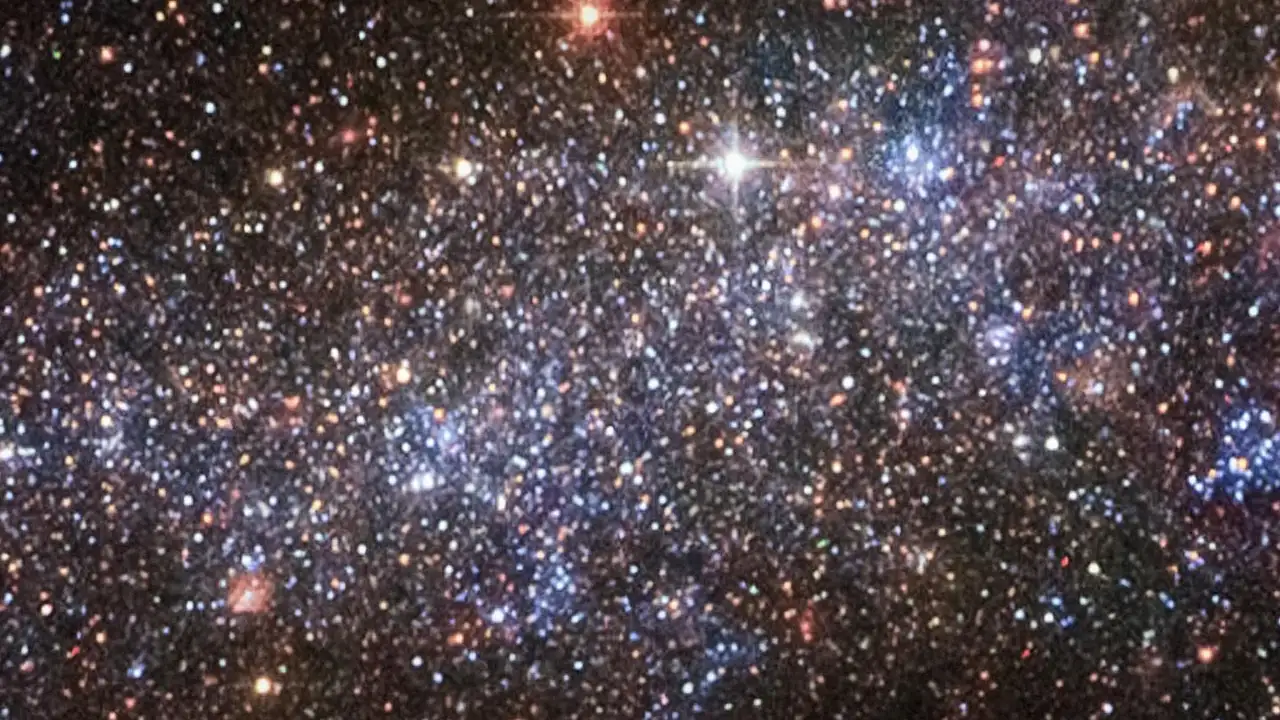
Roman's game-changing feature is its Wide Field Instrument, a 300-megapixel camera that gives it a field of view at least 100 times larger than Hubble's infrared camera. What this means in practice is staggering. Where Hubble would need hundreds of individual images to map a sizable area like the nearby Andromeda galaxy, Roman could do it in just a few pointings. This ability to rapidly survey huge swaths of the sky is what sets it apart. It will generate images with the same stunning sharpness as Hubble but across a canvas hundreds of times larger. This turns the telescope into an unprecedented discovery machine, capable of capturing not just individual galaxies but entire cosmic ecosystems in a single shot. This efficiency will allow astronomers to build the largest-ever 3D maps of the universe, capturing billions of galaxies and stars in its five-year primary mission.
Tackling the Universe's Biggest Mysteries
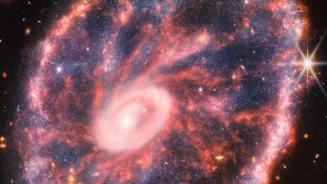
About 95% of the universe is made of mysterious substances we can't directly see: dark matter and dark energy. Scientists know they exist because of their gravitational effects on the things we can see, but their true nature remains one of the most profound puzzles in physics. Roman's primary mission is to tackle this head-on. By imaging over a billion galaxies, the telescope will map how the universe's structure has evolved over cosmic time. It will measure how the subtle warping of distant galaxy light, a phenomenon called weak gravitational lensing, reveals the distribution of unseen dark matter. It will also chart the clustering of galaxies to trace the influence of dark energy—the enigmatic force causing the universe's expansion to accelerate. These massive surveys will provide a wealth of statistical data to test our theories and potentially point toward a new understanding of gravity.
A Grand Census of Alien Worlds
Beyond cosmology, Roman is set to revolutionize the hunt for exoplanets. While missions like Kepler found thousands of planets by watching for the dimming of stars as planets passed in front of them, Roman will primarily use a different technique: gravitational microlensing. This method detects planets by observing how their gravity, combined with their host star's, briefly magnifies the light of a much more distant, unrelated star that passes behind them from our point of view. This technique is uniquely sensitive to planets that are further from their star—in orbits similar to Jupiter or Saturn—and even rogue planets that drift through the galaxy without a host star at all. Astronomers anticipate that Roman’s microlensing survey will discover thousands of new worlds, from gas giants to planets smaller than Earth, providing a statistical census of planets throughout our galaxy.
A Flood of Cosmic Data
The sheer scale of Roman's observations will generate an unprecedented amount of data, creating both a challenge and a monumental opportunity. In its first five years, the telescope is expected to collect more astronomical data than all of NASA's previous astrophysics missions combined. This cosmic firehose of information will be made available to the public and the scientific community, fueling discoveries for decades to come. Beyond its main surveys, Roman also carries a technology demonstration called a Coronagraph Instrument, designed to test new methods for directly imaging giant exoplanets by blocking the overwhelming glare of their stars. By spotting everything from exploding stars to distant black holes shredding cosmic material, Roman will function as a celestial watchdog, capturing the dynamic and ever-changing nature of the universe on a grand scale.