




The Most Ambitious Mission Yet
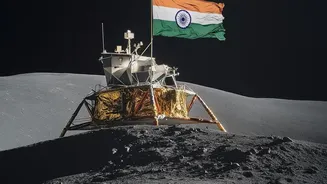
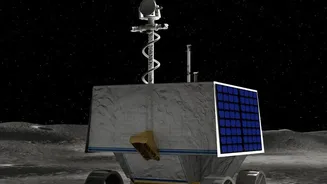
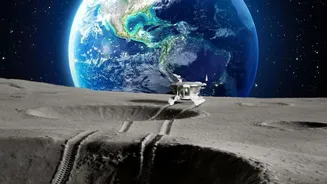
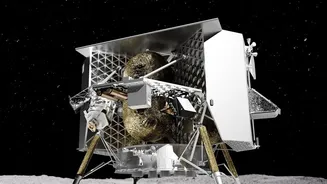
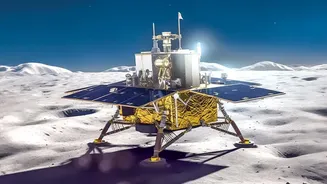
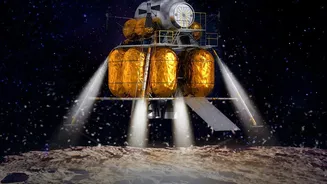
Chandrayaan-4 is a massive leap beyond its predecessors. Where Chandrayaan-3 was a one-way trip to deliver a lander and rover, this new mission is a full round-trip. The primary goal is to perform a soft landing near the Moon's south pole, use a robotic
arm and drill to collect up to three kilograms of lunar soil and rock, and then return these precious samples safely to Earth for scientific study. If successful, India would become only the fourth country in history to achieve this feat, joining the ranks of the United States, the former Soviet Union, and China. The mission, which received cabinet approval in September 2024, is not just a scientific endeavour but a crucial stepping stone towards India's long-term goal of a crewed lunar landing by 2040.
A Complex Five-Module Blueprint
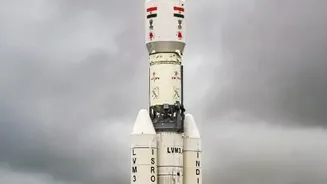
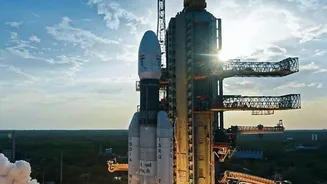
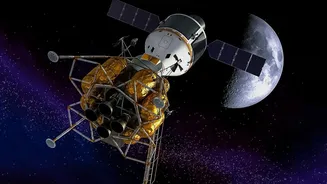
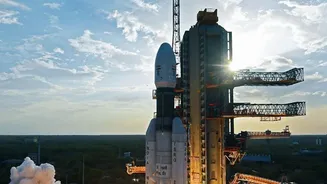
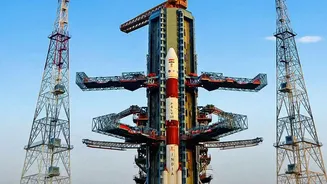
To pull this off, ISRO has designed a complex, five-part spacecraft that requires two separate launches using the powerful LVM3 rocket. The five modules are the Propulsion Module, Descender Module (the lander), Ascender Module, Transfer Module, and Re-entry Module. The first launch will carry the Descender and Ascender. The second will carry the other three. These two stacks will then meet and dock in Earth's orbit—a feat ISRO has been practicing—before the integrated spacecraft travels to the Moon. This dual-launch strategy is necessary because the combined weight of the fully-fuell.ed spacecraft, estimated at over 9,000 kg, is too heavy for a single LVM3 rocket to lift.
An Orbital Ballet, Millions of Kilometres From Home
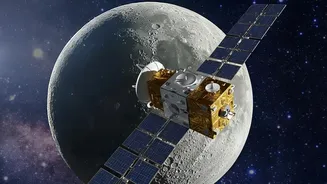
The mission's complexity is breathtaking. Once in lunar orbit, the Descender and Ascender modules will separate and land on the surface. After a robotic arm collects and seals the samples, the Ascender module will perform a launch from the Moon's surface—a first for India. It must then autonomously rendezvous and dock with the Transfer and Re-entry modules waiting in lunar orbit. This is another critical manoeuvre that has only been achieved by a handful of nations. After the samples are transferred to the Re-entry module, the craft will begin its journey back to Earth, culminating in a high-speed atmospheric re-entry and a safe landing of the capsule containing the lunar material.
Why Bring the Moon to India?
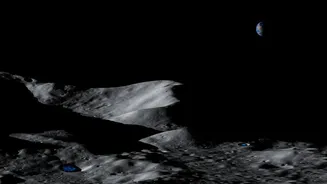
While rovers can perform on-site analysis, their instruments are limited by size and power. Bringing lunar samples back to Earth allows scientists to use the full power of terrestrial laboratories, with equipment far too large or delicate to ever send to space. These pristine samples, collected from the geologically rich and scientifically intriguing south pole, could hold secrets about the Moon's origin, the history of the solar system, and the presence of water ice. Samples returned by the Apollo missions over 50 years ago are still yielding new discoveries with modern technology. Having our own lunar samples would provide Indian scientists with an invaluable resource for decades of research.
The Road to 2028
The mission's design phase is complete, and critical technologies are being validated. A key hurdle was demonstrating orbital docking, which ISRO successfully achieved with the SPADEX mission, a crucial forerunner to Chandrayaan-4. While original timelines mentioned 2027, the current official target for this highly complex mission is now 2028. This timeline provides the necessary window for ISRO to perfect the multiple new technologies required, from the robotic collection systems to the lunar ascent vehicle. Chandrayaan-4 is more than just a sequel; it is a demonstration of end-to-end deep space capability, cementing India’s position as a leading power in space exploration.