





More Than Just Light and Sound
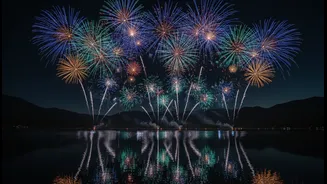
The magic of a firework is pure chemistry. To create those vibrant reds, greens, and blues, manufacturers use a cocktail of metal salts. Strontium creates red, barium produces green, and copper is responsible for blue. To launch them skyward and create the signature
bang, an oxidiser is needed, and a common choice is a chemical called perchlorate. When a firework explodes, it doesn't just produce light and sound; it releases a fine mist of these metals and other unburnt chemical byproducts into the atmosphere. This cloud of microscopic particles, far more than just smoke, is the beginning of an unseen environmental journey.
From the Air to the Water
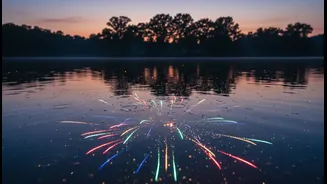
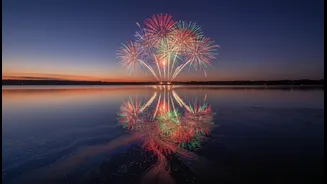
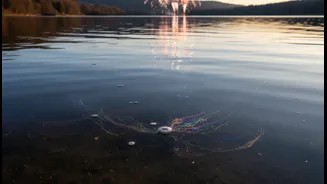
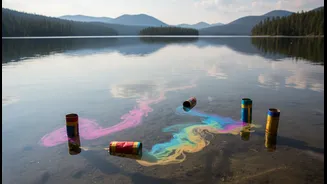
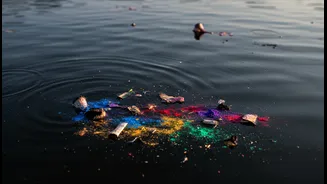
What goes up must come down. The particulate matter and chemical residues scattered by a firework explosion don't simply vanish. They are carried by the wind and eventually settle on the ground, on buildings, and directly onto the surfaces of lakes and rivers. Subsequent rainfall washes these deposits from land into our waterways. This is a particular concern for celebrations that take place near or over water, which is a common practice to enhance the visual spectacle. The debris from spent fire crackers, including charred packaging and partially burned fuel, also contains these pollutants and can be washed into water systems, adding to the contamination.
The Unseen Chemical Cocktail
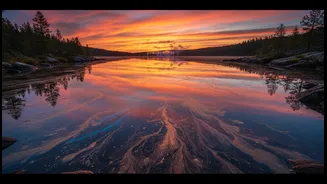
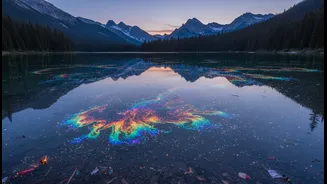
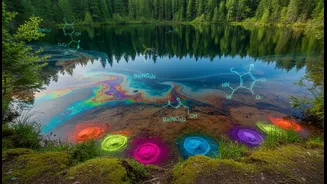
Once in the water, these chemicals can create a complex and potentially harmful soup. Studies have found that spent firework debris can release significant amounts of metal ions like potassium and manganese, along with organic compounds, altering the water's natural chemistry. The most studied of these chemicals is perchlorate. It is highly soluble in water, meaning it dissolves easily and can travel long distances. Research following firework displays has shown dramatic, short-term spikes in perchlorate concentrations in lakes and groundwater. In some cases, levels have been measured at over eight times the baseline before the event. While these levels often decrease as the water mixes and dilutes, repeated annual displays can have a cumulative effect.
A Lasting Legacy for Ecosystems
The introduction of these chemicals can disrupt aquatic ecosystems. Heavy metals like copper, lead, and barium can be toxic to fish and other aquatic organisms, affecting their growth and reproduction. Perchlorate is a specific concern because it can interfere with the thyroid function in wildlife and humans. The thyroid gland is crucial for regulating metabolism and development. In fish, exposure to perchlorate has been shown to alter thyroid function. Studies at locations with long histories of firework displays, such as Mount Rushmore in the United States, have found elevated perchlorate levels in groundwater and surface water, identifying the fireworks as the probable source.
Celebrating with Awareness
The science makes it clear that our celebrations have consequences that last long after the final sparkle fades. This doesn't necessarily mean an end to the tradition, but it does call for greater awareness and responsible practices. Properly collecting and disposing of all firework debris immediately after a show can significantly reduce the amount of pollution that washes into waterways. Around the world, researchers are also working to develop greener alternatives to traditional fireworks, using nitrogen-rich compounds or other materials to create the dazzling effects with a smaller environmental footprint. As our understanding of the environmental costs grows, the hope is that we can find new ways to celebrate that don't leave a lasting mark on our precious water resources.