






Moving Beyond Simple Spellcheck
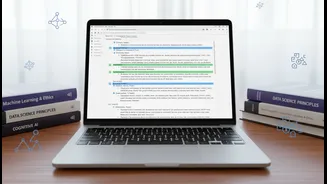
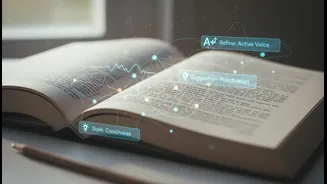
For years, students have relied on built-in spellcheckers and basic grammar tools. But modern AI writing assistants go much further. These sophisticated programs analyze your writing for clarity, tone, and style. They can identify awkward phrasing, wordy
sentences, and suggest more concise alternatives to ensure your arguments are easy to follow. Some tools can even evaluate the overall structure of your paper to ensure a logical flow and a consistent tone, identifying grammatical errors and awkward phrasing that you might miss after reading your own work for hours. Think of it as a tireless proofreader that not only catches typos but also helps refine your language and strengthen your academic voice.
The Citation and Formatting Saviour
One of the most tedious and error-prone parts of academic writing is managing citations and formatting. Ensuring every in-text citation matches the bibliography and adheres strictly to styles like APA or MLA is a classic late-night headache. AI tools excel at this task. They can automatically check for consistency in citation styles, flagging mistakes that could lead to accusations of accidental plagiarism. By reviewing and ensuring the correct application of citation rules throughout your document, these tools save an enormous amount of time and reduce stress, letting you focus on the quality of your research rather than the punctuation in your reference list.
Strengthening Your Arguments
Perhaps the most groundbreaking feature of advanced AI research tools is their ability to provide feedback on the substance of your work. Some platforms can analyze the logical flow of your arguments. They can pinpoint areas where your claims may be weak or unsupported, identify contradictions, and flag repetitive points. This functions like having a debate partner who can review your draft and ask critical questions. AI can help you see gaps in your reasoning that you might have overlooked. By using these tools to challenge your own work, you can ensure your arguments are robust, well-supported, and clearly presented before your professor ever sees them.
Choosing and Using the Right AI Tool
The market is filled with AI tools like Grammarly, Paperpal, and Elicit, each offering different features. Some specialize in grammar and style, while others focus on research discovery or citation management. Instead of juggling multiple apps, it's often best to find one or two that fit your workflow. You might use one tool for brainstorming and outlining, and another for the final polish. The key is to use them as assistants, not as replacements for your own effort. Run your final draft through a tool to catch remaining errors, but always make the final decisions yourself. This ensures the final submission is still authentically yours.
The Ethical Line: Assistant, Not Author
The rise of AI in education has sparked an important conversation about academic integrity. It's crucial to understand the difference between using AI for support and using it to cheat. Using AI to proofread for grammar, check citation formatting, or get feedback on your argument's structure is generally considered an ethical way to improve your work. However, generating entire essays or passing off AI-written text as your own is plagiarism and a violation of academic honesty. Instructors and institutions are increasingly using AI detection tools to identify work that isn't original. The goal should always be to use these tools to enhance your learning and skills, not to avoid the work of thinking critically and writing for yourself.