






How Detectors Hunt for Fakes
AI image detectors don't 'see' pictures like humans. Instead, they act like digital forensics teams, searching for clues invisible to the naked eye. The main approach is to analyze an image for statistical 'fingerprints' left behind by the AI creation
process. Since AI models build images mathematically, they can leave subtle, unnatural patterns in the pixels, lighting, or textures. Detectors are trained on millions of real and AI-made images to recognize these synthetic signatures, which can include everything from unusual pixel noise to inconsistencies in how shadows fall. Some detectors achieve high accuracy—up to 99% in controlled tests—but this number often drops in real-world scenarios.
The Inevitable Arms Race
The biggest challenge is that detection is locked in a perpetual arms race with generation. As soon as detectors get good at spotting the artifacts of one AI model, newer models are trained to produce more realistic images that hide those very flaws. Simple actions like compressing an image, taking a screenshot, or cropping it can also destroy the subtle data that detectors rely on. A recent test on Meta's new detection tool, for example, found that its accuracy fell dramatically on images that had been heavily cropped. This constant evolution means no detector can provide guaranteed, automated certainty. A score of '90% likely AI' is a strong signal, not definitive proof.
Beyond a 'Real or Fake' Score
Given these limitations, the true value of AI detectors isn't in providing a simple yes-or-no answer. Instead, they serve as a crucial first alert for media professionals, researchers, and discerning social media users. A high probability score from a detector is a flag that prompts a deeper, human-led investigation. It signals that a piece of content requires more scrutiny: checking the source, looking for corroborating reports, and examining the context around the image. In this role, the detector isn't a final judge but a tool that helps prioritize which of the millions of images shared daily deserve a closer look. It empowers human judgment rather than replacing it.
A Proactive Approach: Digital Watermarks
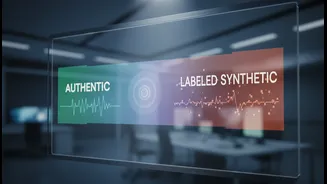
Recognizing that detection alone is a reactive solution, many major tech companies are also embracing proactive measures like digital watermarking. Initiatives like the C2PA (Coalition for Content Provenance and Authenticity) standard allow creators—including AI companies like OpenAI, camera manufacturers, and news organizations—to embed tamper-evident metadata into a file from the moment of its creation. This 'Content Credential' acts like a digital birth certificate, showing who created the file, with what tool, and if it has been edited. While not foolproof, this provides a layer of verifiable history, shifting the focus from just spotting fakes to proving what is authentic.
A Tool, Not a Silver Bullet
Ultimately, AI image detectors cannot be a perfect, standalone solution for misinformation. Their accuracy is variable, and they are constantly playing catch-up with more advanced generative models. However, their inability to provide absolute certainty does not make them useless. When used correctly, they are an essential part of a broader safety strategy. By providing valuable signals that an image may be synthetic, they improve safety by flagging content for further verification. They force a necessary pause, prompting users and platforms to question what they see rather than accepting it at face value. This complements, rather than replaces, the need for enhanced media literacy and critical thinking from the public.