
The Sweet Heart of Braj Bhumi
Mathura's reputation as India's 'Peda Capital' is deeply intertwined with its identity as the heart of the Braj region and the birthplace of Lord Krishna. For centuries, milk and dairy products have been central to the local culture and cuisine, reflecting
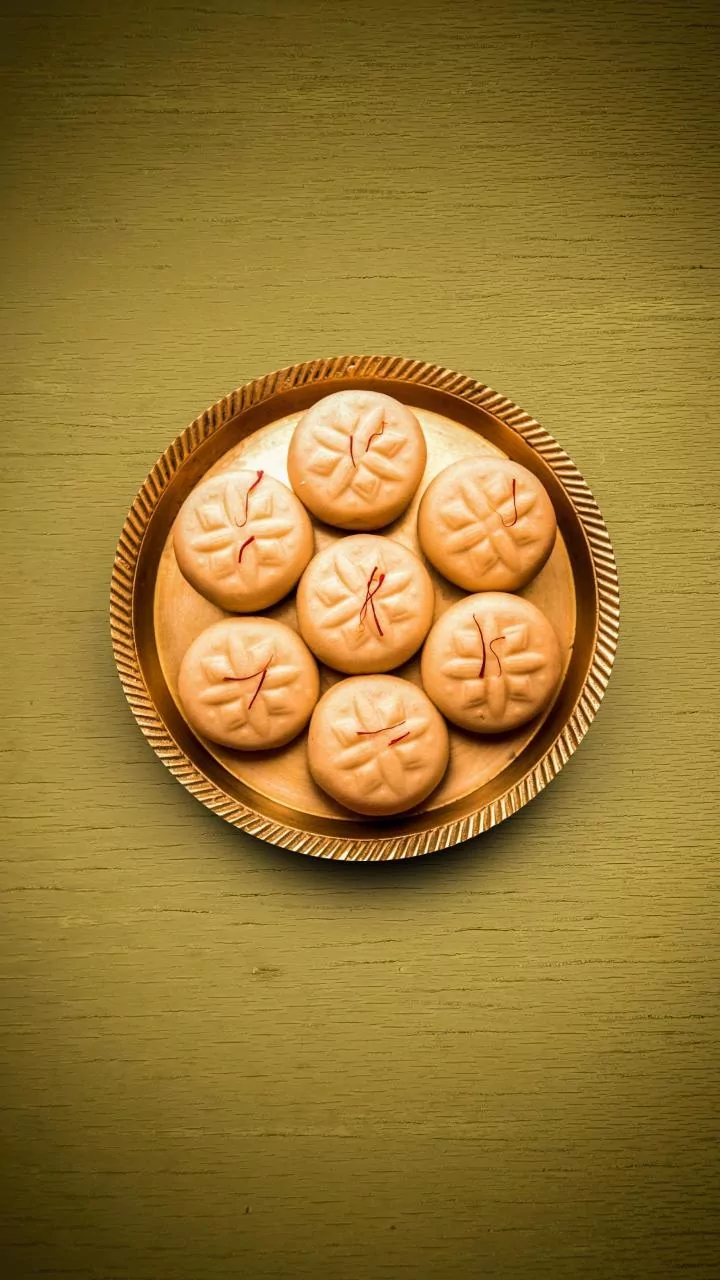
Krishna's own childhood stories as a butter thief ('Makhan Chor'). The peda began as a sacred offering, or 'prasad', in the city's numerous temples. Pilgrims visiting Mathura would carry these blessed sweets back home, spreading their fame across the country. Over time, what started as a devotional item evolved into a commercial specialty that defines the city's culinary landscape, with 'Mathura ke Pede' becoming a brand name synonymous with authenticity and quality.
The Secret to the Grainy Texture
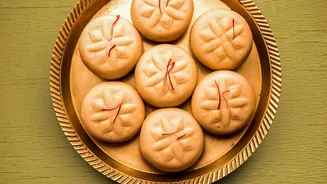
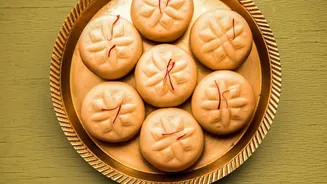
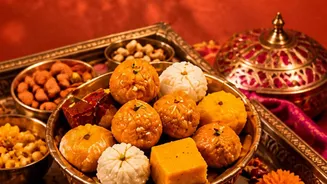
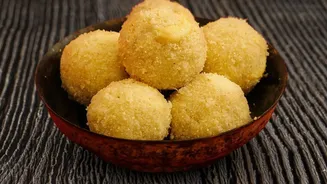
The most distinguishing feature of a classic Mathura Peda is its signature grainy texture, which sets it apart from other, smoother varieties. This unique mouthfeel is not an accident but the result of a deliberate, traditional technique. The magic lies in the type of sugar used. Instead of finely powdered confectioner's sugar, authentic recipes call for 'tagar' or 'boora'. Tagar is a form of crystallized sugar with a porous, slightly coarse consistency. When this is mixed into the warm, roasted milk solids (khoya), it doesn't dissolve completely. Instead, its crystalline structure creates that delightful, melt-in-the-mouth graininess that is the hallmark of an authentic Mathura Peda.
A Labour of Love and Caramelisation
Creating the perfect Mathura Peda is a process that demands patience. The journey begins with high-quality milk, which is slowly simmered in a wide, heavy-bottomed pan for hours. This process reduces the milk to its solid form, known as khoya or mawa. But for the Mathura-style peda, the cooking doesn't stop there. The khoya is then roasted, often with a bit of ghee, and stirred continuously on a low flame. This slow roasting is crucial. It induces the Maillard reaction, a chemical process between milk proteins and sugars that results in a beautiful light brown colour and a deep, nutty, caramelized flavour profile, completely different from the simple milky taste of other pedas.
More Than Just Milk and Sugar
While the soul of Mathura Peda is undoubtedly its high-quality khoya and special sugar, a few other key ingredients complete the masterpiece. The primary components are khoya, sugar (tagar), and often a small amount of ghee to aid in the roasting process and add richness. To enhance the aromatic profile, cardamom powder is almost always included, lending a fragrant warmth that complements the caramelized milk. Some variations might also include a hint of nutmeg. Once the pedas are shaped, they are often rolled in a final coating of the same grainy 'tagar' sugar, which not only adds to the texture but also acts as a natural preservative, giving them a longer shelf life than many other milk-based sweets.
A Legacy Worth Protecting
The cultural and economic significance of Mathura Peda is so profound that efforts have been made to protect its unique identity. Like other famed regional delicacies, the peda is a candidate for a Geographical Indication (GI) tag. An application was filed in 2024 to secure this status, which would legally protect the 'Mathura Peda' name, ensuring that only sweets made in the region using traditional methods can be sold under this title. This move aims to preserve the authentic preparation techniques and safeguard the livelihoods of the thousands of local artisans involved in its production, solidifying its status as a true culinary treasure of India.