


The Lofoten Islands: Picture-Perfect Drama
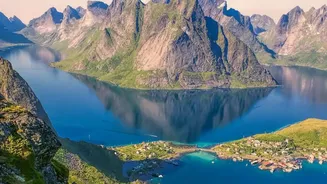
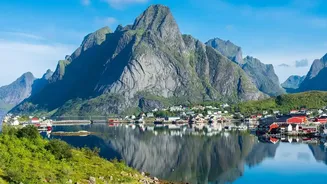
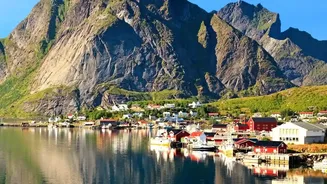
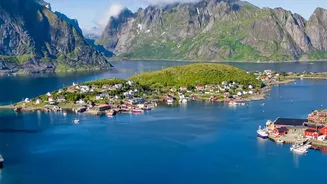
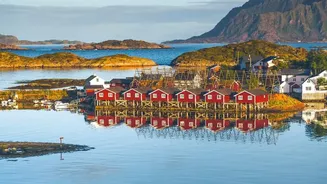
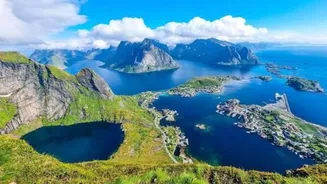
Located above the Arctic Circle, the Lofoten archipelago is world-famous for its dramatic scenery where sharp, jagged peaks rise directly from the sea. This chain of islands is dotted with iconic red fishing cabins, known as 'rorbuer', often built on stilts
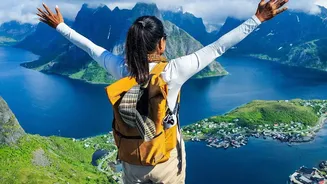
over the water. Picturesque villages like Reine and Hamnøy are postcard-perfect settings, offering a base for activities like hiking, kayaking, and fishing. During summer, visitors can experience the midnight sun, which provides 24-hour daylight perfect for exploring. In winter, the long, dark nights create the ideal canvas for the Northern Lights. The islands are connected by roads and bridges, making them accessible for a scenic road trip, though getting there requires a flight or ferry from the mainland, often via the town of Bodø.
Senja: A Hiker's Paradise
Often described as 'Norway in miniature', Senja offers a stunning cross-section of Norwegian landscapes. The island's National Scenic Route follows a coastline of dramatic mountains plunging into fjords on one side and a gentler, forested landscape on the other. It's an adventurer's dream, renowned for its incredible hiking trails. The trek to the peak of Segla, or the nearby Hesten for a classic view of Segla's pointed summit, is a challenging but rewarding experience. Beyond hiking, you can explore charming fishing villages, relax on white-sand beaches like Ersfjord, or go sea eagle-spotting. Depending on the season, you can enjoy the midnight sun or chase the aurora borealis. Accommodation options like Hamn i Senja, a converted fishing village, provide a comfortable base for exploration.
Frøya: Coastal Culture and Marine Life
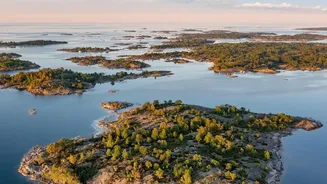
Situated on the Trøndelag coast, Frøya is the gateway to an archipelago of over 5,400 islands, islets, and skerries. This region is a hub of Norwegian coastal culture, with a strong identity rooted in fishing and, more recently, a thriving salmon farming industry. The island is dotted with lively fishing villages like Mausund, Sula, and Titran, each with its own unique character. Visitors can immerse themselves in history at the Titran memorial, which commemorates a tragic 1899 fishing disaster, or explore remnants of the Atlantic Wall at Stabben Fort. The marine landscape is the main attraction, offering excellent conditions for diving, fishing for cod and halibut, and kayaking. You can also go 'island hopping' by local boat services to experience the tranquil life on smaller, car-free islands and even stay overnight in a converted lighthouse keeper's house.
Svalbard: The High Arctic Wilderness
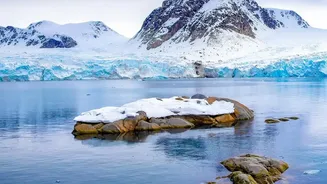
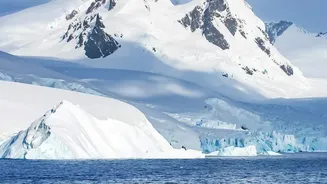
For the ultimate Arctic adventure, the Svalbard archipelago is unparalleled. Located halfway between mainland Norway and the North Pole, its largest island, Spitsbergen, is a land of vast glaciers, icy fjords, and unique wildlife. This is one of the best places in the world to see polar bears in their natural habitat, alongside walruses, Arctic foxes, and various whale species. The main settlement, Longyearbyen, serves as the base for expeditions like dog sledding, snowmobiling, and guided glacier hikes. Due to the real risk of encountering polar bears, it is required to travel with a licensed guide when outside the settlements. Svalbard experiences extreme seasons: the 'polar summer' brings the midnight sun from April to August, while the 'Northern Lights winter' offers months of polar night, providing an incredible opportunity to witness the aurora borealis.
Hinnøya: Norway’s Largest Island
As Norway's largest island, Hinnøya serves as a crossroads connecting the famous regions of Lofoten and Vesterålen. Its landscape is incredibly varied, from the agricultural lands and sheltered fjords around the town of Harstad to the rugged interior mountains of Møysalen National Park. Unlike its more famous neighbours, much of Hinnøya remains outside the main tourist hubs, offering a quieter, more tranquil experience of Northern Norway. The island is a fantastic destination for hiking, with trails ranging from moderate coastal walks to challenging multi-day treks across its high plateaus, connecting a network of mountain cabins. Its deep fjords and ancient pine forests, some with trees over 700 years old, provide a different perspective on Norway's wild beauty.