





A Blueprint for a Lunar Outpost
Establishing a long-term human presence on the Moon, a key goal of NASA's Artemis program, is about more than just planting a flag. It requires creating a sustainable habitat where astronauts can live and work for extended periods. The astronomical cost
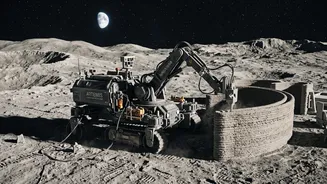
and logistical nightmare of launching fully assembled habitats from Earth make it impractical. The solution lies in using resources already on the Moon, a concept known as in-situ resource utilization (ISRU). The vision is to build landing pads, roads, radiation shields, and habitats before the first long-term human crews arrive. This initial, critical construction work will not be done by astronauts, but by teams of sophisticated, autonomous robots.
Meet the Robotic Builders
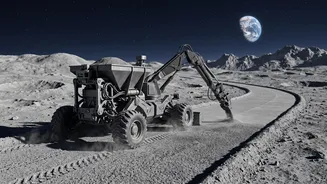
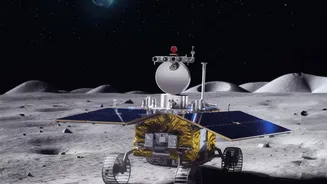
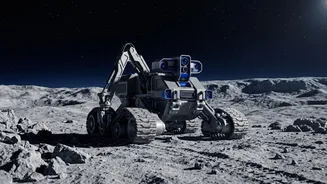
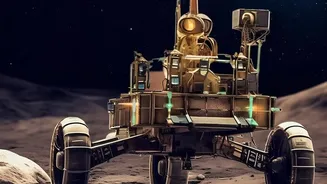
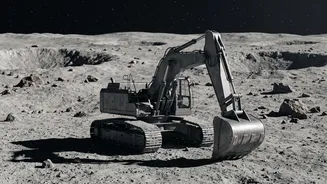
The builders of our lunar future will be specialized robots designed to operate in one of the most hostile environments imaginable. These are not just remote-controlled rovers. Due to the communication delays between Earth and the Moon, these machines must be highly autonomous, capable of making on-site decisions without direct human control. Different robots will form a cooperative team. Some, like NASA's RASSOR (Regolith Advanced Surface Systems Operations Robot), are designed to excavate lunar soil, or regolith. Others will be mobile 3D-printing platforms, while smaller drones may perform surveying and inspection tasks. Companies like Lunar Outpost are developing software, such as Mobile Autonomous Robotic Swarms (MARS), to allow these diverse machines to coordinate their tasks effectively.
Printing Habitats from Moon Dust
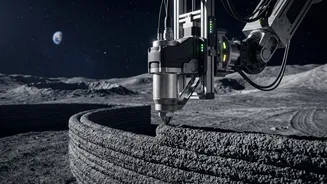
The primary construction method will be additive manufacturing, or 3D printing. The 'ink' for these printers won't be shipped from Earth; it will be the Moon's own regolith. Companies like ICON, in partnership with NASA under 'Project Olympus', are developing technologies to process this lunar dust. The process involves melting the regolith with lasers or microwaves and extruding it layer by layer to build up structures like landing pads and habitat shells. This method creates robust structures that offer superior protection against the Moon's extreme temperatures, radiation, and micrometeorite impacts compared to inflatable or metal alternatives. The European Space Agency (ESA) is also exploring similar concepts, aiming to use 3D-printed regolith to form a protective shell over lighter, inflatable habitat modules.
The Architects of the Future
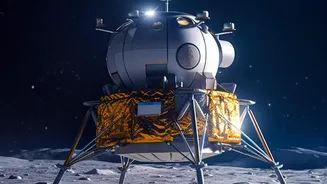
This monumental task is the result of a global collaboration between government space agencies and a growing number of private technology companies. NASA is leading the charge with its Artemis program, providing significant funding and direction through contracts with commercial partners. Key players include ICON, known for its large-scale 3D-printing technology, and SEArch+ and BIG, architecture firms designing the extra-terrestrial habitats. Other companies, such as Blue Origin and Firefly Aerospace, are contracted to deliver robotic systems and other hardware to the lunar surface. Beyond the US, the ESA is actively developing its own robotic concepts, like the Lunar-TARS robotic arm, while JAXA, the Japanese space agency, is also demonstrating how small, autonomous robots can work together on construction tasks. China has also announced plans for AI-powered robots to construct its own lunar base.
Overcoming Lunar Hurdles
Building on the Moon is immensely challenging. The environment features extreme temperature swings, high levels of radiation, a near-perfect vacuum, and a lack of GPS for navigation. Perhaps the biggest obstacle is the lunar dust itself. Regolith is not like sand on Earth; it's sharp, abrasive, and electrostatically charged, posing a significant threat to machinery. Robots must be specially designed with sealed joints and robust electrical systems to survive. Furthermore, the autonomy software must be incredibly sophisticated, allowing robots to navigate treacherous terrain, handle irregular materials, and solve problems without human intervention. Extensive testing is being done on Earth using lunar soil simulants to validate these systems before they are deployed hundreds of thousands of miles from home.
From Blueprint to Reality
The timeline for this futuristic construction site is already taking shape. Under the Artemis program, NASA has outlined a multi-phase plan for its moon base. The first phase, running through the late 2020s, involves numerous robotic missions to scout the area near the Moon's south pole and deliver initial hardware. A key test for construction technology is targeted for as early as 2026, when ICON plans to build a test structure. While the first crewed landings of the new era are planned for the late 2020s, the establishment of the initial base infrastructure is expected in the early 2030s, with a semi-permanent human presence to follow. These robotic pioneers are not just building a base; they are laying the foundation for a permanent human foothold in the solar system.