








The Benchmark: Edinburgh, Scotland
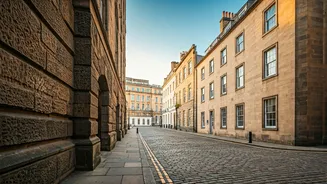
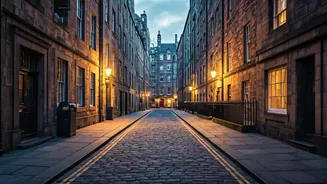
Before we explore other gems, let’s establish the gold standard. Edinburgh isn’t just a city; it's a UNESCO-recognized masterpiece. Its dramatic character comes from the stark contrast between the Old Town—a dense, labyrinthine network of medieval streets
and stone tenements climbing the Royal Mile—and the New Town, a masterclass in elegant, symmetrical Georgian town planning. St. Giles' Cathedral's crown spire pierces the sky, while Edinburgh Castle looms from its volcanic perch, a silent observer of centuries. It’s this powerful, layered history, written directly onto the cityscape, that architecture lovers chase. The experience is about feeling the weight of time, from the soot-stained stone of a pub to the graceful curve of a neoclassical crescent. This is the kind of atmospheric, immersive history that sets the bar for any architectural pilgrimage.
Prague, Czech Republic: A Fairytale of Gothic and Baroque
Often called the “City of a Hundred Spires,” Prague feels like walking onto a movie set built by medieval kings and Habsburg emperors. While hardly undiscovered, it offers an architectural density that rivals anywhere on the continent. The Vltava River, spanned by the iconic, statue-lined Charles Bridge, separates the sprawling Prague Castle complex from the enchanting Old Town Square. Here, the famous Astronomical Clock draws crowds, but the real magic is in the surrounding buildings: a kaleidoscope of Gothic towers, Renaissance facades, and pastel-hued Baroque townhouses. Unlike many European capitals, Prague was largely spared from destruction in World War II, leaving its historical core immaculately preserved. Exploring the winding cobblestone lanes of Malá Strana or gazing up at the soaring vaults of St. Vitus Cathedral delivers that same sense of historical immersion that makes Edinburgh so beloved, but with a distinctly Bohemian, fairytale flourish.
Budapest, Hungary: The Pearl of the Danube
If Prague is a fairytale, Budapest is a grand opera. Forged from the union of two cities, Buda and Pest, it showcases the immense wealth and ambition of the Austro-Hungarian Empire. The architecture is monumental, defined by stately boulevards and jaw-dropping landmarks. Dominating the Pest riverbank is the Hungarian Parliament Building, a neo-Gothic fantasy so vast and ornate it seems to defy gravity. Across the river in the hills of Buda, the Fisherman's Bastion offers panoramic views from its whimsical turrets. But Budapest’s architectural soul is also found in its magnificent 19th and early 20th-century details: the soaring dome of St. Stephen's Basilica, the opulent interiors of the New York Café, and the vibrant Art Nouveau designs of the Gellért Thermal Baths, with their Zsolnay ceramic tiles. It’s a city that rewards looking up, offering a powerful, imperial grandeur that feels both distinct and deeply European.
Lisbon, Portugal: Coastal Charm and Manueline Marvels
For a completely different architectural flavor, look west to Portugal's coastal capital. Lisbon’s story is one of maritime glory and dramatic rebirth. While much of the medieval city was lost in the devastating 1755 earthquake, the rebuilt Baixa district is one of the first examples of neoclassical, grid-based urban design. The real architectural treasures, however, are the survivors from Portugal’s Age of Discovery. In the Belém district, you’ll find two UNESCO World Heritage sites that define a uniquely Portuguese style: Manueline. The Belém Tower, a fortified 16th-century gateway to the city, is adorned with intricate maritime motifs like coiled rope and armillary spheres carved in stone. Nearby, the Jerónimos Monastery is a breathtaking testament to the style, its cloister an impossibly detailed forest of limestone. Add in the city’s iconic, colorful tile-covered buildings (azulejos) and winding, hilly streets of the Alfama district, and you have a city that is vibrant, resilient, and architecturally unforgettable.