







How a Hydrogen Train Actually Works
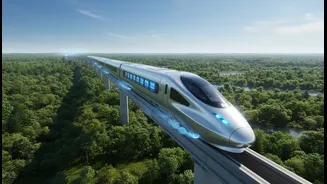
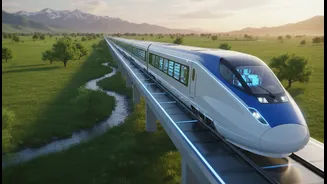
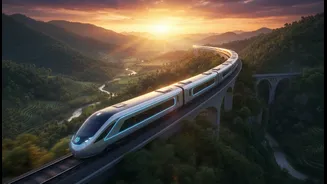
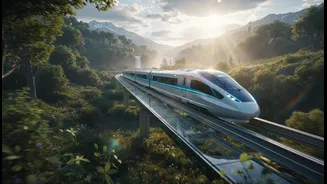
Imagine a train that runs on the most abundant element in the universe and emits only water. That’s the basic principle behind a hydrogen train. Unlike diesel engines that burn fuel, these trains use a device called a fuel cell. Inside the fuel cell,
hydrogen stored onboard reacts with oxygen from the air in a chemical process that generates electricity. This electricity then powers the motors that turn the wheels. The only by-products are water vapour and heat, making it a zero-emission mode of transport at the point of use. To improve efficiency, these trains often include batteries to store excess energy, which can be used for acceleration or climbing slopes.
India's Landmark Pilot Project
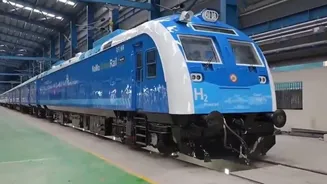
India’s journey into this advanced technology is kicking off in Haryana. The country’s first hydrogen train, developed indigenously, has undergone extensive trials and is set for inauguration on the Jind-Sonipat route. This pilot project involves retrofitting an existing Diesel Electric Multiple Unit (DEMU) rake with a hydrogen fuel cell system. A 10-coach train has been approved for the route, designed to run at a maximum operational speed of 75 kmph. The project is spearheaded by the Indian firm Medha Servo Drives, in collaboration with Canada's Ballard Power Systems for the fuel cell technology. To support the train, a dedicated hydrogen production and refuelling station has been established in Jind.
Beyond the Tracks: The 'Hydrogen for Heritage' Vision
The Jind-Sonipat pilot is just the beginning. This initiative is a key part of a broader national strategy called 'Hydrogen for Heritage'. The plan aims to run 35 hydrogen trains on several of India's iconic heritage and hilly routes, which are often environmentally sensitive. Lines like the Kalka-Shimla Railway, Darjeeling Himalayan Railway, and Nilgiri Mountain Railways are targeted for this green makeover. Electrifying these difficult terrains is often impractical and expensive, making hydrogen an ideal alternative to polluting diesel engines. By converting these tourist-heavy routes, Indian Railways aims to preserve their historical charm while significantly reducing their carbon footprint and noise pollution.
The Hurdles on the Path to a Green Future
While the promise of hydrogen trains is immense, the road ahead has significant challenges. The most prominent is the high initial cost. Each train is estimated to cost around ₹80 crore, with substantial additional investment needed for ground infrastructure like refuelling stations. Another major hurdle is the production of 'green' hydrogen—hydrogen created using renewable energy. Scaling up green hydrogen production to meet demand is a challenge, as it requires massive amounts of water and renewable electricity, and the technology is still at a nascent stage in India. Safety is also a paramount concern, as hydrogen is highly flammable and requires robust storage and handling protocols.
A Symbol of a New India
Despite the costs and complexities, India's push for hydrogen trains is a powerful statement of intent. It positions the nation among a select group of countries, including Germany and Japan, that are pioneering this technology. This move aligns perfectly with India's ambitious goal of achieving Net Zero carbon emissions by 2030 for its railway network and promotes the 'Make in India' initiative through indigenous development. By starting with heritage routes, the project not only tackles challenging terrains but also creates a highly visible symbol of the country's commitment to blending technological progress with environmental stewardship. The success of these initial projects could pave the way for wider adoption across non-electrified parts of the world's fourth-largest rail network.