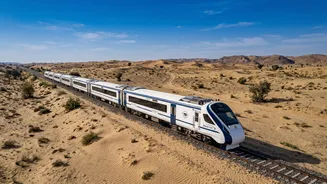

Imagine watching the timeless, sun-baked terrain of Rajasthan blur past from the window of one of India's most advanced trains. The Vande Bharat Express is redefining travel through the state, offering a unique journey of contrasts.
A New Window to an Ancient Land
The introduction of
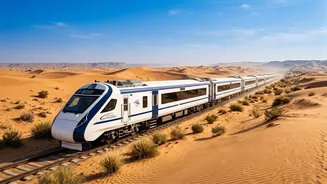
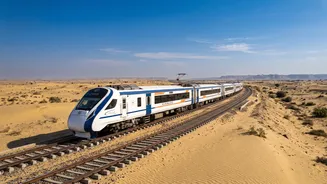
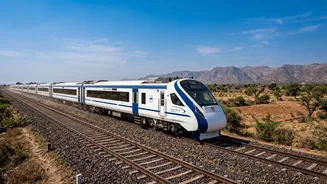
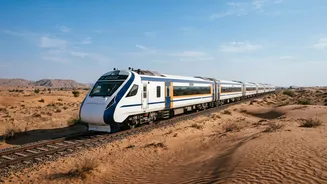
the Vande Bharat Express in Rajasthan has created more than just a faster link between cities; it has unveiled a new way to experience the state's iconic geography. These semi-high-speed trains, symbols of modern Indian engineering, now slice through landscapes that have remained unchanged for centuries. The journey is a compelling paradox: a futuristic blue-and-white rake gliding through a world of golden sand and weathered hills. Several routes now operate within or through the state, each offering a distinct flavour of Rajasthan's diverse topography, from the arid stretches of Marwar to the rugged Aravalli ranges.
The Journey Through Marwar
Perhaps the most definitive 'dry landscape' journey is offered by the Vande Bharat connecting Jodhpur to Sabarmati in Gujarat. As the train pulls out of Jodhpur, the 'Blue City', the urban sprawl quickly gives way to the vast, arid plains of the Marwar region. This is the heart of Rajasthan's desert country. The train's large, panoramic windows become a screen for a minimalist spectacle of thorny 'khejri' trees, hardy shrubs, and distant, shimmering heat hazes. The route passes through stations like Pali and Abu Road, gateways to a region known for its stark beauty. Passengers witness a land sculpted by wind and sun, a powerful reminder of nature's resilience, all viewed from the climate-controlled comfort of a world-class cabin.
Crossing the Rugged Aravalli Hills
Rajasthan's first Vande Bharat service, connecting Delhi Cantt. to Ajmer, offers a different but equally dramatic experience. This route cuts across the Aravalli range, one of the oldest mountain folds in the world. Instead of flat desert, the landscape here is a rugged canvas of rocky outcrops, undulating hills, and deep cuttings blasted through the rock to make way for the tracks. The train navigates sharp curves and gradients that were once challenging for conventional locomotives. As it snakes through areas near Jaipur and Alwar, passengers are treated to views of ancient forts perched on hilltops, standing as silent witnesses to the new age of travel unfolding below. This journey showcases a tougher, more muscular side of Rajasthan's terrain, a stark contrast to the soft dunes of the west.
More Than Just a Fast Ride
What makes the Vande Bharat experience unique in this setting is not just the speed, but the design of the train itself. The sealed, wide windows keep the dust and heat of the desert at bay while offering an uninterrupted, cinematic view. The train's stability and low noise levels create a serene environment, allowing one to fully absorb the passing scenery. It is a far cry from the bustling, sensory overload often associated with Indian train travel. Here, the journey becomes a meditative experience. The comfort of the revolving seats on Executive Class coaches even allows travellers to turn their chairs towards the window, transforming their seat into a personal viewing gallery for the grand theatre of the Rajasthani outdoors.
Connecting Rajasthan's Jewels
Beyond the visual poetry, the Vande Bharat network is a practical boom for Rajasthan. Routes like the one connecting the tourist magnets of Udaipur and Jaipur have slashed travel times, making the state's famed heritage circuit more accessible than ever. For travellers, this means less time in transit and more time exploring palaces, lakes, and markets. The train itself becomes part of the premium travel experience, bridging the gap between historical destinations with a dash of modern luxury. This network is knitting the state closer together, facilitating not just tourism but also business and family travel, and proving that modern infrastructure can enhance, rather than detract from, the appreciation of a timeless land.