





Saturn Shines All Night Long
October kicks off with a brilliant showing from the ringed planet, Saturn. On October 4, it reaches opposition, which means Earth is directly between Saturn and the Sun. This alignment makes the planet appear at its biggest and brightest for the entire
year, visible from sunset to sunrise. You won't need any equipment to spot it; just look for a steady, yellowish point of light rising in the east as the Sun sets. While its famous rings are only visible with a telescope, its bright, constant glow makes it an easy and rewarding target for any backyard stargazer. It will remain a great object to spot throughout the month.
An Evening With the Draconids
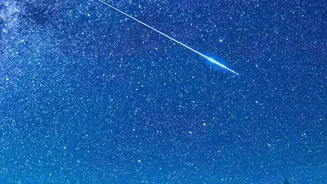
The first of two meteor showers this month is the Draconids, peaking on the evening of October 8. Unlike most meteor showers that are best after midnight, the Draconids are best viewed in the early evening, just as darkness falls. The shower’s radiant point—the spot where the meteors appear to originate—is high in the northern sky at this time. In 2026, viewing conditions are excellent because the peak happens just two days before the new moon, meaning there will be no bright moonlight to wash out the show. While typically a modest shower with about 5 to 10 meteors per hour, the Draconids are known for occasional outbursts of hundreds of meteors, so it's always worth a look.
Catch a Glimpse of our Galactic Neighbor
October provides a fantastic window to spot the most distant object visible to the human eye: the Andromeda Galaxy. This massive spiral galaxy, our closest major galactic neighbor, appears as a faint, hazy smudge of light in the night sky. To find it, you'll need a very dark location, far from city light pollution, and a moonless night. With the new moon on October 10, the days surrounding it are your best bet. Look for it in the constellation Andromeda, which is high in the sky during autumn evenings. It may take a few minutes for your eyes to adapt to the dark, but spotting this faint glow is a truly awe-inspiring experience.
The Orionids Flash from Halley's Comet
The more active of October's meteor showers, the Orionids, will peak on the night of October 21-22. These meteors are actually tiny pieces of debris left behind by the famous Halley's Comet. The Orionids are known for being fast and can produce up to 20 meteors per hour in a dark sky. This year, a bright waxing gibbous moon will interfere with the show during the evening hours. For the best view, plan to head out in the pre-dawn hours after the moon has set, which will provide a dark window to catch the meteors as they appear to radiate from the constellation Orion.
The Full Hunter's Moon
October's full moon, known as the Hunter's Moon, will rise on the evening of Sunday, October 25, reaching its peak illumination just after midnight on the 26th for those in the Eastern time zone. This full moon follows the Harvest Moon and is named for the time of year when hunters traditionally used the bright moonlight to spot game in the now-barren fields. For the most dramatic view, watch the moon as it rises above the eastern horizon around sunset. At this time, it will appear larger and take on a beautiful orange or reddish hue due to an effect called the Moon illusion and the scattering of light by Earth's atmosphere.