
An Evening Star's Performance
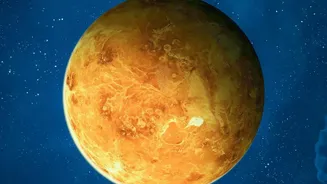
Venus is often called the “Morning Star” or “Evening Star” because its orbit keeps it close to the Sun from our perspective on Earth. This means we can only see it for a few hours just before sunrise or just after sunset. Throughout August 2026, Venus will
be a dazzling “Evening Star,” gracing the western sky after the Sun goes down. It will be so bright that it will be one of the first objects to appear in the twilight, shining more brilliantly than any other star or planet.
Why Is Venus So Bright This Month?
The main reason for Venus's stellar performance is an astronomical event called 'greatest elongation'. Around August 15, Venus will reach its farthest angular distance from the Sun in our evening sky. Think of it as the planet stepping out from behind the Sun's glare and into the spotlight. This positioning means it will linger in the sky for longer after sunset, making it easy to spot. During this period, it will shine with an incredible brilliance, at a magnitude of around -4.4, making it the third brightest object in our sky after the Sun and Moon.
How to Find Venus from India
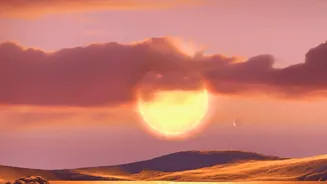
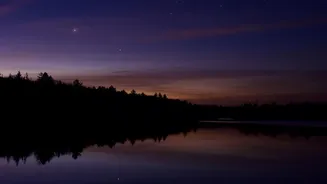
Finding Venus is incredibly simple this month. You don’t need any special equipment or maps to begin. Just find a spot with a clear view of the western horizon and look in the direction where the sun has just set. As the sky darkens, Venus will emerge as an unmistakably bright, silvery light. It will be visible throughout the month, but keep an eye out around August 15, when it reaches its peak separation from the sun and appears near a beautiful crescent Moon, creating a stunning celestial pairing.
Getting a Better Look
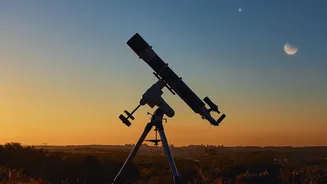
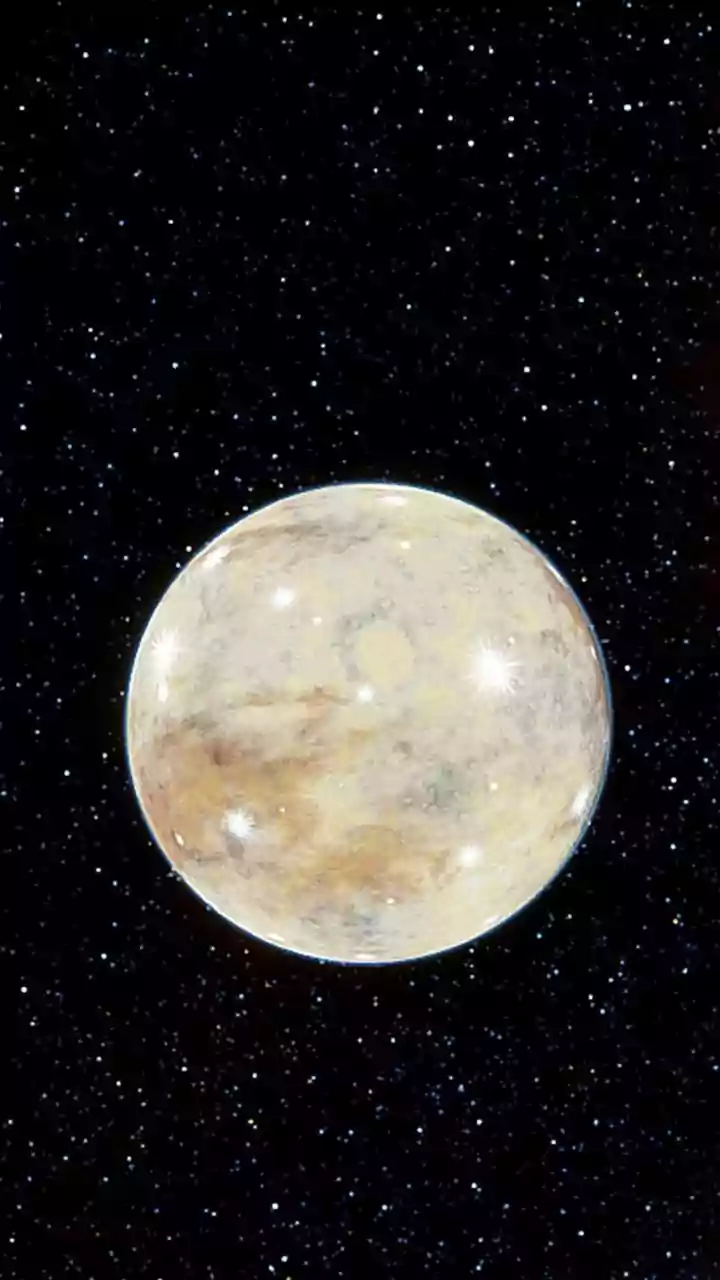
While Venus is stunning to the naked eye, even a simple pair of binoculars can enhance the experience. Through binoculars, you won't just see a point of light; you'll be able to resolve Venus into a tiny disc. Because of its position relative to Earth and the Sun, it will appear about 50% illuminated, looking like a tiny half-moon. This is a fascinating sight, revealing that the planets in our solar system have phases, just like our own Moon.
Tools for the Modern Stargazer
For those who want to know exactly what they're looking at, your smartphone can be a powerful tool. Stargazing apps like SkyView, Star Walk 2, or Stellarium can help you identify Venus with ease. Just point your phone to the sky, and the app will label the planets, stars, and constellations. Many apps also have features that can notify you of interesting events, like conjunctions. For a uniquely Indian perspective, the Bhagol app presents the sky with names from Indian astronomical traditions. These tools can turn a simple viewing into a more enriching and educational experience.
Tips for the Best Viewing
To make the most of your skywatching session, try to get away from bright city lights if possible, as light pollution can wash out the sky. Find a comfortable spot, perhaps a balcony, terrace, or a local park with an open view to the west. Give your eyes about 20 minutes to fully adjust to the darkness; this will help you see not just Venus in its full glory, but also the surrounding stars. Since you'll be looking up for a while, a comfortable chair or a blanket can make the experience more enjoyable.