





What Are the New PUC Rules?
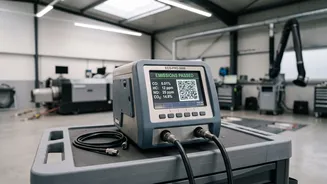
The Ministry of Road Transport and Highways (MoRTH) has introduced several key changes to streamline the PUC system across India. The most significant update is the mandate for a uniform PUC certificate format for all vehicles. Every new certificate issued
by authorised testing centres will now come with a QR code. This code contains crucial details about the vehicle, its owner, and the emission status, allowing for easy verification by enforcement agencies. Furthermore, all emission test data is now electronically linked to the central VAHAN database, creating a national registry of vehicle pollution records. This integration is designed to prevent fraud and ensure that all vehicle data, including pollution status, is accessible in a single place. The government has also introduced the concept of a 'rejection slip', which will be issued if a vehicle fails the emission test, specifying the reason for the failure.
Revised Validity Periods for BS-VI Vehicles
A major change effective from November 2026 involves revised validity periods for PUC certificates, particularly for BS-VI compliant vehicles, based on their age. For private (non-transport) BS-VI vehicles, the new rules are: vehicles up to six years old will need a PUC certificate only once every three years. For those aged between six and ten years, the certificate must be renewed annually. Vehicles older than ten years will require renewal every six months. For commercial (transport) BS-VI vehicles, the validity is two years for vehicles up to six years old, one year for those between six and ten years, and six months for vehicles over ten years old. For older BS-IV vehicles, the validity remains six months, while for BS-I, BS-II, and BS-III vehicles, it is three months.
Why Were These Changes Necessary?
The primary goal of these new rules is to create a unified and transparent system for monitoring vehicular pollution nationwide. The old system had inconsistencies, with different formats and limited data sharing between states. This often caused issues for vehicle owners during interstate travel, where a valid PUC from one state might not be recognised in another because the data was not available on the national VAHAN portal. The new QR code-based uniform certificate and mandatory linkage to the VAHAN database solve this problem, creating a 'One Nation, One PUC' system. This ensures that traffic authorities anywhere in India can instantly verify the pollution status of any vehicle, reducing harassment for compliant drivers and making it harder to use fake certificates. It also supports stricter enforcement of environmental norms to combat rising air pollution.
How to Get the Updated Certificate
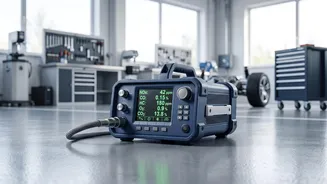
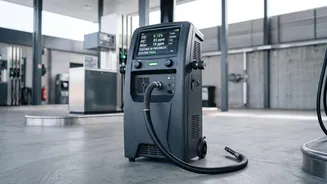
Getting the new PUC certificate is a straightforward process. You must take your vehicle to an authorised emission testing centre, which can be found at many petrol pumps or as standalone facilities. You'll need to provide your vehicle's Registration Certificate (RC). The operator will conduct an emission test by inserting a probe into the vehicle's exhaust pipe. If your vehicle's emissions are within the prescribed limits, the centre will generate the new, uniform certificate with the QR code and upload the data to the VAHAN portal in real time. The certificate can be downloaded from the official Parivahan website by entering your vehicle registration number and the last five digits of its chassis number. It is important to note that PUC certificates cannot be renewed online; the physical presence of the vehicle for testing is mandatory.
Penalties for Non-Compliance
Driving without a valid PUC certificate is a serious offence under the Motor Vehicles Act, 1988. The penalty for not having a valid certificate can be a fine of up to ₹10,000, imprisonment for up to three months, or both. Penalties can be higher for repeat offences. With the data now centralised on the VAHAN portal, enforcement has become more stringent. Authorities can automatically detect non-compliant vehicles through automated number-plate recognition systems and issue e-challans. Additionally, an expired PUC certificate can block the renewal of your motor insurance policy, as the IRDAI has made a valid PUC mandatory for insurance renewals.