



Gaganyaan: India’s Giant Leap
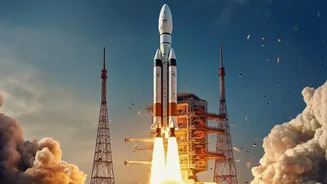
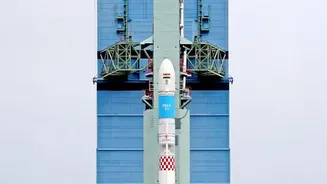
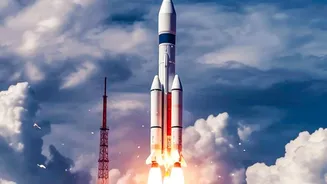
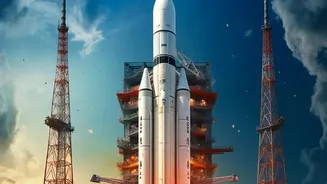
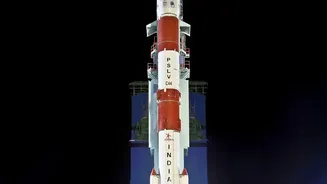
The most anticipated mission is undoubtedly Gaganyaan, India’s first human spaceflight program. The goal is to send a crew of three astronauts into a 400-kilometre orbit for a three-day mission and bring them safely back to Earth. This will make India the fourth
nation in the world to independently send humans to space. The program is proceeding with multiple uncrewed test flights to ensure the safety and reliability of its human-rated LVM3 launch vehicle and crew module. The first uncrewed flight, G1, is a critical step and is anticipated in the latter half of 2026. Extensive ground tests and crew module qualification tests have already been successfully completed, paving the way for this monumental achievement in India’s space journey.
NISAR: A Partnership to Watch Over Earth
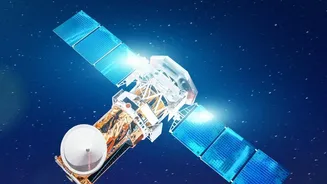
In a landmark collaboration, ISRO has partnered with NASA for the NISAR (NASA-ISRO Synthetic Aperture Radar) mission. This advanced Earth-observation satellite is one of the most sophisticated ever built, equipped with dual-frequency radar to scan nearly all of Earth's land and ice surfaces twice every 12 days. Scheduled for launch from Sriharikota, NISAR will be able to detect changes in the planet’s surface with centimetre-level accuracy, regardless of weather or time of day. This data will be invaluable for managing natural disasters like earthquakes and landslides, monitoring crop health, tracking climate change impacts on glaciers, and managing water resources, making it a critical piece of infrastructure for India and the world.
Mangalyaan-2: A Bold Return to Mars
Building on the phenomenal success of its first Mars Orbiter Mission (MOM), ISRO is planning an even more ambitious sequel: Mangalyaan-2. This mission aims to go beyond just orbiting the Red Planet. Current plans suggest it will include a lander, a rover, and even a helicopter to explore the Martian surface directly. If successful, India would become only the third nation to land a rover on Mars. The mission's objectives include studying the Martian surface composition, atmosphere, and environmental conditions to better understand its history and potential for past life. It represents a significant technological leap, moving from orbital exploration to complex planetary landings.
Shukrayaan-1: Unveiling the Secrets of Venus
After the Moon and Mars, ISRO is setting its sights on our other planetary neighbour, Venus. The proposed Venus Orbiter Mission, named Shukrayaan-1, will be India’s first expedition to the cloud-shrouded planet. The primary goals are to study the Venusian surface and atmosphere, which is a toxic inferno of carbon dioxide with crushing pressure. Despite being Earth's 'twin' in size, Venus evolved very differently, and scientists hope Shukrayaan can provide clues as to why. The orbiter is expected to carry a suite of instruments to map the surface and analyse the complex atmospheric chemistry. While the timeline has shifted, with a launch now anticipated around 2028, it remains a key part of ISRO's interplanetary roadmap.
LUPEX: Hunting for Water on the Moon with Japan
The Lunar Polar Exploration Mission, or LUPEX, is a joint venture between ISRO and the Japan Aerospace Exploration Agency (JAXA). This mission will target the Moon's south pole, a region of immense scientific interest due to its permanently shadowed craters that may hold vast reserves of water ice. Under the collaboration, JAXA is developing the rover, while ISRO is responsible for the lander that will deliver it to the lunar surface. The mission, also known as Chandrayaan-5, aims to directly assess the quantity and quality of this lunar water, a resource crucial for future long-term human presence on the Moon. The launch is slated for no earlier than 2028.
Chandrayaan-4: Bringing a Piece of the Moon to Earth
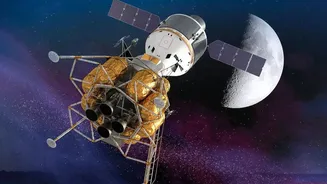
Before LUPEX, ISRO plans another major lunar mission: Chandrayaan-4. This mission marks a significant step up in complexity as it is designed to be India's first lunar sample-return mission. The spacecraft will land on the Moon, collect samples of rock and soil, and then launch them back to Earth for detailed analysis in terrestrial labs. This capability is a hallmark of an advanced spacefaring nation. Returning pristine lunar material will provide unprecedented insights into the Moon's composition, age, and evolution. Scheduled for around 2027, Chandrayaan-4 is a critical stepping stone, building on the landing technology perfected by Chandrayaan-3 and paving the way for even more complex future explorations.
SPADEX: Mastering the Art of Docking in Space
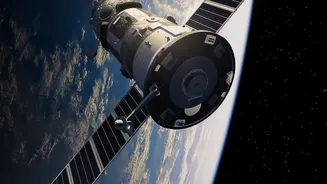
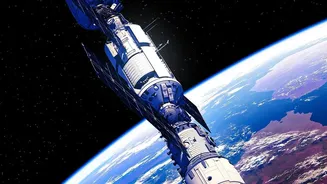
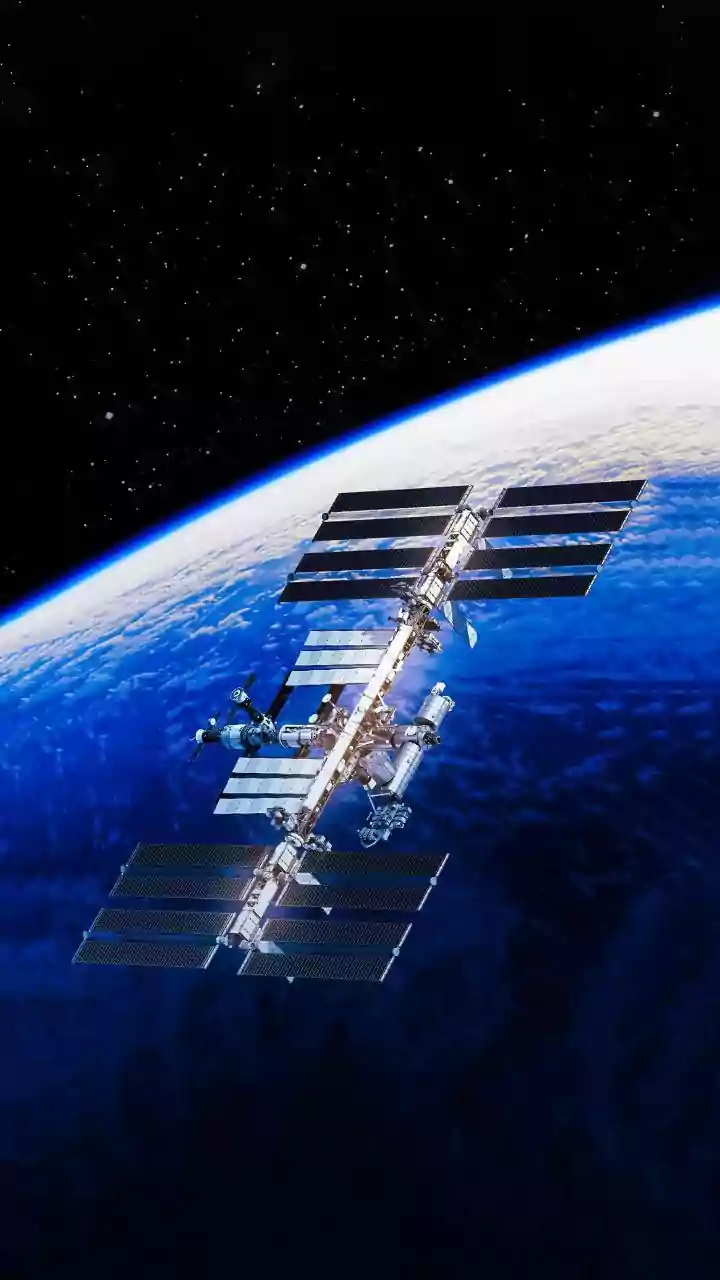
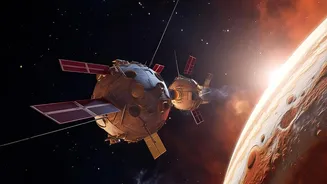
The Space Docking Experiment (SPADEX) is a crucial technology-demonstrator mission that underpins many of ISRO's future ambitions, including the establishment of the 'Bharatiya Antariksh Station' (Indian Space Station) by 2035. The mission successfully demonstrated the autonomous ability for two spacecraft to rendezvous, dock, and undock in orbit—a complex capability mastered by only a handful of countries. This technology is essential for assembling modular space stations, servicing satellites to extend their life, and conducting complex interplanetary missions. By proving its docking technology, ISRO has unlocked the door to a new era of more sustainable and sophisticated operations in space.