





An Ancient Monsoon Uncovered
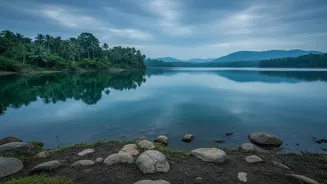
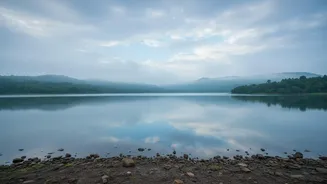
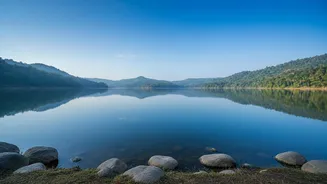
Scientists are buzzing about recent findings from Raja Rani Lake in Chhattisgarh’s Korba district. By studying microscopic pollen grains preserved for centuries, they've uncovered evidence of an unusually strong Indian Summer Monsoon that swept through
central India roughly 1,000 years ago. During a period known as the Medieval Climate Anomaly (around 1060 to 1725 CE), the region was far wetter and sported denser tropical forests than previously thought. This discovery not only redraws our map of India's climate history but also provides a crucial baseline for understanding future monsoon behaviour. The key to this revelation wasn't a complex computer model, but something much more fundamental: mud from the bottom of a lake.
Pollen Grains as Tiny Timekeepers
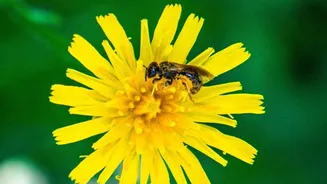
To understand how mud can tell us about ancient rainfall, we first need to appreciate the humble pollen grain. Every flowering plant, tree, and grass produces pollen, each with a unique and identifiable shape. These grains are incredibly tough, protected by a hard outer shell that allows them to survive for millennia without decaying. When a plant releases pollen, much of it gets scattered by the wind, eventually settling on the ground and in nearby bodies of water. By studying these preserved grains, a science known as palynology, researchers can build a detailed picture of the exact types of vegetation that grew in an area at a specific point in history.
The Main Check: Lake Sediments
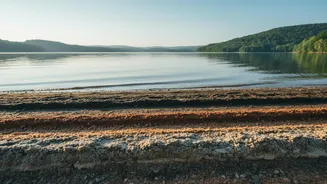
This is where lakes become invaluable. A lake acts like a natural history book, with each page made of a thin layer of sediment. Every year, dust, soil, and organic matter, including a heavy sprinkling of pollen from the surrounding landscape, wash into the lake and settle at the bottom. This process creates a chronological record, with the newest layers on top and the oldest, most ancient layers buried deep below. These sediments effectively trap and preserve the pollen, creating an undisturbed timeline of ecological change. By drilling a long, vertical core from the lakebed, scientists can essentially pull out this entire history book at once, ready to be read page by page, layer by layer.
Reading the Climate Record
In the Chhattisgarh study, researchers from the Birbal Sahni Institute of Palaeosciences extracted a sediment core that represented about 2,500 years of history. Back in the lab, they meticulously sampled the core at different depths, chemically processing the material to isolate the tough little pollen grains. By identifying and counting the types of pollen in each layer, they could reconstruct the past environment. For example, a layer rich in pollen from moisture-loving forest trees points to a period of high rainfall and warm, humid conditions. Conversely, a layer dominated by pollen from grasses and shrubs suggests a drier, more open savannah-like landscape.
What the Grains Revealed
The analysis of the Raja Rani Lake core showed a clear shift over time. The deeper, older layers revealed a mix of forest and savannah, but as they moved up into the layers corresponding to the Medieval Climate Anomaly, the pollen profile changed dramatically. Pollen from dense mixed tropical deciduous forest species became dominant, indicating a significant intensification of the Indian Summer Monsoon. This provided hard evidence that central India, the country's core monsoon zone, was exceptionally wet during this era. The findings help settle debates about this climatic period, showing it wasn't a time of dryness in the region but one of abundant moisture.
Why This Ancient History Matters Today
Understanding that the monsoon has been much stronger in the past has significant implications. It provides scientists with a wider range of natural variability to consider when modelling future climate change. As India faces increasingly erratic weather patterns, knowing the historical extremes of the monsoon system is vital for developing robust strategies for water management, agriculture, and disaster preparedness. These lakebed archives offer a rare window into how ecosystems in India's monsoon zone respond to major climatic shifts, giving us clues about what to expect in a warming world.