



What Are Air Taxis, Exactly?
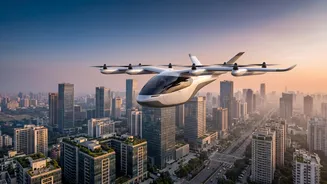
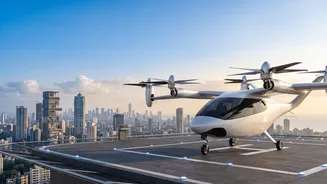
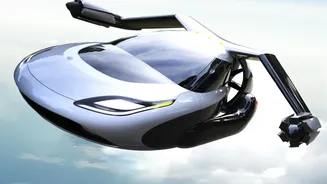
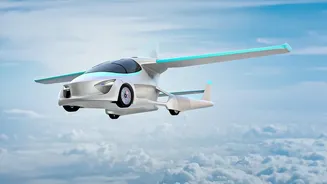
The vehicles at the heart of this new vision are called eVTOLs, which stands for electric Vertical Takeoff and Landing aircraft. Think of them as a quiet, eco-friendly cross between a helicopter and a drone. Powered by batteries, they can ascend and descend
vertically like a helicopter, making them ideal for urban areas where runways are non-existent. Once airborne, they transition to flying forward like a small plane. Companies like California-based Archer Aviation are developing these vehicles, such as their 'Midnight' aircraft, which is designed to carry a pilot and four passengers. These eVTOLs are significantly quieter than traditional helicopters and produce zero emissions during flight, making them a more sustainable option for crowded cities.
The Blueprint for Delhi
The most concrete proposal for Delhi comes from a partnership between InterGlobe Enterprises, the parent company of IndiGo, and Archer Aviation. Their ambitious plan aims to launch an all-electric air taxi service as early as 2026. The initial flagship route would connect Connaught Place in the heart of Delhi with Gurugram in Haryana. This 27-kilometre journey, which can easily take 60 to 90 minutes by car during peak hours, could be completed in approximately seven minutes by air. The joint venture plans to operate a fleet of up to 200 of Archer's Midnight aircraft to serve the city. Beyond the Delhi-Gurugram link, future expansion plans target other congested corridors in the National Capital Region and other major Indian cities like Mumbai and Bengaluru.
The Commuter's Dream: Time and Cost
The primary appeal is, without a doubt, time. Slashing a 90-minute road journey to just seven minutes is a game-changer for daily commuters and business travellers. But what will it cost? While final fares are not set, initial estimates suggest a one-way trip on the Connaught Place to Gurugram route would be priced between ₹2,000 and ₹3,000 per passenger. This is positioned as a premium service, roughly 1.5 times the cost of a comparable journey in an app-based cab, which can range from ₹1,500 to ₹2,000 depending on traffic and surge pricing. The aircraft are designed for quick turnarounds, with battery charging times of around 30 to 40 minutes, enabling a high frequency of flights.
Reality Check: Hurdles on the Horizon
While the 2026 target is exciting, significant obstacles remain. The most critical is regulation. Archer's aircraft must first achieve certification from the US Federal Aviation Administration (FAA), which is anticipated in 2025, before it can be approved by India's Directorate General of Civil Aviation (DGCA). Beyond certifying the aircraft, a whole new regulatory framework for Urban Air Mobility (UAM) is required. This involves creating designated air corridors, managing air traffic to prevent collisions, and establishing safety protocols. Another major challenge is infrastructure. Air taxis require 'vertiports'—dedicated sites for takeoff, landing, and charging. Identifying and developing these locations in a dense city like Delhi is a complex task involving coordination between private companies and government bodies.
A Solution for All or a Luxury for Few?
With an estimated cost of several thousand rupees for a single trip, air taxis will not be a replacement for the Delhi Metro or city buses for the vast majority of commuters. Initially, the service will cater to business executives, high-end tourists, and those for whom time is more valuable than money. The long-term vision, however, is that as the technology matures, operational efficiencies increase, and the number of aircraft grows, costs will eventually come down. Proponents see this as a 'Roadster moment' for flying vehicles, similar to how early electric cars were expensive but paved the way for more affordable models. For now, it represents a new, premium tier of public transport, but its success could pave the way for a broader transformation of how we navigate India's megacities.