




Start With Your Curiosity
Every great journey begins with a single step, and for an aspiring explorer, that step is often taken inside a classroom or at a local science fair. Building a strong foundation in Science, Technology, Engineering, and Mathematics (STEM) is non-negotiable.
Focus on understanding the core principles of physics, chemistry, and mathematics. But don't just stop at textbooks. Participate in your school's science exhibition, build a model volcano, or design a simple circuit. These hands-on projects are the first practical tests of your theoretical knowledge. Organisations like SPACE India offer various school-level workshops and astronomy clubs that can help transform a flicker of interest into a burning passion. These early experiences are crucial for developing problem-solving skills and a scientific temperament.
Level Up With National Competitions
Once you've honed your skills at the school level, it's time to test them on a bigger stage. India hosts numerous STEM competitions for students that provide excellent exposure and a chance to tackle real-world problems. For instance, the World Robot Olympiad (WRO) and FIRST LEGO League challenge students to design and program robots for specific tasks. These events are more than just competitions; they are festivals of innovation where you can meet like-minded peers and learn from mentors. Other notable platforms include the STEMathon organised by Imperial College London for students in grades 10 to 12, which focuses on solving global challenges. Success in these competitions not only looks great on your profile but also proves that you can apply your knowledge creatively and collaboratively.
Engage With National Space Agencies
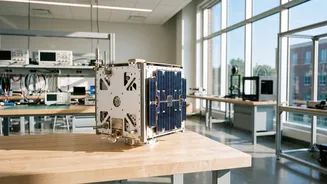
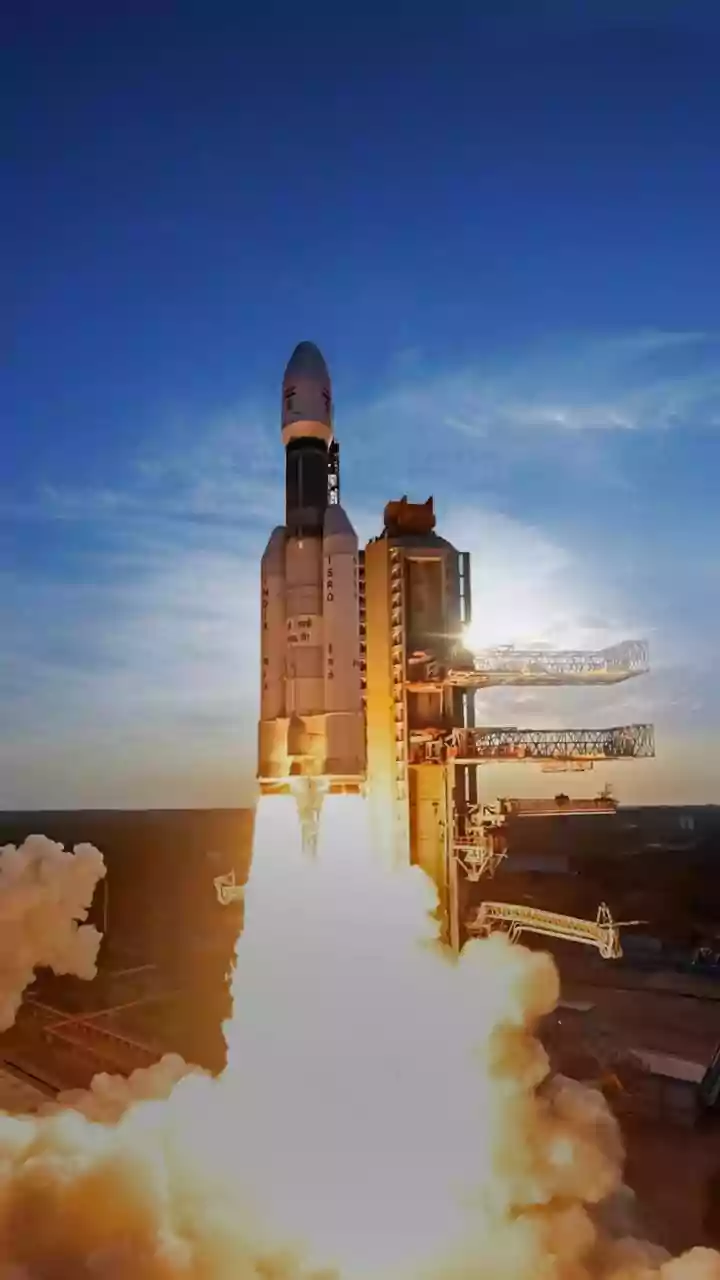
For many, the ultimate dream is to be associated with the Indian Space Research Organisation (ISRO). Fortunately, ISRO has several outreach programmes designed specifically to “catch them young”. The most prominent among these is the YUva VIgyani KAryakram (YUVIKA) or Young Scientist Programme. This is a two-week residential program that gives selected school students a deep dive into space science, technology, and applications. Participants get to interact with senior scientists, visit ISRO facilities, and engage in hands-on activities like model rocketry. Selection is competitive, often giving weightage to academic performance and participation in science fairs. ISRO also offers internships and project trainee schemes for university students, providing a direct pathway to contribute to India's space endeavours. There are also organisations like Space Kidz India that give students hands-on experience in building and launching small satellites, making space more accessible.
Choose the Right Academic Path
A formal education is the launchpad for a career in exploration. For those aiming for the stars, pursuing a Bachelor's degree (B.Tech) in Aerospace or Aeronautical Engineering is a popular choice. Premier institutions like the Indian Institutes of Technology (IITs) in Bombay, Madras, and Kanpur are consistently ranked at the top for these programs. The Indian Institute of Space Science and Technology (IIST) in Thiruvananthapuram is another excellent choice, as it was established by the Department of Space and often absorbs its top-performing students directly into ISRO. For those who may not get into an IIT, several other reputed government and private colleges like SRM IST and Manipal Institute of Technology offer robust aerospace programmes. A strong academic record in one of these institutions opens doors to roles in both government agencies and the burgeoning private space sector.
Look at the Global Horizon
While India's space programme is soaring, the spirit of exploration is global. Indian students can and should look for international opportunities to broaden their horizons. While NASA primarily hires U.S. citizens, it offers internships to international students through specific partnerships. Similarly, the European Space Agency (ESA) and the Japan Aerospace Exploration Agency (JAXA) have programmes open to foreign students, often through collaborations with universities. Participating in international projects, like the NASA-affiliated Sally Ride EarthKAM program managed in India by SPACE India, allows students to request images of Earth from the International Space Station, offering a taste of global scientific collaboration. Pursuing higher studies (Master's or PhD) abroad can also open up research opportunities at institutions that work closely with these global space giants.