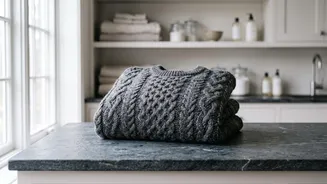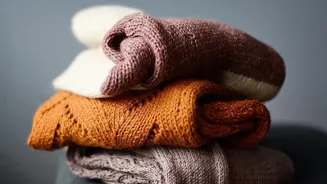






There's nothing like a cosy woollen sweater on a chilly winter day. But that warmth often comes with a frustrating itch. Don't banish your favourite woollens to the back of the closet. You can make them softer and much more comfortable to wear.
Understanding the Itch
That scratchy
feeling isn't necessarily an allergy. True allergies to wool are rare and are typically a reaction to lanolin, a natural wax found in sheep's fleece. For most people, the itch is a purely mechanical issue. Wool fibres have a microscopic, scaly surface. Coarser, thicker fibres are stiff and don't bend easily against your skin; instead, their ends poke you, which your nerves register as an itch or prickle. Finer fibres, such as those from Merino wool, are more flexible and bend when they touch your skin, which is why they feel much softer. The itch can also be caused by residue from harsh detergents or leftover chemicals from the manufacturing process.
The Gentle Wash
Proper washing is the first step to softer wool. Always check the care label first. Heat and aggressive agitation are the enemies of wool, as they can cause the fibre's scales to lock together, a process known as felting, which makes the garment feel tighter and rougher. Opt for hand washing in lukewarm or cool water. Use a small amount of a mild, wool-specific detergent. Standard detergents can be too harsh and strip the natural oils from the wool, leaving it brittle. Avoid wringing or twisting the sweater. Instead, gently squeeze out the excess water. You can also roll it in a clean, thick towel to absorb moisture before laying it flat to dry.
The Hair Conditioner Hack
One of the most effective ways to soften a scratchy sweater is with a product you already have: hair conditioner. Since wool is a natural hair fibre, conditioner works on it just like it does on your hair, smoothing down the microscopic scales on each strand. After washing, refill a basin with cool water and add a generous dollop of a basic, inexpensive hair conditioner. Gently work it through the sweater, ensuring it is fully saturated, and let it soak for about 30 minutes. Afterwards, rinse it thoroughly with cool water. Some experts suggest leaving a tiny bit of residue, but a good rinse is generally better to prevent any stickiness or staining.
Soften with Vinegar or Glycerin
Two simple household items can also work wonders. A white vinegar soak can help dissolve any alkaline residue left from soaps and detergents, which can stiffen fibres over time. Add about one cup of distilled white vinegar to a basin of cold water, submerge the sweater, and let it sit for about 20 minutes before rinsing thoroughly. Alternatively, vegetable glycerin, which is known for its ability to attract and retain moisture, can restore flexibility to dry wool fibres. Use about one tablespoon of glycerin per litre of water and soak the garment before giving it a final rinse. Glycerin has the added benefit of being odourless compared to vinegar.
The Big Freeze
An unconventional but surprisingly effective trick involves your freezer. After your sweater is completely dry, fold it neatly, place it in a sealed plastic bag, and leave it in the freezer overnight. The cold temperature helps to lock down the short, protruding fibres that cause the poking sensation. While the science is less established than other methods, it’s a riskfree trick that many find reduces that initial surfacelevel prickle when you first put the sweater on. This method is best for addressing mild itchiness rather than transforming a very coarse wool.
Wear It Right
If a beloved sweater still has a bit of an itch, the simplest solution is to create a barrier. Wearing a thin, long sleeved T shirt or a collared shirt made of a smooth fabric like cotton or silk underneath your woollen can prevent direct contact with your skin. This not only stops the itch but also helps keep your sweater cleaner for longer, reducing the frequency of washing. Sometimes, your skin just needs a moment to adjust. Unless you have a true sensitivity, wearing a sweater for 10–15 minutes can allow it to warm up to your body temperature, which can sometimes reduce the sensation of itchiness.